News
Android Halo previews a new way to track AI agents from your phone’s top edge
Google has previewed Android Halo, a subtle interface designed to show what an AI agent is doing without forcing users to leave the app they are using.
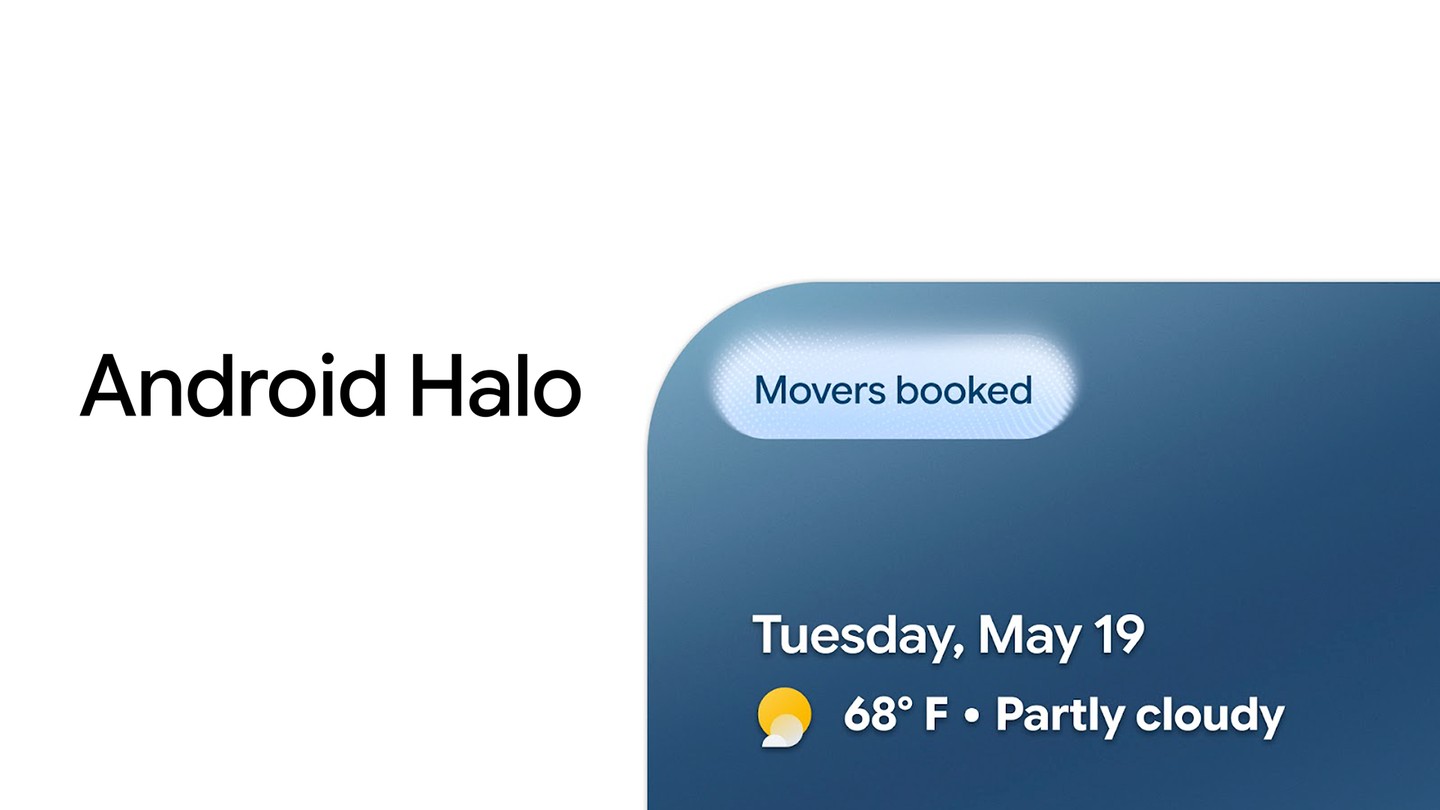
Google has previewed Android Halo, a new Android interface designed to make an AI agent’s activity visible without taking over the phone screen. Instead of requiring users to open a separate assistant app or repeatedly check a notification panel, Halo is intended to provide a small, persistent signal at the top of the display.
The idea addresses a practical problem created by increasingly capable mobile assistants. An agent may be able to carry out a task, enter a live mode or send a message, but users still need a clear way to understand what is happening while they continue with something else. Google’s preview positions Android Halo as an at-a-glance status layer for those moments.
A status layer for tasks that continue in the background
According to Google, Android Halo brings subtle communication to the top of the phone screen while an agent is working. The company says the interface can show when an agent takes on a task, switches into live mode or sends a message. The goal is to keep progress visible without interrupting the current activity.
That distinction matters. A conventional alert usually tells the user that something happened, while an agent may remain active for longer and require several steps before completing a request. Halo is being presented as a way to make that ongoing state easier to follow. Users could remain in another app and still have a visual indication that their request is being processed.
Google has not announced a final release date, a complete device list or a detailed set of supported tasks. Android Halo is described as a preview and is expected to become available later in the year. That timing leaves important questions open, including how the interface will behave when an agent needs clarification, pauses because of a connection problem or finishes a task that requires user approval.
Designed for Gemini Spark and other supported agents
The announcement says Android Halo will work with Gemini Spark and other supported agents. This wording suggests that Halo is intended to be an interface layer that can accommodate more than one compatible agent, although Google has not yet explained how support will be added or managed across different services.
The company also says Halo will offer additional capabilities with Gemini Intelligence on its most advanced devices. That statement connects the preview to Google’s broader effort to make Android more proactive, but it does not establish which phones will receive every capability. Availability may depend on device, software version, language, account, region and the individual agent involved.
For users, the most significant change would be a shift in how mobile AI communicates. The assistant would not need to dominate the screen to remain present. A small status element could make an agent feel more like a background service: visible when attention is needed, but quiet while the user continues reading, navigating or working in another application.
Why the design could matter on smartphones
Mobile screens are narrow, and interruptions compete directly with whatever a person is doing. Full-screen assistant panels can be useful for a conversation, but they are less convenient when the task is already underway. Android Halo’s proposed position at the top of the display could make the agent’s state easier to notice while preserving the rest of the screen for the user’s current task.
The design may also help users form a clearer mental model of agentic software. When an assistant performs several actions rather than returning one immediate answer, people need feedback about whether it is active, waiting or finished. Google’s preview focuses on that visibility rather than promising a particular productivity result or a specific group of applications.
There are still practical limits. Halo cannot by itself guarantee that an agent has completed a task correctly, and a status indicator is not a substitute for reviewing sensitive actions before approving them. Users should continue to check the final result, especially when an agent is handling messages, purchases, account changes or other information that could have consequences.
What to expect next
Android Halo remains a preview, so the eventual experience may change before it reaches compatible devices. Google says more details will follow, but the current announcement establishes only the core concept: an unobtrusive status channel at the top of the phone that keeps users informed while an AI agent works.
That makes Halo one of the more interesting interface experiments in Android’s current AI direction. The feature is not being announced as a new phone, a standalone app or a benchmark result. Its importance lies in the interaction model. If Google can make agent activity understandable without adding constant interruptions, Android Halo could become a useful bridge between one-shot mobile commands and assistants that continue working after the initial request.