
News
Apple previews AI-powered accessibility updates across iPhone and iPad
Apple has previewed accessibility updates using Apple Intelligence, including richer image descriptions, natural-language Voice Control, on-device subtitles and expanded support across its device ecosystem.
Apple has previewed a broad set of accessibility updates that will bring Apple Intelligence to features including VoiceOver, Magnifier, Voice Control and Accessibility Reader. Announced on May 19, 2026, the changes are designed to help people navigate apps, understand visual information and consume video with fewer barriers.
The announcement is a preview rather than a completed software release. Apple says the new features are coming later this year, but it does not provide one universal launch date. Availability will also depend on the device, operating system, language and region involved.
More useful descriptions for VoiceOver and Magnifier
VoiceOver is gaining an Image Explorer that can provide more detailed descriptions of images across the system. Apple says the feature is intended to help people who are blind or have low vision understand photographs, scanned bills, personal records and other visual material.
Live Recognition is also being updated. On iPhone models with an Action button, users will be able to ask what the camera viewfinder is showing and then continue with follow-up questions in natural language. Magnifier brings similar visual-description capabilities into a high-contrast interface, with spoken commands for actions such as zooming or turning on the flashlight.
These additions could make everyday tasks more accessible, but Apple explicitly warns that VoiceOver and Magnifier should not be relied on in high-risk situations, for navigation or for diagnosing or treating a medical condition. The features are assistive tools, not substitutes for professional care or situational awareness.
Voice Control moves toward natural language
Apple is also changing how Voice Control works on iPhone and iPad. Instead of memorising exact labels or numbered controls, users will be able to describe what they see on screen. Apple gives examples involving apps such as Maps and Files, where a person could identify a visible guide or folder using ordinary language.
This matters because many apps use visual layouts that are difficult to operate with rigid commands. Apple says the natural-language approach may also help when interface elements are not properly labelled for accessibility. The company currently lists English-language availability for the United States, Canada, the United Kingdom and Australia, so the feature should not be treated as globally available at launch.
Accessibility Reader handles more complex documents
Accessibility Reader is being expanded to work with source material containing multiple columns, images and tables. Apple says readers will be able to request an overview before reading the full document, while built-in translation will preserve their chosen formatting, font and colours.
That combination targets a practical problem: accessible reading is not only about enlarging text. A document can remain difficult when its structure is complicated, when information is spread across columns or when the reader needs a different language. Apple’s announcement presents the update as a system feature rather than a separate reading service.
On-device subtitles for uncaptioned video
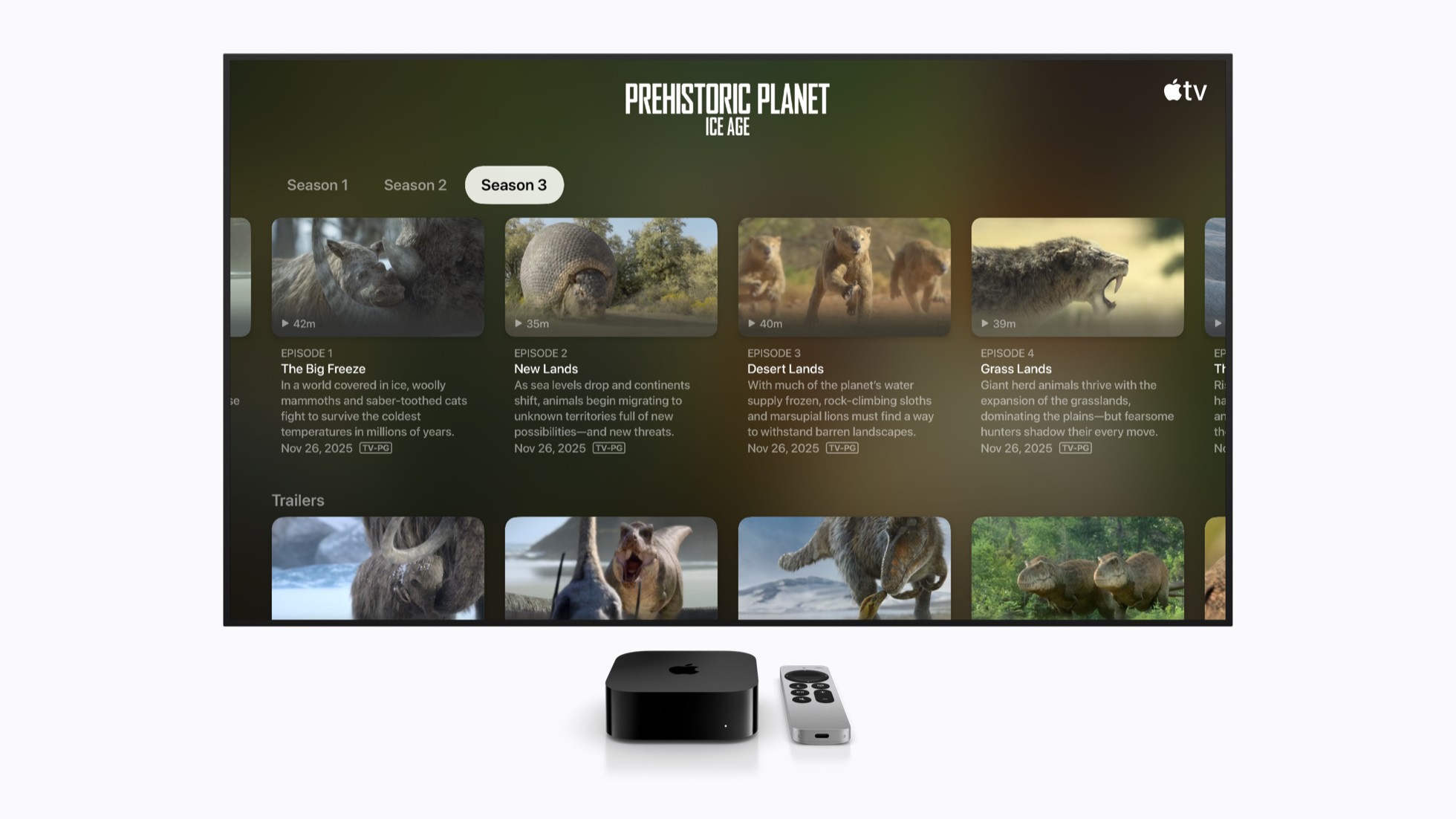
Apple is preparing automatically generated subtitles for video that does not already include captions. The company says the feature will cover clips recorded on iPhone, videos received from friends and family, and streamed content. It is planned for iPhone, iPad, Mac, Apple TV and Apple Vision Pro.
Apple says the speech recognition happens on device and that users can customise the appearance of subtitles from playback controls or Settings. The company’s current note specifies English availability in the United States and Canada. That limitation is important for anyone considering the feature for multilingual or international use.
Accessibility reaches beyond the phone
Apple Vision Pro is also set to gain a feature for controlling compatible power-wheelchair drive systems with eye tracking. Apple says the capability will launch with Tolt and LUCI alternative drive systems in the United States, supporting Bluetooth and wired connections. A wired setup requires Apple’s Vision Pro Developer Strap, according to the company’s footnotes.
Other updates include Name Recognition, which Apple says works across more than 50 languages, an API for sign-language interpretation apps to add a human interpreter to an ongoing FaceTime call, and support for Sony’s Access controller on iPhone, iPad and Mac. Users can configure the controller’s buttons, thumbstick and compatible external switches to create a more personalised layout.
What to watch before rollout
Apple is presenting these features as privacy-conscious, but the announcement does not provide independent testing of accuracy or real-world performance. The on-device processing statement specifically applies to the new generated-subtitles feature; it should not be read as proof that every Apple Intelligence accessibility function operates entirely offline.
Users should therefore check Apple’s final compatibility notes before depending on any feature. The company’s own announcement lists language and regional restrictions, says some features are coming later in 2026, and cautions against using visual assistance for safety-critical decisions. For now, the significance is clear: Apple is extending accessibility from fixed interface settings toward context-aware descriptions, voice navigation and cross-device assistance, while the practical value will depend on how the promised features perform after release.
Amelia SantosEditorial lead
Source: Apple Newsroom.