
News
Deutsche Telekom raises 2026 cash-flow guidance as mobile contract growth continues
The German telecom group reported second-quarter growth, 218,000 new contract customers in Germany and a higher full-year free-cash-flow outlook.
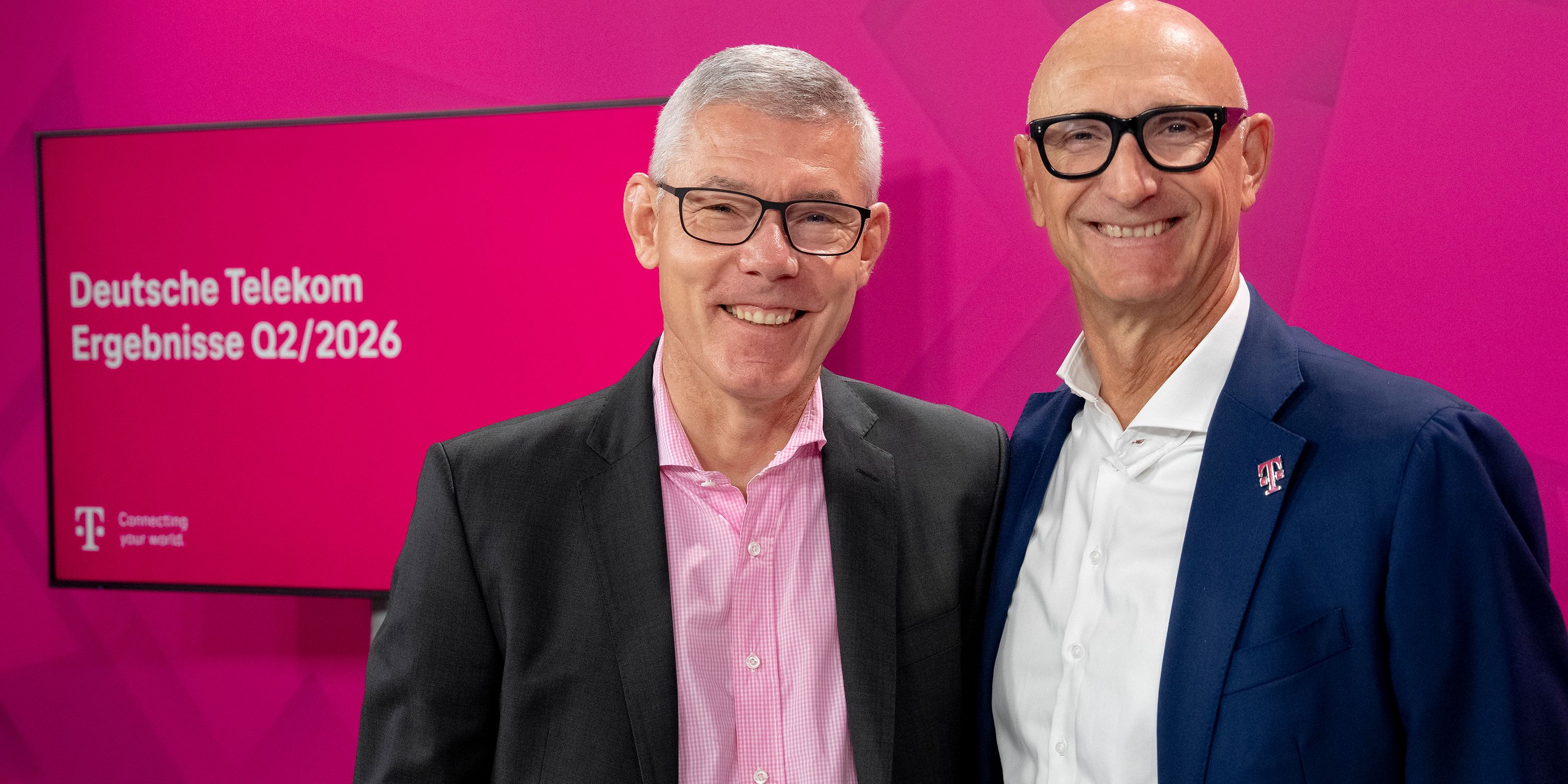
Deutsche Telekom has raised its 2026 free-cash-flow outlook after reporting another quarter of growth across its telecommunications businesses. In its official second-quarter 2026 report, published on August 6, the group said it added mobile contract customers in Germany and across its European operations while maintaining strong momentum at T-Mobile US.
The announcement is a financial update rather than a phone launch or a new consumer-service announcement, but it offers a useful snapshot of the scale and direction of one of Europe’s largest telecom groups. Its figures cover mobile subscriptions, broadband, television, network investment and the wider T-Mobile business in the United States.
Free cash flow guidance moves higher
Deutsche Telekom reported second-quarter net revenue of €29.9 billion, up 3.3% in organic terms. Organic service revenue also grew by 3.3%, while adjusted EBITDA after leases rose 7.3% to €11.8 billion. Adjusted net profit increased 11.1% to €2.8 billion.
Free cash flow after leases reached €5.0 billion for the quarter, an increase of 3.1% year on year. On the back of the result, the group raised its full-year 2026 guidance for free cash flow after leases from more than €19.8 billion to around €20.0 billion. Deutsche Telekom left its guidance for adjusted EBITDA after leases at around €47.5 billion and its adjusted earnings-per-share target at around €2.20.
The company distinguishes these adjusted figures from its reported results. Reported net profit fell 6.3% to €2.5 billion, which Deutsche Telekom attributed mainly to integration costs at T-Mobile US connected with UScellular, as well as the absence of positive investment write-ups recorded in the previous year.
Germany adds 218,000 contract customers
Mobile growth was particularly visible in Germany, Deutsche Telekom’s home market. The company recorded 218,000 new mobile contract customers during the second quarter, describing the increase as higher than in the same period a year earlier. At the end of June, the German operating segment reported 76.733 million mobile customers, including 28.148 million contract customers.
The German business also added 161,000 pure fibre-optic users during the quarter. Fibre penetration reached 17.5% of the 13.6 million homes passed, according to the company. These figures place mobile and fixed connectivity in the same broader investment picture: Deutsche Telekom is growing its customer base while continuing to expand higher-capacity network access.
For smartphone users, the mobile customer figure is more relevant than the group’s headline revenue. It indicates that the operator is still attracting contract customers in Germany, but it does not by itself measure network speed, coverage quality or the performance of any particular handset. Those factors depend on location, spectrum, congestion, device compatibility and the specific service plan.
European mobile operations keep adding subscribers
Across Deutsche Telekom’s European national companies, revenue reached €3.2 billion in the second quarter, up 1.0% year on year in organic terms. Service revenue grew by 4.1%, and adjusted EBITDA after leases increased by 4.1% to €1.3 billion.
The European operations recorded 189,000 mobile contract net adds during the quarter. The group reported 47.007 million mobile customers in Europe, of whom 25.660 million were contract customers. Deutsche Telekom notes that customer comparisons need context: customers in Poland and Greece were reclassified from mobile communications to fixed network from January 1, 2026, and prior-year comparatives were not adjusted for that change.
This accounting detail matters because headline customer totals can move when a company changes how it classifies services. It does not represent a sudden loss of smartphone users, but it does mean that year-on-year comparisons should be read alongside the group’s definitions.
T-Mobile US remains the largest growth engine
Deutsche Telekom’s United States business also continued to expand. T-Mobile US generated US$19.0 billion in service revenue between April and June, up 8.9% from the prior-year quarter. Adjusted EBITDA after leases rose 12.1% to US$9.3 billion, while postpaid accounts increased by 277,000 to 34.7 million at the end of June.
The US figures help explain why the group can raise its cash-flow outlook even while its European operations grow at a more measured pace. They also show that Deutsche Telekom’s mobile business is not limited to its German network: the group’s performance is increasingly shaped by a combination of European connectivity and T-Mobile US scale.
What the results mean for mobile users
The release should be read as an indicator of operator health and investment capacity, not as an independent network test. Deutsche Telekom’s Q2 table lists €4.43 billion in cash capital expenditure for the quarter and €8.36 billion for the first half of 2026. The company says this spending mainly relates to building and operating networks, but the announcement does not promise a specific upgrade for a particular city, handset or tariff.
In practical terms, the most immediate news is that Deutsche Telekom continues to add contract customers in Germany and Europe while raising its full-year cash-flow target. That combination can support future network investment, but it does not automatically change the experience of every customer today. Coverage maps, local capacity, compatible devices and plan conditions will remain the details that determine what an individual smartphone user actually receives.
For now, Deutsche Telekom’s second-quarter results show a carrier growing across mobile, fibre and international operations, with Germany’s contract-customer gains and the group’s higher cash-flow guidance providing the clearest signals for the rest of 2026.