
News
Gemini expands its bridge to everyday apps and services
Google is expanding Gemini’s connected-app ecosystem with tools for productivity, travel, entertainment, music, home services and healthcare, although availability will vary by location, language, device and app.
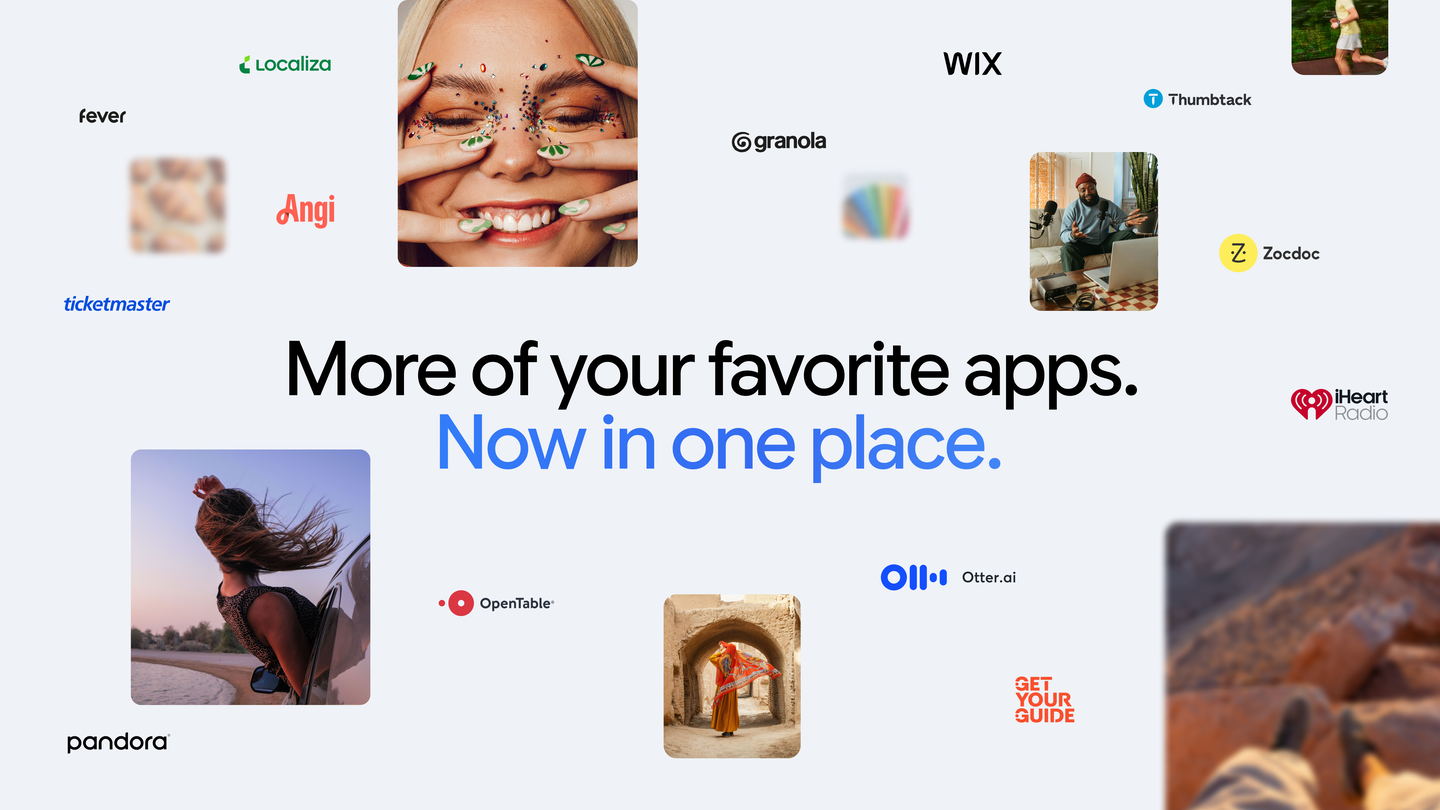
Google is widening the role of Gemini beyond a standalone chatbot. The company has announced a new group of connected apps and services that will let users plan, create and manage everyday tasks from within Gemini, with the first integrations rolling out over the next few weeks.
The announcement, made at Made by Google, is significant because it targets one of the most persistent frustrations in mobile software: the need to jump between separate apps to complete a single task. Gemini’s connected-app model is designed to keep more of that work in one conversation while still handing specialist actions to the services that already perform them.
A broader set of mobile use cases
Google’s initial list covers several parts of daily digital life. In productivity and creativity, Granola and Otter.ai can help summarize meetings, while Wix can be used to edit a website. These integrations point Gemini toward tasks that involve both understanding information and turning it into an action.
The local and entertainment category is more transactional. Google says users will be able to book local experiences with Fever and GetYourGuide, rent a car through Localiza, reserve a table with OpenTable in the United Kingdom and search for event tickets with Ticketmaster. Instead of treating each service as an isolated destination, Gemini is being positioned as a conversational starting point for several types of planning.
Music is another early focus. iHeartRadio and Pandora are being added for discovering stations and streaming playlists. That matters on smartphones, where music searches often begin with a natural-language request rather than a precise artist, album or playlist title. Gemini can interpret the request first, then pass the relevant task to the connected service.
The final group announced by Google covers home, health and lifestyle. Angi and Thumbtack will help users find home-service professionals, while Zocdoc will support doctor’s-appointment booking. These are practical examples of the difference between answering a question and helping someone move from an answer to a real-world next step.
Availability remains part of the story
The rollout is not being presented as a universal switch that makes every integration available to every Gemini user at once. Google’s support documentation says that Connected Apps can vary by location, language, device and Gemini app. An integration may be available in the Gemini mobile app but not on the web, or on the web but not on mobile.
That qualification is important for anyone trying the feature. The list of announced partners describes the direction of the platform, not a guarantee that every service is already active in every market. Support for a particular app can also depend on whether the service itself operates in the user’s region and on which Gemini experience is being used.
Google’s approach also leaves room for different kinds of integration. Some services are suited to a simple search or recommendation, such as finding music or local events. Others involve more consequential actions, including making reservations, arranging services or starting a healthcare appointment. The more useful Gemini becomes as a front end for these tasks, the more important it is for users to understand which service is handling the final action.
What changes for smartphone users
For mobile users, the immediate benefit is less context switching. A request such as planning an evening out can combine discovery, transport or car rental, dinner and tickets without requiring a separate search in every app. A meeting-related request could begin with a transcript summary and continue into a website edit or an action list.
That convenience will depend on how consistently Gemini understands context and how clearly it communicates the handoff to each partner. The announcement does not claim that Gemini replaces the connected apps. Instead, it gives the assistant a broader set of services to call when a request goes beyond text generation or general information.
There is also a strategic shift for the Android and mobile-app ecosystem. Connected services become more discoverable through conversation, while their value depends less on a user remembering the exact app name or navigation path. For developers and service providers, that could create another route to reach customers, but it also means that accurate descriptions, clear permissions and reliable completion flows will matter more than ever.
A useful expansion, with limits to watch
Gemini’s new integrations are most compelling when a task naturally crosses several categories. Planning a trip, organizing an event, finding a professional or turning meeting notes into follow-up work are all activities that already span multiple apps. A conversational layer can make those workflows easier to start and easier to keep together.
The rollout should nevertheless be judged by practical details rather than the size of the partner list. Users will want to know where each integration works, what Gemini can actually do inside the service and when a task is handed off for confirmation. Google’s availability documentation provides the necessary starting point, while the coming weeks of deployment will show whether the experience feels like a coherent mobile workflow or simply another collection of links behind a chat interface.
For now, the announcement is a clear expansion of Gemini’s ambitions. Google is moving the assistant closer to the apps people already use for work, entertainment, travel, music, home services and healthcare. If the integrations remain transparent and dependable, Gemini could become a more useful command layer for everyday smartphone tasks without requiring users to abandon the specialized apps that complete them.