
News
Google makes Android CLI 1.0 stable and expands AI tools for app developers
Google has made Android CLI 1.0 stable, adding agent integrations, Android skills and new AI benchmarks for mobile app development.
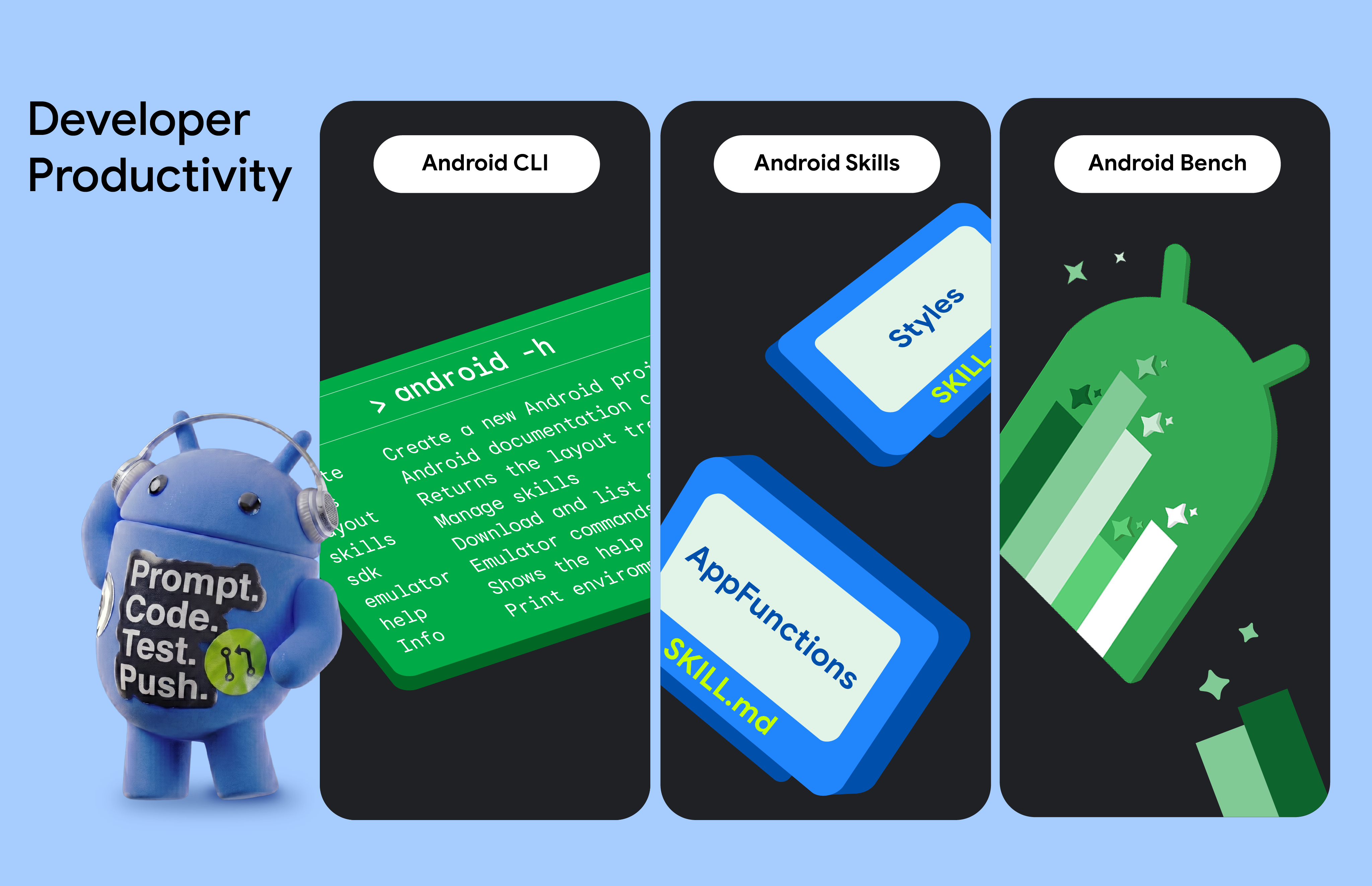
Google is making Android development more accessible to command-line tools and AI agents. In an official Android Developers update, the company announced that Android CLI is now stable at version 1.0, alongside a larger library of Android skills and new models added to Android Bench.
The change is aimed at developers, but it matters to smartphone users because the tools used to build, test and maintain mobile apps increasingly determine how quickly those apps can support new Android features, form factors and security requirements.
Android CLI reaches version 1.0
Android CLI is a command-line interface designed to provide a common entry point for Android development tools, documentation and agent-assisted workflows. Google says version 1.0 adds programmatic version lookup, support for Journeys and a bridge to Android Studio through the studio command.
That bridge is the most significant part of the announcement. Instead of treating the terminal, an AI agent and the Android IDE as separate environments, developers can connect them. Google says the integration can expose Android Studio capabilities including performance profilers, Compose Previews and Android Device Streaming.
The official Android CLI documentation describes the tool as a way to automate environment setup, create projects from templates, manage virtual devices and test apps with Journeys. It can also inspect project structure, install SDK packages, deploy APKs and capture device screenshots.
Google has also expanded distribution. Android CLI is available through additional package managers, including npm and Homebrew. For teams that already rely on scripted build or testing workflows, that makes the tool easier to add without replacing their existing development environment.
Android skills give agents more specialised knowledge
Google is pairing the command-line interface with a growing collection of Android skills. These are specialised instructions intended to help AI models follow Android development patterns and recommended practices instead of relying only on general programming knowledge.
The company says the collection now includes more than 17 skills. The areas listed include adaptive user interfaces, CameraX migration, Perfetto SQL and trace analysis, Jetpack Compose styles, AppFunctions, Android Credential Manager, Engage SDK integration, testing setup and Wear OS Material 3.
That range shows where Google expects AI-assisted development to expand. The focus is not limited to generating isolated snippets of Kotlin code. It includes adapting interfaces for phones, foldables and larger screens, diagnosing performance data, preparing tests and connecting apps to Android services.
Google also says its Antigravity development environment now officially supports Android through an Android resources bundle containing Android CLI and the skills collection. The bundle is intended to help an agent carry out tasks such as creating a project and deploying an app to a virtual device.
Android Bench adds more models
The third part of the announcement concerns evaluation. Google launched Android Bench as a leaderboard for testing language models on real-world Android development tasks. The goal is to compare how well different models handle practical work rather than relying only on general coding benchmarks.
At Google I/O, Google added more widely used models to the leaderboard, including its Gemma 4 model and Gemini 3.5 Flash. The company also says it is working on harder tasks, including longer-running challenges, although those evaluations are still to come.
This distinction is important. A model that can produce a plausible function is not necessarily able to understand an Android project, navigate its build system, test an interface, inspect a trace or preserve behaviour across different screen sizes. Android Bench is intended to make those differences more visible.
What the announcement means for Android apps
Google’s update points toward a development workflow in which agents can move between planning, code changes, testing and deployment with access to more of the official Android toolchain. The company is not announcing a replacement for Android Studio or claiming that agents can independently deliver production-ready apps without supervision. Instead, it is connecting existing tools and adding structured guidance around them.
For app teams, the immediate opportunity is practical: automate repetitive setup, use a virtual device consistently, inspect project and performance information from scripts, and give an AI assistant access to Android-specific workflows. That could reduce friction during routine maintenance and make it easier to prepare apps for new devices and Android releases.
The risks remain familiar. Developers still need to review generated changes, protect signing keys and credentials, check permissions, run tests on representative devices and verify that performance claims match real measurements. The official documentation also notes platform limitations, including currently disabled Windows emulator commands and unsupported PowerShell downloads.
Android CLI 1.0 is therefore less a consumer-facing feature than an infrastructure announcement. Its importance lies in making Android’s development tools more interoperable and more usable by both people and software agents. If Google’s benchmarks and skills continue to mature, the result could be faster iteration on the mobile apps users depend on every day.