
News
Google opens 2026 South Africa accelerator for 15 AI startups
Google has opened applications for a new South African accelerator supporting 15 growth-stage AI startups with funding, mentorship and access to Google’s technical ecosystem.
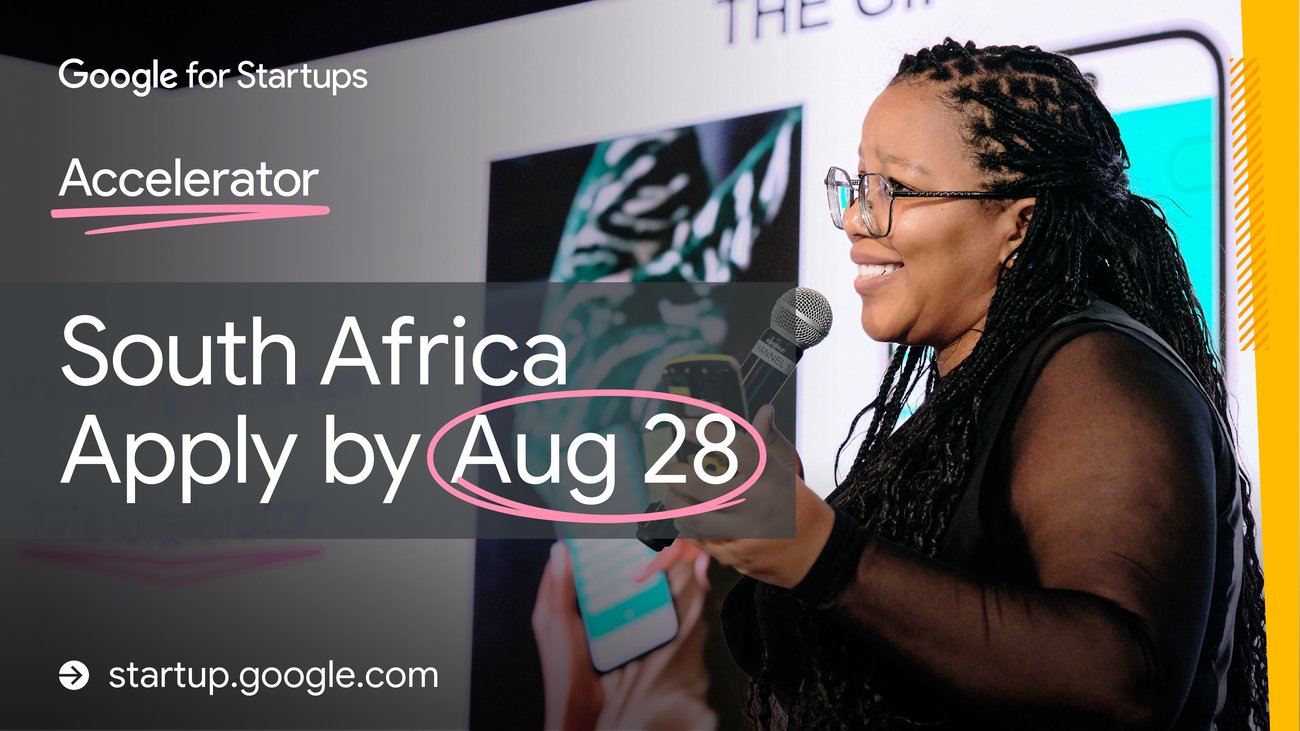
Google has opened applications for the 2026 Google for Startups Accelerator South Africa, a programme aimed at 15 growth-stage companies building artificial intelligence products on the continent. Applications close on 28 August 2026, giving eligible founders a limited window to apply through the official Google for Startups programme page.
The announcement matters to the mobile sector because many African technology companies are building services for smartphones first. AI-powered consumer apps, financial tools, education platforms and business services all depend on mobile access, reliable cloud infrastructure and products that can work in local markets. Google’s latest accelerator is designed to help companies move from promising prototypes to more durable products, while giving the company a closer view of the region’s emerging AI ecosystem.
What Google is offering
According to Google’s announcement, the programme will support 15 South African growth-stage startups with R1 million in non-dilutive funding, Google AI tools, cloud infrastructure, technical resources and mentorship. The funding is described as non-dilutive, meaning participating founders do not give up equity in exchange for that support.
The three-month hybrid programme is scheduled to run from 28 September to 4 December 2026. Founders will be paired with mentors and AI specialists to work through practical product and operational challenges. Google says the curriculum will cover product roadmapping, growth strategy and goal-setting, rather than focusing only on model development.
That broader approach is significant for mobile applications. A working AI model is only one part of an app business. Startups also need to manage onboarding, authentication, data protection, reliability, cloud costs and user experience on devices that may have limited storage, battery life or network bandwidth. Product decisions made at this stage can determine whether an application remains useful outside well-connected urban environments.
Why the regional focus matters
South Africa has one of the continent’s most developed technology and venture ecosystems, but local founders still face the challenge of building products that can scale across different languages, payment systems, connectivity conditions and regulatory environments. The programme’s local focus allows Google to work with companies that understand those constraints firsthand.
Google says the accelerator will connect participants with more than 25 local alumni as well as the wider global Google for Startups community. That network can provide practical knowledge about hiring, distribution, partnerships and technical operations. It may also help founders avoid a common problem in the app economy: developing a product that works in a demonstration but is difficult to support once thousands of users depend on it.
The company’s announcement points to previous programme results as context. Since the African accelerator launched in 2018, Google says it has supported more than 190 startups across 17 African countries. Those companies have collectively raised more than $400 million and created over 3,500 jobs, according to figures published by Google. These are programme-reported figures, not an independent assessment of the accelerator’s impact.
What applicants should know
The published call is aimed at growth-stage, AI-driven startups based in South Africa. Google has not presented the programme as a general introduction to artificial intelligence or a consumer app promotion. The focus is on companies that already have a product or business direction and need help strengthening their technology, operations and route to growth.
For founders working on smartphone applications, a strong application should therefore explain more than the novelty of its AI feature. It should make clear who uses the product, what problem it solves, how the service performs in real-world conditions and what technical barrier currently limits its growth. Details about data handling, model reliability, pricing assumptions and the cost of serving users could be just as important as the underlying model.
The deadline is 28 August 2026. The programme’s planned dates mean that successful applicants would begin the hybrid accelerator at the end of September and continue through early December. Google has not announced a consumer product launch, a guaranteed investment round or any claim that participating startups will be accepted into Google’s commercial product portfolio.
A signal for Africa’s mobile AI market
The announcement reflects a wider shift in African technology development: AI is increasingly being built for specific communities and business environments, rather than treated only as a feature imported from larger markets. For mobile users, that could eventually mean applications that understand local workflows, support regional languages or operate more effectively under uneven connectivity.
There is no product result to review yet, and the accelerator itself will not prove that every participating startup can reach scale. Its immediate importance is more practical. By combining funding, technical support and a regional founder network, Google is attempting to shorten the distance between an AI idea and a service that can survive the demands of everyday mobile use. The next concrete milestone is the 28 August application deadline, followed by the programme’s scheduled start on 28 September.