
News
Google announces Pixel 11 lineup with Tensor G6, HiLight and camera upgrades
Google’s Pixel 11, Pixel 11 Pro and Pixel 11 Pro XL combine a new Tensor G6 chip, upgraded cameras, on-device AI features and seven years of software support.
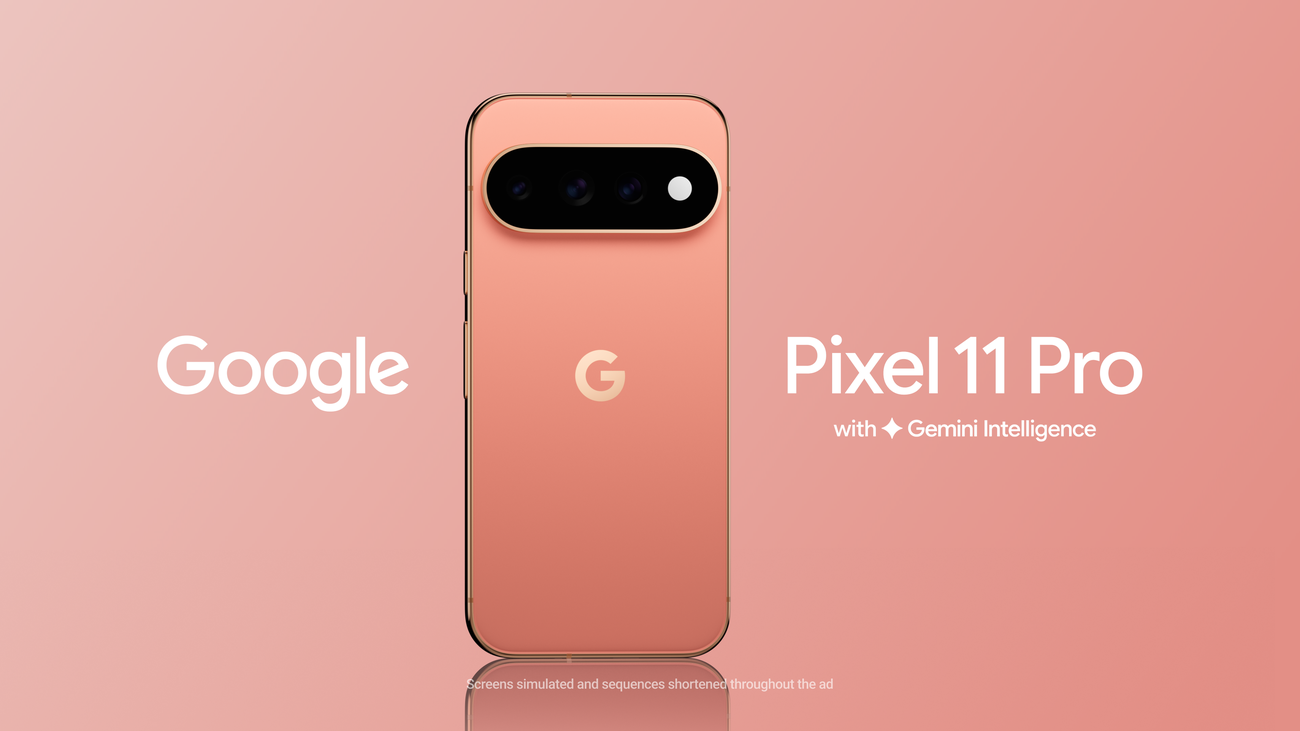
Google has announced the Pixel 11, Pixel 11 Pro and Pixel 11 Pro XL, presenting the new generation as a tighter combination of hardware, camera software and Gemini-powered assistance. The company’s official launch announcement introduces the three phones alongside a new Tensor G6 processor, upgraded imaging hardware and a visual notification feature called HiLight.
The announcement comes from Google’s Australian blog, so availability and pricing details cited here apply to that market unless Google confirms otherwise. The company says pre-orders are open, with the phones due to reach the Google Store and retail partners on August 20.
Three Pixel 11 models, one hardware platform
The standard Pixel 11 is positioned as the entry point to the new range, while the Pixel 11 Pro and Pro XL retain the Pro family’s larger displays and more advanced camera systems. All three use edge-to-edge glass around the Pixel camera bar, and Google says the camera bar on the base model is 40% thinner than on earlier-generation base Pixel phones.
Google says Pixel 11 starts with 256GB of storage and supports its fastest charging yet. Pixel 11 and Pixel 11 Pro add compatibility with Qi2.2 wireless charging at up to 25W. The Pixel 11 Pro XL can reportedly add up to 15 hours of battery life after 15 minutes of wired charging when used with Google’s 45W USB-C charger, which is sold separately.
HiLight puts Gemini activity on the hardware
One of the range’s more distinctive additions is HiLight, a system of coloured LEDs built around the camera flash on the Pro models. According to Google, the lights can signal whether Gemini is listening, processing a request or responding. Users will also be able to assign colours to selected contacts for incoming calls, giving the phone a glanceable alert without requiring the display to be turned on.
Google says additional HiLight functions, including message notifications from favourite contacts, are planned for the future. The approach reflects the company’s broader Gemini Intelligence strategy: use the phone’s hardware to make AI activity visible while reducing the need to constantly check the screen. Google explains the wider software direction in its separate Pixel 11 feature overview.
Camera improvements across the range
Camera performance remains the central hardware story. Google says the standard Pixel 11 includes a larger 48-megapixel main sensor with 56% more light sensitivity than Pixel 10. Its 5x telephoto camera now supports 30x Super Zoom, with Tensor G6 handling the image processing behind the feature.
The Pro models receive a new main sensor and an upgraded 48-megapixel telephoto camera. Google claims the telephoto sensor has 30% more light sensitivity, while Portrait Mode now works at 5x magnification. Pro Zoom can reach up to 120x, although Google notes that results vary and the maximum is not available in every camera, application or mode. The company also says Night Sight can capture images up to four and a half times faster, compared with selected earlier Pixel generations.
These are manufacturer claims rather than independent test results. Google’s footnotes specify that several comparisons are based on internal testing with pre-production devices, so they should be treated as launch specifications and performance targets rather than a substitute for a completed review.
Tensor G6 focuses on local AI and efficiency
Tensor G6 is described as Google’s fastest and most powerful mobile chip so far. The company says its upgraded CPU enables 25% faster web browsing and 15% quicker app launches compared with Tensor G5 at launch. Google also claims 50% more TPU compute, while on-device AI tasks can run up to 3.5 times faster and use up to 3.5 times less energy.
The practical goal is to make Gemini features feel more immediate without sending every request to the cloud. Google says the latest Gemini Nano model runs on Tensor G6 and supports the camera experiences, proactive assistance and other AI functions introduced with the Pixel 11 family. Availability can still vary by country, language, age and subscription requirements.
Security and long-term support
Google is pairing Tensor G6 with a new Titan M3 security chip. The company says the combination brings post-quantum cryptography to secure boot, extending the phone’s protection against both current attacks and future threats involving quantum computers.
All three Pixel 11 models will receive seven years of operating-system, security and Pixel Drop updates from launch. Buyers of the Pro models in eligible markets also receive six months of Google AI Pro, subject to Google’s conditions. In Australia, Google lists starting recommended retail prices of $1,499 for Pixel 11, $1,849 for Pixel 11 Pro and $2,099 for Pixel 11 Pro XL.
The Pixel 11 launch therefore combines a conventional annual camera and processor upgrade with Google’s longer-term attempt to make AI assistance part of the phone’s ambient interface. The most notable question for buyers will be how much of that experience remains useful after the launch moment, especially as HiLight, Gemini features and regional availability continue to develop.