
News
Google Pixel Watch 5 Makes On-Wrist Gemini More Proactive
Google’s Pixel Watch 5 adds faster on-device Gemini actions, proactive suggestions and new Health Guardian features, including breathing emergency detection.
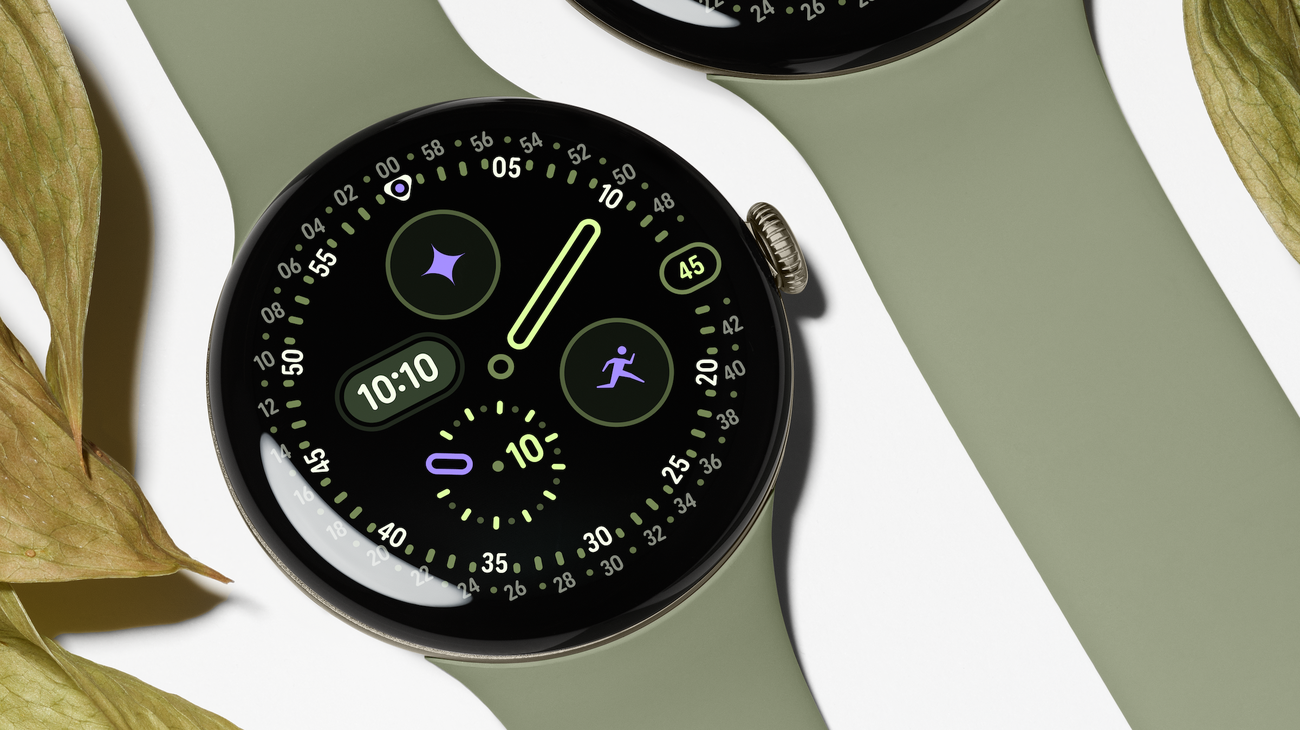
Google has introduced the Pixel Watch 5, positioning its latest smartwatch as a more proactive companion for everyday tasks, exercise and personal wellness. The announcement brings together on-wrist Gemini assistance, new Google Health features and safety tools under the Health Guardian label.
Google says pre-orders begin on August 12, with general availability starting August 20. The company has not presented the watch as a replacement for a smartphone: it is designed to extend key information and actions to the wrist, reducing the need to reach for a phone during workouts, commutes or routine tasks.
Gemini is designed to act before users open an app
The biggest software change is a broader role for Gemini Intelligence. Google’s official Pixel Watch 5 announcement says Raise to Talk has been improved so users can lift their wrist to ask Gemini to launch a workout, set a timer or retrieve dinner reservations from Gmail.
Google says core actions use on-device AI and can respond with low latency, including when the watch is offline. That does not mean every Gemini capability works without connectivity, but it could make common commands feel less dependent on a phone or cloud response.
The watch also introduces Proactive Suggestions. Instead of requiring a user to search through an app, Gemini can surface relevant information from sources such as the calendar. Google gives the example of a family dinner appearing directly on the watch face when someone asks for the scheduled time. Suggestions can then be selected, confirmed and sent with a double-pinch gesture.
This approach moves the watch beyond notifications. The aim is to turn context from phone apps into small, actionable prompts that can be handled at a glance. Google also describes At a Glance as a way to surface items such as boarding passes or remaining stops on a commute without requiring a separate app session.
More power for faster interactions
Under the case, Pixel Watch 5 uses Qualcomm’s Snapdragon W5 Gen 2 Accelerated processor with a dual-chip architecture. Google claims 50% more RAM, a 12% CPU boost and a 20% overall speed increase compared with the previous generation. Those are manufacturer figures rather than independent test results, so they should be read as launch claims until third-party testing is available.
Google also says the watch has its most accurate GPS route tracking yet, with twice the accuracy of previous generations in difficult environments. The company attributes that claim to a combination of three-dimensional building models, satellite-ray analysis, weather reference stations and software optimisation. The announcement does not provide an independent test methodology, so the practical improvement will depend on location, surroundings and the activity being tracked.
Health Guardian adds a serious safety layer
The most consequential feature is breathing emergency detection. According to Google, Pixel Watch 5 combines signals from a photoplethysmography sensor, accelerometer and barometer with on-device AI to detect severe, persistent drops in oxygen saturation. If the watch identifies a breathing emergency and the wearer is unresponsive, it can automatically call emergency services and share the wearer’s location. Google says the feature launches first in Europe.
This is a safety feature, not a medical diagnosis. Google’s own limitations state that breathing emergency detection may miss events, can produce false positives and is not intended to replace prescribed or over-the-counter monitoring equipment. Emergency calling also depends on factors such as battery level, cellular connectivity and local emergency-service availability.
Pixel Watch 5 also expands the wellness information available through the Google Health platform. Google describes monthly summaries for blood-pressure trends, sleep-breathing quality and insulin-resistance trends, built from sensor data and health models. The company says the first detailed summary arrives after one month of wear.
These summaries are intended to help users notice longer-term changes, not to provide real-time clinical readings or determine treatment. Google says they are for general wellness and informational purposes, and users should consult a healthcare professional about symptoms, diagnoses or medication decisions.
Sleep and training become more integrated
For fitness, Google Health Coach will create customised strength workouts and allow users to build routines in the Google Health app. A new on-wrist strength-training experience is planned with step-by-step guidance, rest periods and weight-and-repetition logging.
Google also claims 15% more accurate sleep-stage detection. The update adds bedtime automations that can pause audiobooks when the wearer falls asleep, a dedicated bedtime watch face and Smart Wake, which uses heart rate and movement during the 30 minutes before an alarm to identify a lighter-sleep moment for waking.
Pixel Watch 5 therefore represents a shift in emphasis for Google’s wearable strategy. The watch is not just a smaller screen for phone notifications: it is becoming a context engine for Gemini, a fitness coach and a wellness dashboard. The useful question for buyers will be how consistently these tools work across countries, languages, phones and subscription tiers. Google confirms that feature availability varies by region and that some Google Health features require the Google Health app or a premium membership.
For now, the Pixel Watch 5 is best understood as an announced platform for more proactive assistance and safety monitoring. Its strongest promises, especially around health detection and GPS accuracy, still require careful real-world validation before they can be treated as proven performance.