
News
Nokia joins Finland’s nationwide counter-drone connectivity initiative
Nokia Defense is joining a Finnish-Nordic consortium to develop secure connectivity, sensing and real-time data exchange for the Finnish Border Guard’s nationwide counter-drone capability.
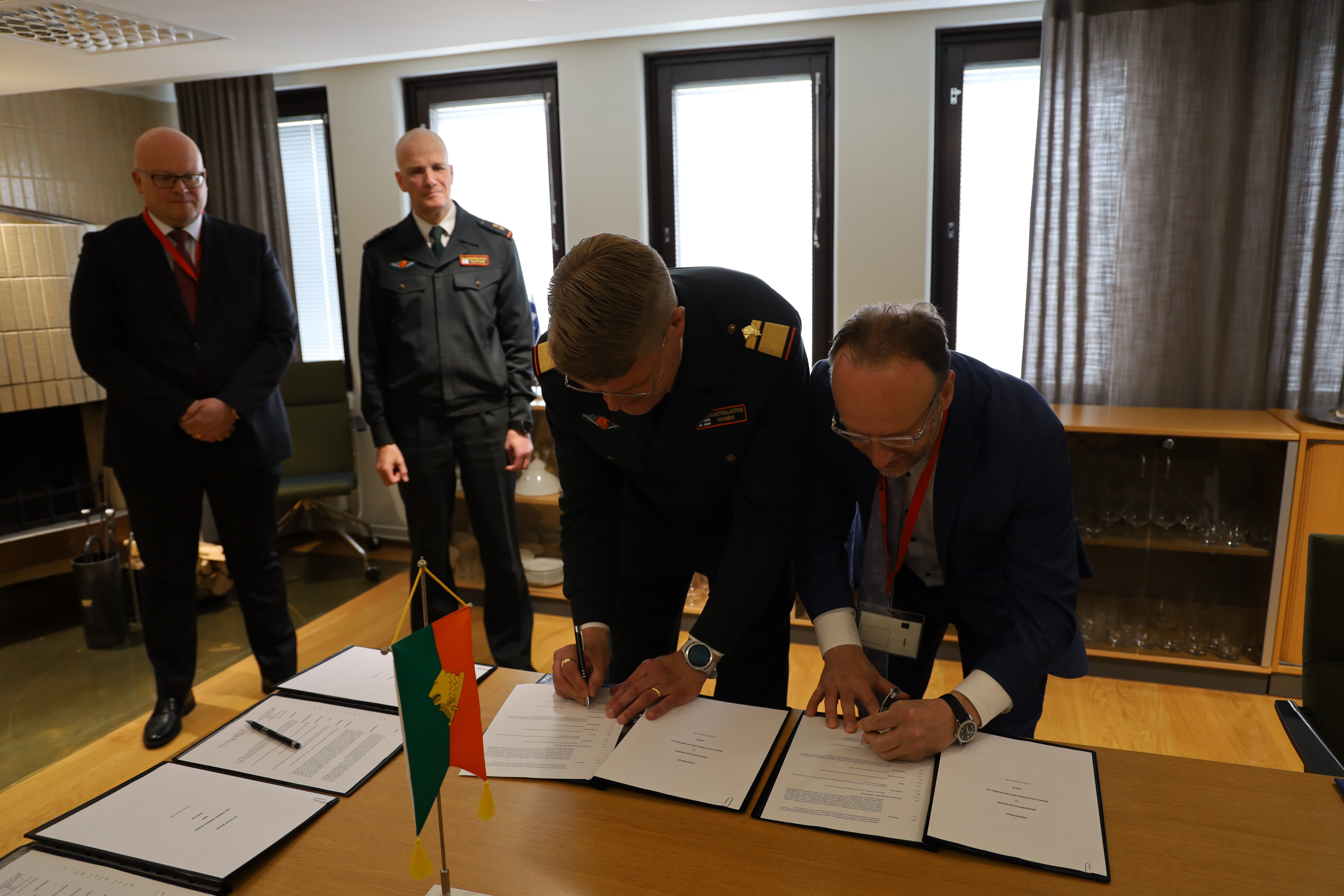
Nokia Defense is joining a Finnish-Nordic consortium led by the Finnish Border Guard to develop next-generation counter-drone capabilities for patrol vehicles and boats. The company announced the partnership on June 25, 2026, describing the project as a nationwide effort focused on secure connectivity, real-time data exchange and interoperability across mission-critical systems. Nokia’s official announcement presents the network layer as a central part of the wider security system, rather than as a standalone drone-detection product.
A connectivity problem as much as a detection problem
Counter-drone operations depend on more than identifying an aircraft in the sky. Patrol vehicles, boats, sensors and command-and-control systems need to exchange information quickly and reliably, sometimes across different operating environments. Nokia says its Defense unit will contribute an intelligent network solution designed to provide secure, high-performance connectivity and interoperability between those systems.
That emphasis matters because a detection result is only useful when it reaches the right operator or platform in time. The Finnish Border Guard wants to connect surveillance and threat-detection capabilities with operational systems so that personnel can build a more complete picture of what is happening across land and maritime areas. Nokia describes the intended outcome as stronger real-time situational awareness and faster, more coordinated responses to changing, multi-domain threats.
What the consortium is developing
The initiative is intended to create a sovereign, integrated counter-unmanned aerial systems capability that can eventually be deployed nationwide. In this context, sovereign means that the solution is being developed around Finnish and allied requirements, with control of the operational capability remaining aligned with national security needs. Nokia’s release does not announce a consumer mobile service or a new smartphone feature. It describes infrastructure for public-sector and defense operations where resilience, security and system compatibility take priority.
The project also reflects how mobile-network technology is moving into specialized environments. A deployable or highly adaptable network can provide a common communications foundation for vehicles, boats, sensors and command systems without requiring every component to operate as an isolated platform. For border authorities, the value is not simply higher bandwidth. It is the ability to share trusted information between systems while maintaining a coherent operational view.
Evaluation comes before nationwide deployment
Nokia’s announcement is careful about the project’s stage. The Finnish Border Guard initiative includes the procurement and deployment of evaluation platforms, connectivity and sensing capabilities, together with system integration. The solutions are scheduled to be evaluated during 2027 and early 2028. That means the announcement marks the beginning of a development and assessment process, not the confirmation that a completed nationwide counter-drone network is already active.
The distinction is important for anyone following the announcement. Nokia has not disclosed a final price, a completed rollout map or a public launch date for the operational system. The company has also not presented a consumer-facing application that ordinary smartphone users can download. The confirmed information is narrower: Nokia is participating in a consortium intended to build and assess an integrated capability for the Finnish Border Guard.
Why secure connectivity is becoming strategic
Drones are increasingly accessible, while the environments in which authorities must detect and respond to them can be complex. A border-security operation may involve remote terrain, coastal areas, moving patrols and multiple types of sensors. In such conditions, communication links are part of the system’s effectiveness. If information cannot move securely between sensing equipment and decision-makers, detection alone may not produce a useful response.
Nokia’s role places connectivity and sensing alongside the more visible elements of counter-drone technology. The company says the consortium will support border-security duties, surveillance, protection of territorial integrity and the safeguarding of critical infrastructure. Those goals suggest that the project is being designed as a reusable operational foundation rather than a narrow response to one type of drone or one location.
For the wider telecom industry, the announcement is another example of networks being treated as mission infrastructure. The same broad principles that matter in commercial mobile services—coverage, reliability, secure data transport and interoperability—become more demanding when the network supports public safety or national-security operations. The Finnish project will show how well those principles translate into a system that must work across land and sea and remain adaptable as threats evolve.
The next meaningful milestone will be the evaluation period planned for 2027 and early 2028. Until those assessments are completed, Nokia’s announcement should be read as a confirmed consortium and development commitment, not as evidence of operational performance. What is clear today is that Finland is pursuing an integrated counter-drone capability in which secure mobile connectivity is treated as a core requirement.