
News
OPPO and MediaTek showcase on-device AI at MWC 2026
OPPO and MediaTek presented smartphone AI that can work without a network connection, alongside a planned Quick Share bridge between Android and Apple devices.
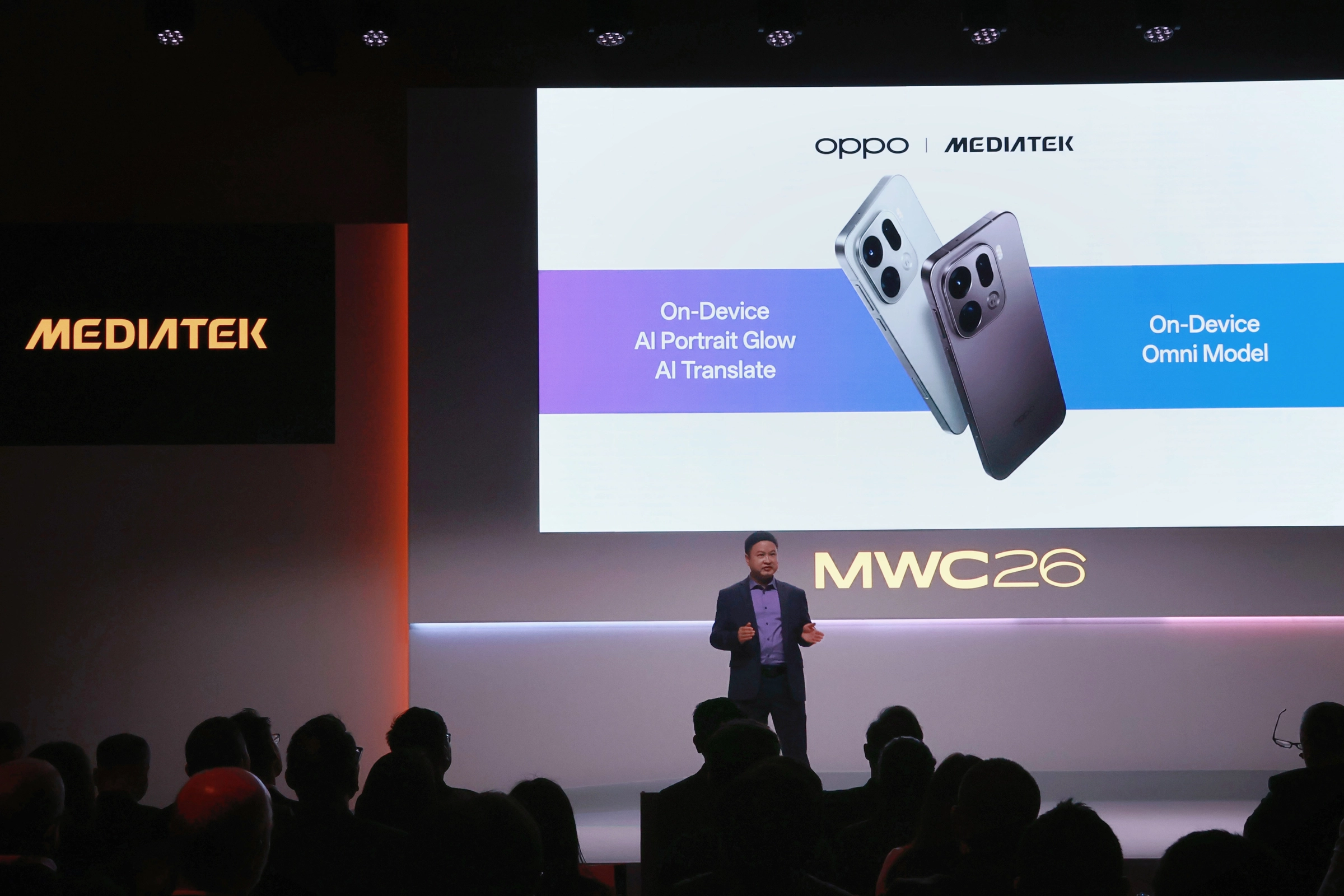
OPPO and MediaTek used Mobile World Congress 2026 to show how more smartphone intelligence could move directly onto the handset. Their March 4 presentation in Barcelona focused on on-device translation, image processing and multimodal interaction, while also highlighting a planned cross-platform sharing feature for OPPO phones.
The companies presented the work at MediaTek’s “AI for Life” keynote as part of a broader collaboration around smartphones powered by on-device computing. The approach matters because many AI features still depend on remote servers. Running selected workloads locally can reduce reliance on a network, improve responsiveness in weak-signal conditions and give manufacturers more control over how personal information is handled.
Translation designed to keep working offline
One of the clearest demonstrations was OPPO’s on-device AI Translate. According to OPPO, the feature runs directly on the phone and supports multilingual translation without requiring a constant connection to the cloud. The company says it achieved an average 15% improvement in accuracy compared with conventional approaches, although the announcement does not provide a complete testing protocol or independent verification for that figure.
That limitation is important. The claim describes OPPO’s own comparison, not a hands-on test conducted by an outside laboratory. It nevertheless points to a practical use case for local AI: translation can remain available when a traveller is underground, in a rural area or temporarily outside reliable coverage. OPPO also says the system maintains stable output in weak-signal conditions, which is more useful to everyday users than a feature that works only with a strong data connection.
Photography processing moves closer to the camera
OPPO and MediaTek also showed AI Portrait Glow, an image-processing tool designed to improve portraits captured in dim or backlit scenes. The system analyses the lighting in a photograph and reconstructs the scene illumination directly on the device. OPPO says the result is intended to improve portrait rendering while maintaining a natural appearance, without relying on a network connection.
This is a familiar direction for smartphone photography: the camera captures the raw information, while software decides how faces, highlights and shadows should be rendered. The difference here is where the computation takes place. Local processing can make the editing workflow more immediate and avoid uploading every image for analysis. It does not mean that every AI operation on an OPPO phone is necessarily offline, but these demonstrations show how selected tasks can be handled locally.
Omni is a preview, not a finished product
The most ambitious announcement was Omni, described by OPPO and MediaTek as an on-device full-modal AI model. The technology preview accepts voice, video and text inputs, then uses them for live scene understanding and interactive questions directly on a smartphone.
That combination could make mobile assistants more useful in situations where typing is inconvenient. A phone might interpret what its camera sees, respond to a spoken question and use written context in the same interaction. However, OPPO presented Omni as a technology preview rather than a finished consumer feature. The announcement does not specify a public release date, supported models, languages or final software requirements, so its longer-term impact remains to be demonstrated.
Quick Share targets a fragmented device ecosystem
The presentation also covered connectivity beyond AI. OPPO said its Find X9 Series would bring Android Quick Share through collaboration with MediaTek and Google. The stated goal is to let users transfer files between OPPO smartphones and Apple devices running iOS, iPadOS or macOS without installing a third-party application.
OPPO said the feature was expected to begin rolling out through a software update starting in March. That wording describes the plan announced at MWC; it is not confirmation that every eligible phone or market has received the feature. Availability can depend on the device, software version and region, so users should check OPPO’s own release information before assuming that cross-platform sharing is active on a particular handset.
If delivered as described, the change would address one of the most persistent frustrations in mobile technology: moving photos and documents between ecosystems that do not always share the same transfer tools. The value would come less from a new protocol than from reducing the number of steps required to send a file to a friend, colleague or nearby computer.
What the announcement means for smartphone users
OPPO and MediaTek’s MWC showcase is best understood as a roadmap for the next phase of mobile software rather than a single product launch. Translation and portrait processing illustrate features that can already benefit from local computation. Omni points toward more capable multimodal assistants, but remains a preview. Quick Share addresses a separate problem by making device-to-device transfers less dependent on platform boundaries.
The announcement also shows why smartphone AI is increasingly tied to chip design. A mobile processor must handle demanding models while limiting heat, battery drain and latency. MediaTek supplies the Dimensity 9500 platform used in the demonstrations, while OPPO develops the software experiences and device integration. Whether those ideas become reliable everyday tools will depend on final software updates, supported hardware and performance outside controlled demonstrations.
For now, the confirmed news is that OPPO and MediaTek demonstrated these capabilities at MWC 2026. The practical test for users will come later: how consistently the tools work, how much battery they consume, which languages and devices they support, and whether the promised cross-platform sharing reaches the phones and regions that need it most. Read OPPO’s official announcement.