
News
Orange and CEA Open Lab to Rethink Future Mobile Networks
The five-year AI-Native Communications partnership will study semantic communications designed to make future networks more efficient, sustainable and ready for AI-driven services.
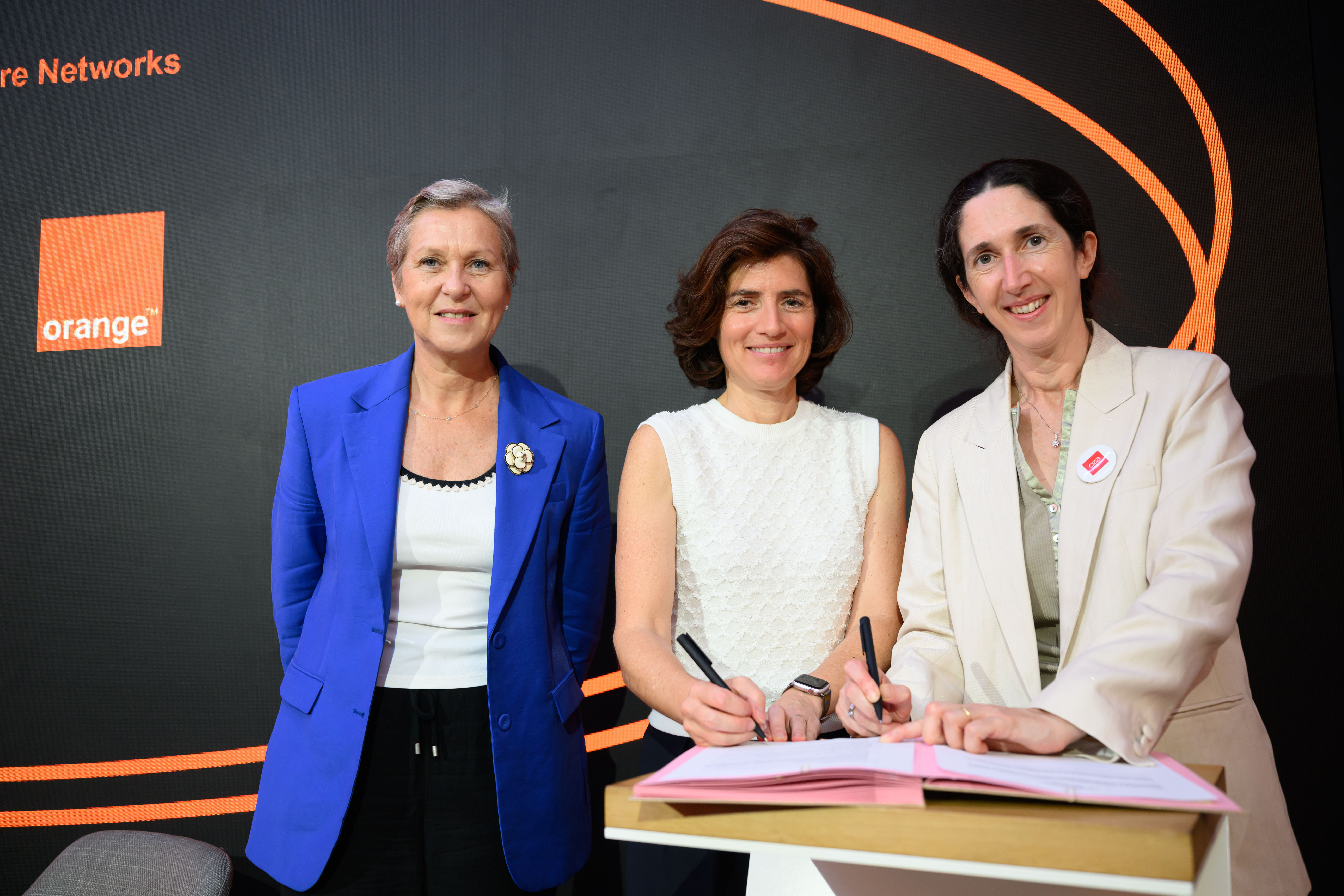
Orange and France’s CEA research organisation have launched a five-year partnership to study a different way of moving information across future communications networks. Announced on 18 June 2026, the AI-Native Communications laboratory will focus on semantic communications, a research direction that prioritises the meaning of data rather than requiring every transmitted bit to be reproduced exactly.
The announcement is significant for mobile technology because networks are carrying more data while also being asked to support artificial intelligence, connected devices and increasingly responsive digital services. Orange and CEA say their joint work could help future networks exchange information more efficiently, while reducing energy use and the amount of infrastructure needed. It is a research programme, however, rather than a consumer feature or a new mobile service that users can activate today.
From identical data to understood meaning
Conventional networks treat a transmission as correct when the data received matches the data sent. A missing or altered part of a message is normally considered an error, even if the receiver could still understand the intended content. Semantic communications take a different approach: a transmission could be considered successful when its meaning is understood, even if the received data is not perfectly identical to the original.
That distinction could matter as mobile networks handle more machine-generated information. Some future applications may not need every individual element of a data stream to arrive unchanged, provided that the receiving system can correctly interpret the message. Orange and CEA describe this as a possible route towards more efficient communications, with fewer bits exchanged and less processing or network capacity required for particular tasks.
The potential benefit is not simply faster downloads. A more selective approach to transmitting information could help networks manage capacity and energy more carefully, especially as artificial intelligence increases the volume and complexity of traffic between devices, edge systems and cloud services. Those benefits remain objectives for research, not measured results from a live public network.
Why AI changes the network equation
Orange’s announcement links semantic communications to the growing role of AI in future networks. The laboratory will examine shared semantic representations between AI models, which could allow systems to exchange useful information without always sending the complete underlying data. The partners also point to communication between AI agents as an area in which this approach could become relevant.
This does not mean that every mobile message, call or file will soon be compressed according to its meaning. Many uses still require accurate and comprehensive transmission. Financial records, software updates, legal documents and other sensitive data cannot simply be reconstructed from an approximate interpretation. The official announcement explicitly recognises that future networks will still need to support use cases where exact data remains essential.
The practical challenge is therefore one of choosing the right method for the right job. Semantic techniques would need to coexist with conventional communications, while meeting the reliability, security and interoperability requirements expected from telecom infrastructure. That balance will be central to any path from research to standardised network technology.
A five-year research programme
The AI-Native Communications laboratory is intended to explore the technology at several levels. Orange and CEA list four priorities:
anticipating how communications networks will evolve;
developing semantic communication technologies and their most promising applications;
designing shared semantic representations for AI models; and
contributing to future standards in the field.
The standards work is important because a communications technique becomes useful at scale only when devices, operators and software systems can interoperate. Orange and CEA say the partnership is part of a broader effort to establish expertise in France and Europe around future intelligent networks. Their work connects with European research initiatives including Future Networks, France 6G, 6G-GOALS, 6G-DISAC, 6GARROW, Hexa-X and SUSTAIN-6G.
For mobile users, the immediate takeaway is limited but clear: there is no announced rollout, compatible smartphone list or launch date for semantic communications. The partnership is laying research and standards foundations that could influence how future networks handle AI-related traffic, but the companies have not presented it as a finished product.
What to watch next
The most useful milestones will be evidence from prototypes, demonstrations and standardisation efforts. Future updates should clarify which network functions can benefit from semantic transmission, how systems verify that meaning has been preserved, and how the approach handles privacy and security. They should also show where conventional transmission remains the safer or more accurate choice.
Orange and CEA’s announcement places semantic communications among the technologies being investigated for more intelligent and sustainable mobile networks. Its value will ultimately depend on whether the concept can move beyond promising research into interoperable systems that operators can deploy without compromising reliability. For now, the laboratory marks the beginning of that work rather than the arrival of a new feature on today’s smartphones.