
News
Qualcomm Puts Wildfire Response AI at the Point of Risk
Qualcomm, SDG&E and UC San Diego are deploying edge AI and private cellular connectivity to analyze wildfire and extreme-weather risks closer to where they emerge.
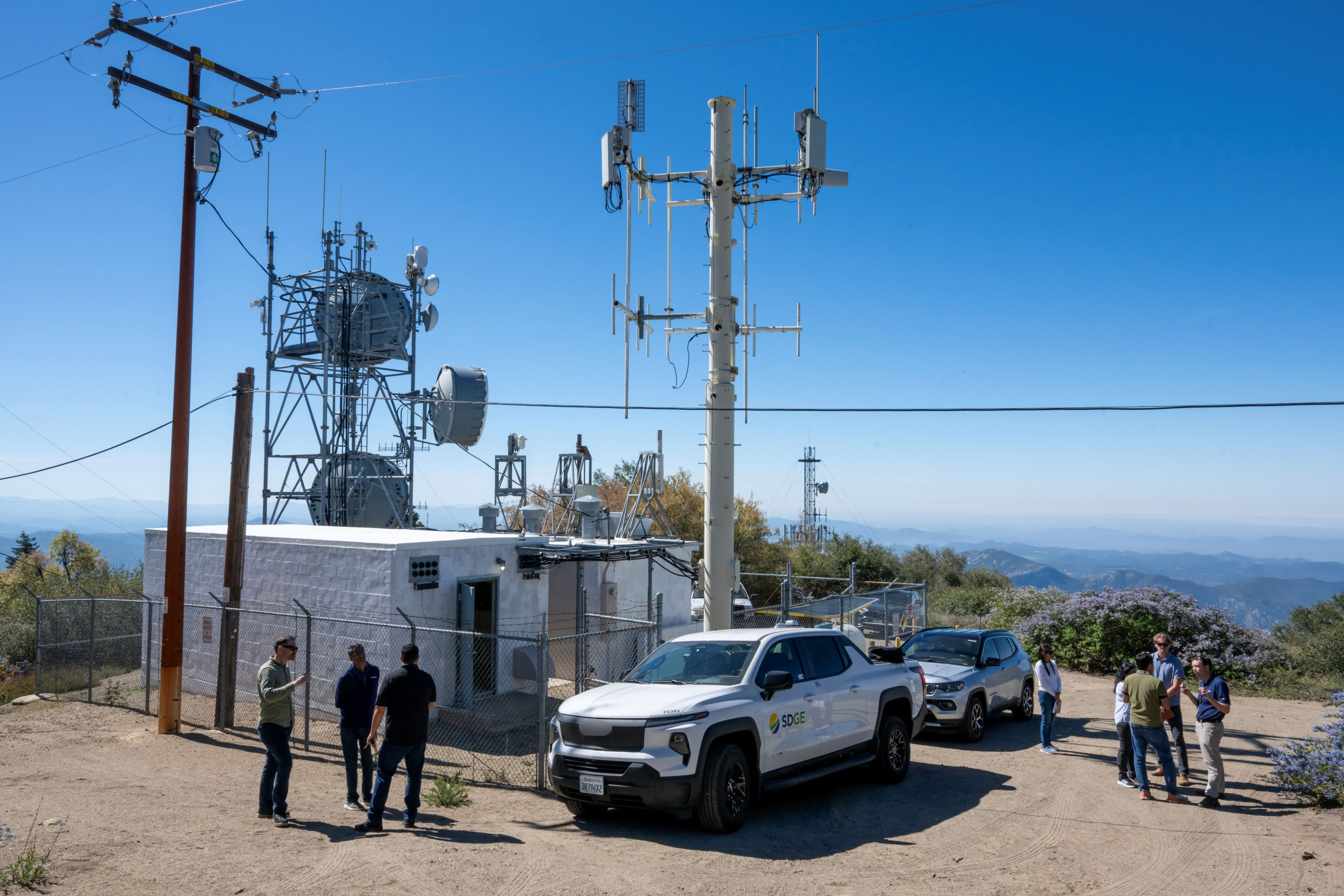
Qualcomm, San Diego Gas & Electric and the University of California San Diego’s Scripps Institution of Oceanography have announced Edge Alert Sentinel, a collaboration designed to bring artificial intelligence closer to the front lines of wildfire and extreme-weather response. The project combines environmental sensors, atmospheric science, edge computing and private cellular connectivity so that critical data can be analyzed near the source instead of being sent first to a distant cloud.
The announcement is significant for mobile technology because the cellular network is part of the operational loop. Qualcomm says monitoring data and predictive alerts from the edge deployment will be transmitted to SDG&E’s control center over its private cellular network. The system is not a consumer smartphone application, but it shows how mobile connectivity is becoming a foundation for real-time industrial and public-safety decisions.
AI processing moves closer to the hazard
Edge Alert Sentinel is being installed at Mount Palomar, a high-elevation site in Southern California that is important for monitoring wildfire and weather conditions. The system is intended to analyze wind, weather and environmental data as conditions change, providing earlier visibility into factors that can influence wildfire behavior and the impact of extreme weather on infrastructure.
According to Qualcomm’s official announcement, the deployment uses a ruggedized edge AI gateway powered by the Qualcomm Dragonwing IQ9 processor. Qualcomm says the processor includes a neural processing unit capable of delivering up to 100 trillion operations per second. That figure describes the processor’s stated AI capability; it is not a field-performance result from the Sentinel deployment.
The gateway will run on-device models using an MLOps platform from Edge Impulse. Those models are intended to help forecast conditions that could affect grid infrastructure in residential areas. Because analysis takes place at the point where the measurements are collected, the system can generate local insights without depending entirely on a remote data center.
Why private cellular connectivity matters
Cloud processing remains useful for storing data, training models and coordinating information across a large region. During an emergency, however, the fastest route from a sensor to an operational decision may be the shorter one. Edge processing can reduce the amount of raw data that must travel, while a private cellular network can provide a controlled communications path between field equipment and the utility’s control center.
That does not mean the system eliminates the need for wider networks or guarantees uninterrupted communications. Qualcomm describes the project as a way to support faster analysis when connectivity is strained, not as a replacement for public mobile networks or emergency communications systems. The practical advantage is that local intelligence can continue to support decision-making even when sending every measurement to a distant cloud would introduce additional delay.
For telecom operators, the project illustrates a broader shift in the role of private cellular networks. They are no longer limited to connecting phones, cameras or industrial devices. With edge computing and machine learning added to the same architecture, a private network can carry sensor data, support local inference and deliver alerts to teams responsible for physical infrastructure.
From environmental monitoring to aerial inspections
The collaboration also extends beyond fixed sensors. Qualcomm and SDG&E are working on applying on-device AI and real-time connectivity to automated inspections of critical utility infrastructure through autonomous aerial operations. The companies describe this as a parallel application of the same edge-intelligence approach, allowing physical assets to be assessed closer to where inspections take place.
That combination could be useful in environments where sending high volumes of imagery or sensor readings to a central system is impractical. An edge device can filter or interpret information locally, while the cellular connection can transmit the most relevant findings. The official announcement does not claim that autonomous aerial inspections are already operating at scale, so the project should be understood as an area the partners are exploring alongside the initial Sentinel deployment.
A pilot with a defined next stage
The partners plan to evaluate the initial Mount Palomar deployment during the upcoming Public Safety Power Shutoff season. Qualcomm says the pilot’s insights will inform possible expansion to additional sites beginning the following year, with a wider rollout targeted for 2027. Those plans make clear that Edge Alert Sentinel remains a deployment and evaluation project rather than a finished commercial service.
No public performance result has been announced for the system’s ability to predict wildfire conditions, reduce response times or prevent outages. The claims currently concern the architecture, the planned deployment and the intended operational benefits. Measuring whether those benefits materialize will depend on the quality of the sensor data, the accuracy of the models, the reliability of the private cellular link and how effectively alerts are incorporated into utility procedures.
The broader lesson is that edge AI is moving from demonstrations toward infrastructure projects where latency and resilience matter. In this case, Qualcomm supplies the processing platform, SDG&E provides the operating environment and data networks, and Scripps contributes atmospheric observations and scientific expertise. If the pilot produces useful results, the model could offer a template for other regions facing wildfires, storms or similarly fast-changing risks. For now, the announcement is best read as a carefully defined field deployment: a test of whether local AI, sensors and private cellular connectivity can help decision-makers see danger sooner.