
News
Samsung explains how Galaxy Buds4 Pro keeps phone calls clear in noisy places
Samsung has detailed the microphones, bone-conduction sensor and on-device AI processing behind the Galaxy Buds4 Pro’s call-quality system.
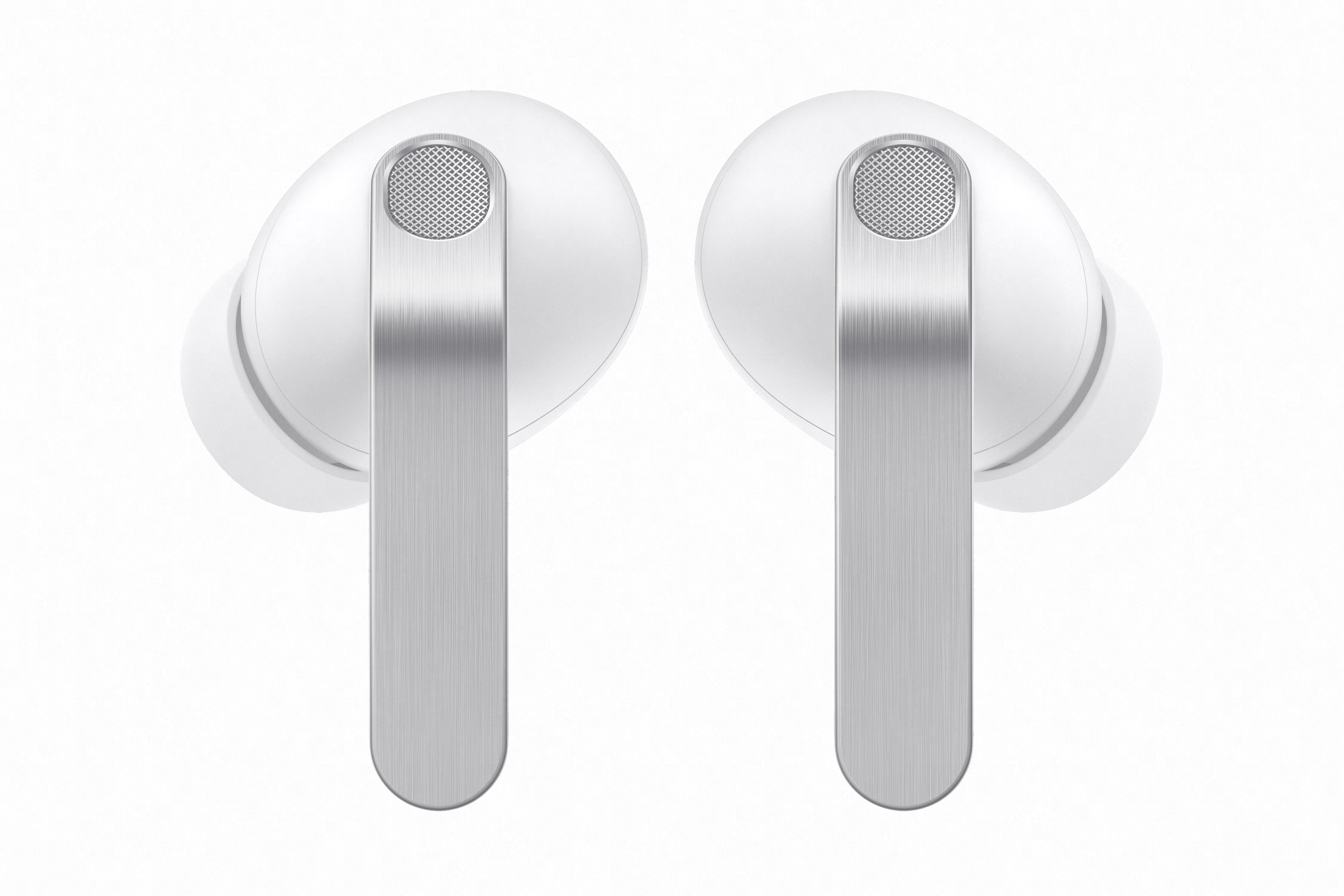
Phone calls are still one of the most demanding jobs for wireless earbuds. Their microphones sit farther from the speaker’s mouth than a smartphone microphone, while wind, traffic and nearby conversations can overwhelm the voice signal. Samsung has now explained how the Galaxy Buds4 Pro is designed to handle that problem, using a combination of sensor fusion and locally processed speech enhancement.
In its official technical explanation, Samsung says the Buds4 Pro uses three microphones alongside a Voice Pickup Unit, or VPU, sensor based on bone conduction. Two external microphones capture the speaker’s voice directly. A third microphone inside the earbud detects speech transmitted through the body, while the VPU monitors physical vibrations in the head as the wearer talks.
The idea is to give the call-processing system several different descriptions of the same voice. A conventional microphone records both speech and surrounding sound from the air. The VPU and internal microphone provide additional signals that can help the system distinguish the speaker from noise. Samsung calls this environment-aware approach Sensor Fusion: rather than relying on a single input, the earbuds combine multiple sensor streams before applying noise reduction.
More processing, but kept on the earbuds
Samsung says the voice signal then passes through an AI-based Deep Neural Network. The company says it optimized the model for on-device operation, reducing processing demand to roughly 10 percent of the original requirement and shrinking the model to about 30 percent of its former size. That matters for an earbud because its power, heat and computing budgets are much tighter than those of a phone.
The company also claims that the upgraded system captures 16 times more vocal detail than the previous approach. That is a manufacturer figure, not an independently verified measurement, but it describes the target clearly: preserve consonants, word endings and higher-pitched parts of speech that are often lost when aggressive noise reduction is applied. Removing noise is only useful if the result still sounds like a natural voice.
Fit changes are another part of the system. Earbuds can move slightly as someone walks, talks or turns their head, creating what Samsung calls fit leakage. That opening allows external sound to enter and can reduce the effectiveness of noise suppression. Samsung says the Buds4 Pro continuously compares signals from its inner and outer microphones to estimate leakage and adjust processing in real time.
Why the Galaxy phone still matters
The Buds4 Pro is not operating in isolation. Samsung says its voice clarity is maximized when the earbuds are paired with a Galaxy smartphone using a Super Wideband connection of up to 16 kHz. In practical terms, the earbuds and phone are treated as a combined communications system rather than two unrelated Bluetooth accessories.
That pairing requirement is important context for consumers. The earbuds can connect to phones beyond Samsung’s ecosystem, but Samsung’s most specific call-quality claim is tied to a compatible Galaxy device. Actual results can also depend on the calling application, the Bluetooth connection, the surrounding acoustic environment and the network path used for the call. A wideband link cannot repair a poor microphone signal before it reaches the phone, or a heavily compressed connection after it leaves the device.
Samsung describes a real-world validation process
Samsung says it tested the call system with large wind simulators built from recordings of real locations. It also describes field testing in busy cafés, department stores and echoing train stations, along with outdoor walks and car journeys with the windows open. These scenarios are relevant because a fixed laboratory noise source cannot reproduce the changing reflections, voices and movement found in everyday calls.
However, the announcement should be read as a description of Samsung’s engineering process, not as an independent product test. It does not publish a complete test dataset, a sample size, a standardized speech-intelligibility score or a comparison against competing earbuds. The before-and-after audio examples demonstrate the intended effect, but they do not establish how consistently the result will appear for every user, phone or environment.
The technical direction is nevertheless significant for mobile users. Instead of treating call clarity as a simple microphone specification, Samsung is combining acoustic microphones, body-conduction sensing, adaptive leakage control and on-device AI. That approach could make clearer calls more dependent on coordination between the earbuds and the smartphone’s software than on any single component.
For buyers, the useful takeaway is straightforward: the Galaxy Buds4 Pro’s call-quality story is built around sensor diversity and local processing, while the strongest benefits are designed for Galaxy-phone owners. Samsung’s explanation provides a credible look at the architecture and the situations it considered, but independent measurements will still be needed to determine how much of that promise survives outside the manufacturer’s test environments. The full technical account is available through Samsung Mobile Press.