
News
Samsung Research Details Health AI Models Built for Wearable Signals
Samsung Research has outlined xMAE and HiMAE, two foundation models designed to extract health insights from wearable biosignals, including a compact model built for smartwatch-class hardware.
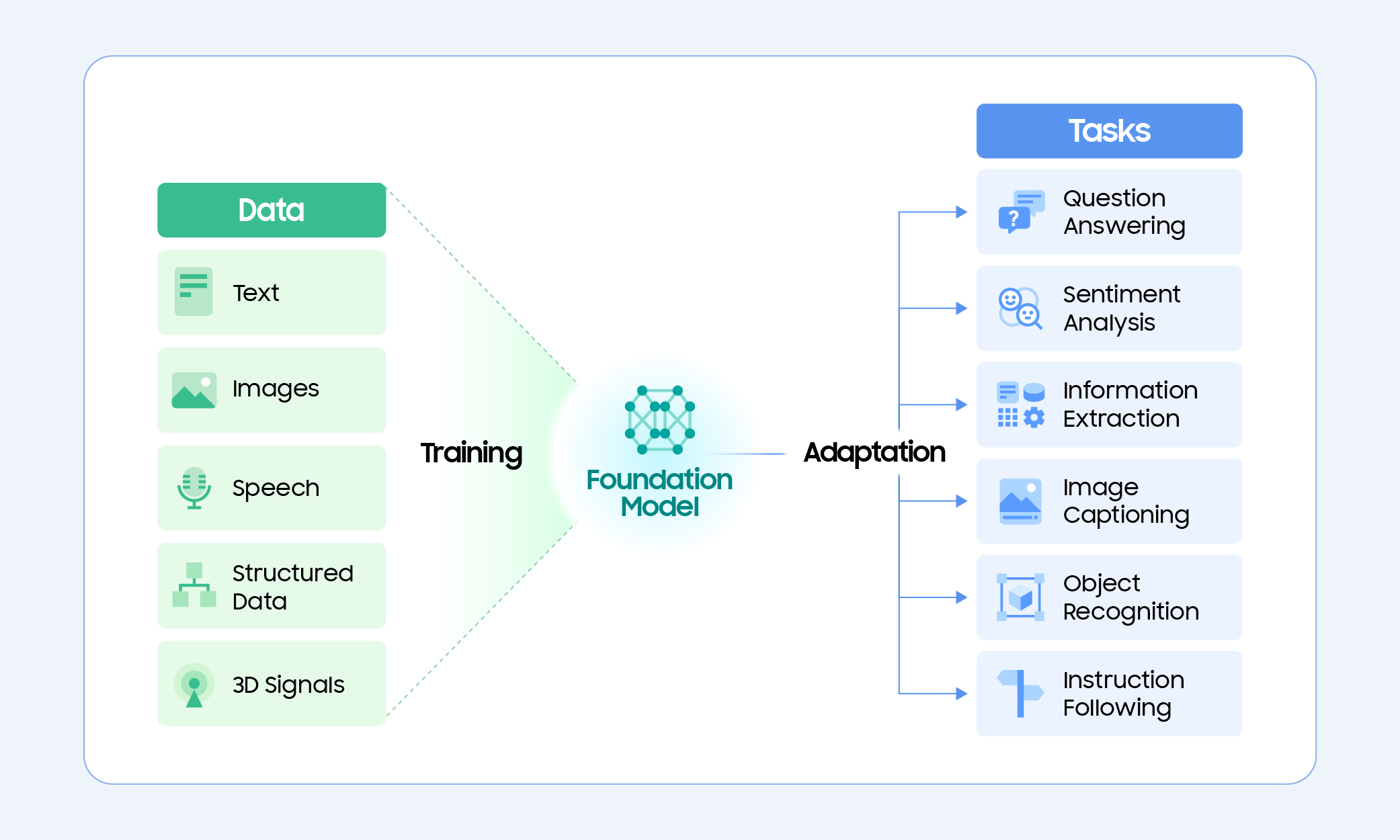
Samsung Research has published a new look at two artificial-intelligence models designed to understand health data from wearable devices. The company’s Digital Health Team developed xMAE and HiMAE to learn patterns from biosignals such as electrocardiography, photoplethysmography, sleep measurements and activity data.
The work is significant for the mobile ecosystem because smartwatches increasingly act as continuous sensors while smartphones provide the interface for viewing trends, receiving guidance and managing permissions. Samsung’s official overview presents the models as research foundations for future connected-care experiences, rather than as a confirmed software update or medical product launch.
Why wearable data is difficult to interpret
Wearables collect several types of signals at different sampling rates and from different locations on the body. A smartwatch may measure an optical pulse signal continuously, while an ECG reading normally requires a deliberate measurement. Sleep and activity patterns also emerge over longer periods than a single heartbeat.
Samsung describes a health foundation model as a system that learns useful representations from large quantities of mostly unlabeled biosignal data. Once pretrained, the model can be adapted to different tasks, such as signal analysis, biomarker research or prediction. That approach could reduce the need to build a separate model for every individual health function, although real-world deployment would still require extensive validation.
xMAE links ECG and pulse signals
The first model, xMAE, focuses on the relationship between ECG and PPG. ECG records the electrical activity that initiates a heartbeat, while PPG detects changes in blood flow at the wrist. Because the pulse arrives after the electrical event, the two signals contain a meaningful temporal relationship.
xMAE is trained to reconstruct missing parts of one signal using information from the other. Samsung says the model was pretrained on approximately 9,400 hours of ECG and PPG data. In the company’s report, xMAE outperformed unimodal models and existing multimodal approaches in 15 of 19 evaluation tasks, including cardiovascular outcome prediction, abnormal test-result detection and sleep-stage classification.
The linked primary xMAE paper also reports that the learned representations generalized across different sensor devices, body locations and data-gathering environments. That does not mean a consumer watch can independently diagnose a condition. It indicates that the research model captured patterns that remained useful when the input conditions changed.
HiMAE is designed for multiple time scales
Samsung’s second model, HiMAE, addresses a different problem: health signals reveal different information depending on how long they are observed. A short window may help describe a heartbeat, while a longer window may reveal sleep or activity patterns accumulated over hours or days.
HiMAE uses a hierarchical architecture to examine short and long segments separately. According to Samsung, the model can support classification, numerical prediction and data generation from one pretrained system. The company also says it is smaller than existing models and can produce results in less than one millisecond on a smartwatch-class central processing unit.
The ICLR research page for HiMAE describes the model as compact enough for on-device inference. Processing signals locally could reduce dependence on a cloud connection and limit the amount of raw health data that has to leave the wearable or phone. It could also make feedback more responsive, though battery use, sensor quality and device-specific tuning remain practical constraints.
What this could mean for phones and apps
The most immediate relevance is the connection between the wearable, the companion smartphone and health applications. A model that understands several time scales could help an app present more meaningful trends instead of showing isolated readings. A model that runs locally could also support privacy-sensitive features without continuously uploading raw sensor streams.
Those benefits depend on careful product design. Users would need clear explanations of what data is collected, how long it is retained and whether processing happens on the watch, the phone or a remote server. Developers would also need to distinguish wellness insights from medical advice and communicate uncertainty when a sensor reading is incomplete or affected by movement.
Research, not a consumer feature announcement
Samsung says the xMAE and HiMAE work was accepted at the International Conference on Machine Learning and the International Conference on Learning Representations. That recognition confirms that the research has been presented through major machine-learning venues, but it does not establish regulatory approval or guarantee that either model will appear in a Galaxy Watch or Samsung Health update.
Samsung has not announced a consumer release date, supported device list or specific app feature based on these models in the article. The results are also reported by Samsung and the paper authors rather than independently reproduced in this newsroom report. Readers should therefore treat the announcement as a window into future mobile-health research, not as proof that a current smartwatch can detect or prevent disease.
The direction is nevertheless clear: Samsung is working toward health AI that can combine continuous wearable sensing with efficient processing close to the user. If the models survive broader clinical, privacy and performance evaluation, they could eventually make smartphone health apps more useful while reducing the need to send sensitive biosignals to the cloud.