
News
Snapchat says users created nearly 2 trillion Snaps in 2025
Snap says its users created nearly two trillion Snaps during 2025, offering a rare look at the scale of visual messaging on one of the world’s biggest mobile apps.
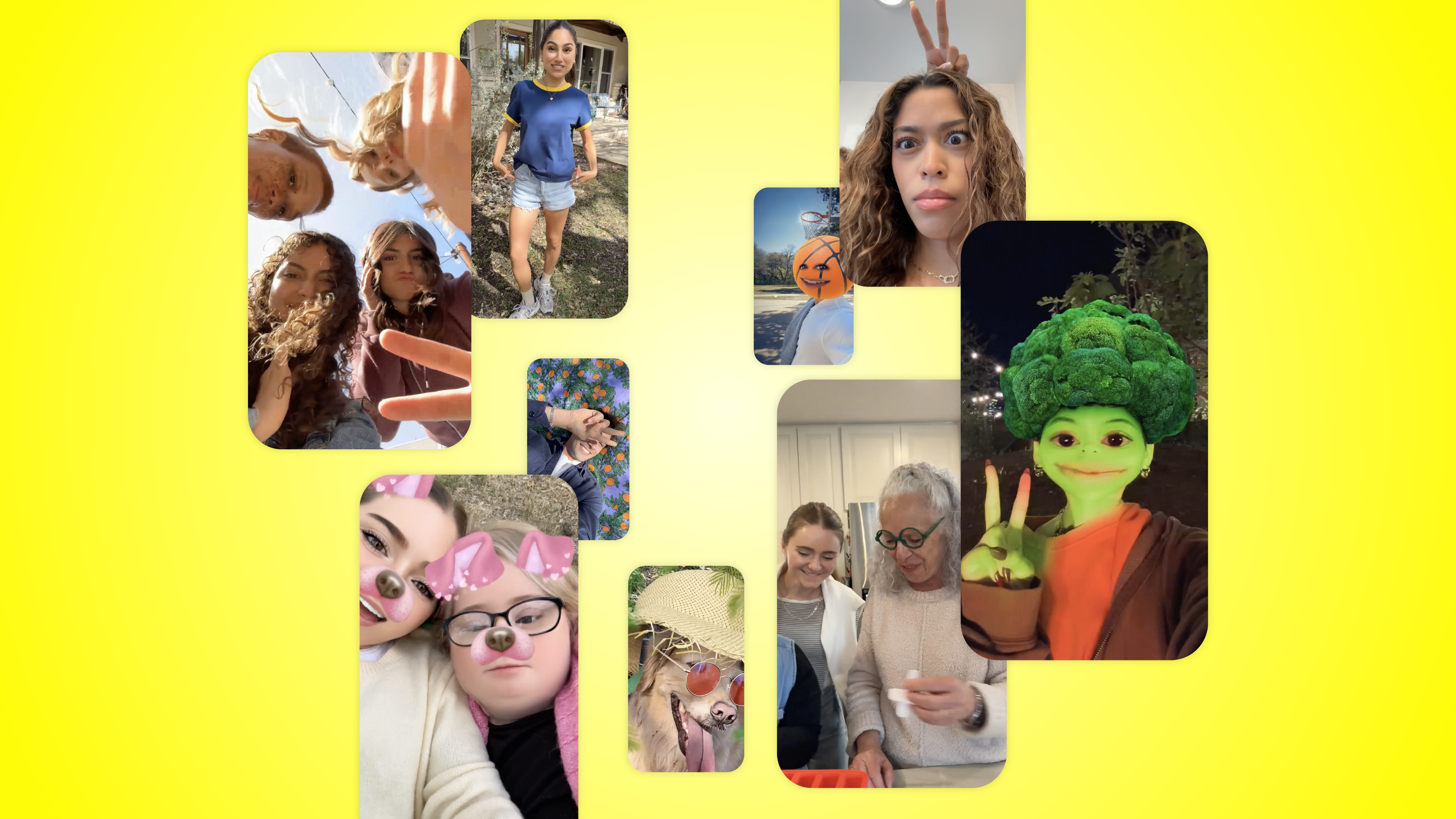
Snapchat says its users created nearly two trillion Snaps in 2025, a company-wide milestone that illustrates how deeply visual messaging has become embedded in everyday smartphone use. Snap shared the figure in a March 24 announcement on its official newsroom, presenting the total as a measure of billions of small interactions between friends and family rather than simply a count of files uploaded to a service.
Snap’s figures are difficult to picture at first. The company breaks the total down into approximately 38.5 billion Snaps per week, 5.5 billion per day, 3.8 million per minute and 63,000 every second. Those figures describe activity across the whole of 2025, so they should not be read as a live daily counter or as a forecast for the platform’s future. They do, however, show why mobile messaging platforms increasingly operate as continuous communication layers rather than occasional social destinations.
A mobile habit measured in moments
Snapchat’s explanation focuses on the character of the interaction. A Snap may be a single image sent to one friend, a short video shared with a group, or part of a longer-running exchange such as a Streak. The company argues that the significance of the total lies in the frequency of these small moments: users are repeatedly opening a camera, capturing something, and sending it to people they already know.
That model remains distinct from a traditional photo library. A camera roll is primarily a record of what someone has chosen to keep. Snapchat’s framing is closer to live conversation, where the camera is the starting point for a message and the content exists mainly to support a social exchange. The scale reported by Snap therefore reflects both content creation and communication behaviour, although the announcement does not provide a separate breakdown showing how many Snaps were sent privately, posted to Stories, or shared through other parts of the app.
What the numbers reveal—and what they do not
The announcement also includes several comparisons designed to make the total more understandable. Snap says users created about 17,000 Snaps in the time it takes to blink. It also compares the volume with global births per second and says that, over three hours, Snapchatters created more Snaps than the number of songs available on Spotify. These comparisons are useful for communicating magnitude, but they are not performance benchmarks and do not establish that Snapchat is growing faster than competing services.
There is another important limitation. The two-trillion figure is a company-reported measure of activity, not an independent audit of the entire visual messaging market. It does not reveal how many people contributed to the total, how often an average user opened Snapchat, or how much time users spent creating versus viewing content. Nor does it say whether the volume was evenly distributed across countries, age groups or device types. The safest conclusion is narrower: Snapchat recorded an enormous amount of user-generated visual communication during 2025.
Why the milestone matters for smartphone apps
For the wider mobile industry, the announcement highlights the continuing importance of camera-first design. Smartphones are no longer used only to take a picture that will later be edited or archived. Their cameras increasingly act as interfaces for messaging, discovery, entertainment and identity. That puts pressure on app developers to make capture, editing, sharing and privacy controls work together without adding friction.
It also explains why messaging apps continue to compete around more than text delivery. Features such as temporary media, visual effects, private conversations and camera shortcuts are attempts to make communication feel immediate while keeping the app useful across many daily situations. The two-trillion total does not prove that any one feature caused the activity, but it shows the scale available when a mobile service combines messaging with the phone’s most accessible sensor: its camera.
A snapshot of 2025, not a promise about 2026
Snap’s announcement is retrospective, and it should be read in that context. The figure covers activity that has already happened; it does not include a new product launch, a change to Snapchat’s privacy settings or a commitment about how the service will operate next. That makes the announcement less about a single feature and more about the role Snapchat believes it plays in mobile communication.
The broader takeaway is straightforward. Visual messages have become routine enough to be counted in the trillions, and the smartphone camera now sits at the centre of many social interactions. Snap’s figure is not a complete picture of the messaging market, but it is a useful indicator of how often users turn a handset into a live communication tool rather than treating it as a passive camera or an archive.