
News
Vodafone targets 10,000 mobile sites with AI-backed outage resilience
Vodafone is expanding backup power and AI-based network controls to keep emergency services and mobile connectivity available during major outages.
Vodafone is expanding a network-resilience programme designed to keep critical mobile services running during major power failures. The operator says its Enhanced Power initiative will reinforce more than 10,000 essential mobile infrastructure sites across Europe, with the rollout beginning in Portugal and continuing over the next two years.
The announcement focuses on a part of mobile technology that users rarely see until it fails. When electricity or backhaul services go down, smartphones can quickly lose access to calls, text messages, navigation, banking and emergency support. Vodafone’s plan combines additional backup power with software that can decide how a network should operate as an outage develops.
According to Vodafone’s announcement, the programme is intended to support emergency services, public-safety organisations and other critical online services, while maintaining connectivity for ordinary mobile customers where possible. The company says the initiative was accelerated after a large blackout in Portugal and parts of Spain and France in April 2025, when about 60 percent of mobile users in Portugal lost connectivity or struggled to connect at the peak of the disruption.
How the backup strategy is structured
Vodafone is dividing the resilience effort across different layers of the mobile network. Core mobile sites, which include more than 400 data centres and major backbone locations across European markets, are being equipped with battery backup designed to provide at least 72 hours of support or guaranteed refuelling assistance within 48 hours.
Aggregation sites, which route customer traffic between parts of the network, are being planned around a minimum of four hours of backup power. More than 10,000 critical access sites, including radio and backhaul locations serving hospitals, airports, government offices, transport hubs and emergency command centres, are also intended to receive at least four hours of backup in the first phase.
That structure matters because a mobile network can fail in several different ways. Keeping a single phone mast powered does not help if a larger aggregation point or core facility has already stopped routing data. Vodafone’s approach therefore combines local battery capacity with protection for the network’s central and regional links.
AI decides which network functions stay active
The software element is called Adaptive Power Backup. Vodafone says it has launched the AI-driven service in Greece, is trialling it in Turkey and plans to deploy it in additional markets during 2026. The system is designed to predict outages, manage available energy and extend the operating time of a site without requiring engineers to make every decision manually.
During a wider regional outage, the system can remotely place non-essential equipment into a low-energy state known as cell sleep mode. Vodafone says this allows the network to conserve battery power while keeping crucial channels open for emergency services, voice calls and text messages. The company says the approach can potentially double battery backup time in some situations and keep emergency services connected three times longer than the industry standard. Those figures are Vodafone’s stated targets and results for the system, rather than an independent test of every network configuration.
For smaller local outages, Vodafone will continue using portable Cells on Wheels units. Its Instant Network Emergency Response programme can also provide free Wi-Fi and phone-charging stations during disaster relief operations. These measures address a practical problem for people whose phones still have battery power but cannot reach a functioning local network or charging point.
Satellite connectivity is part of the wider plan
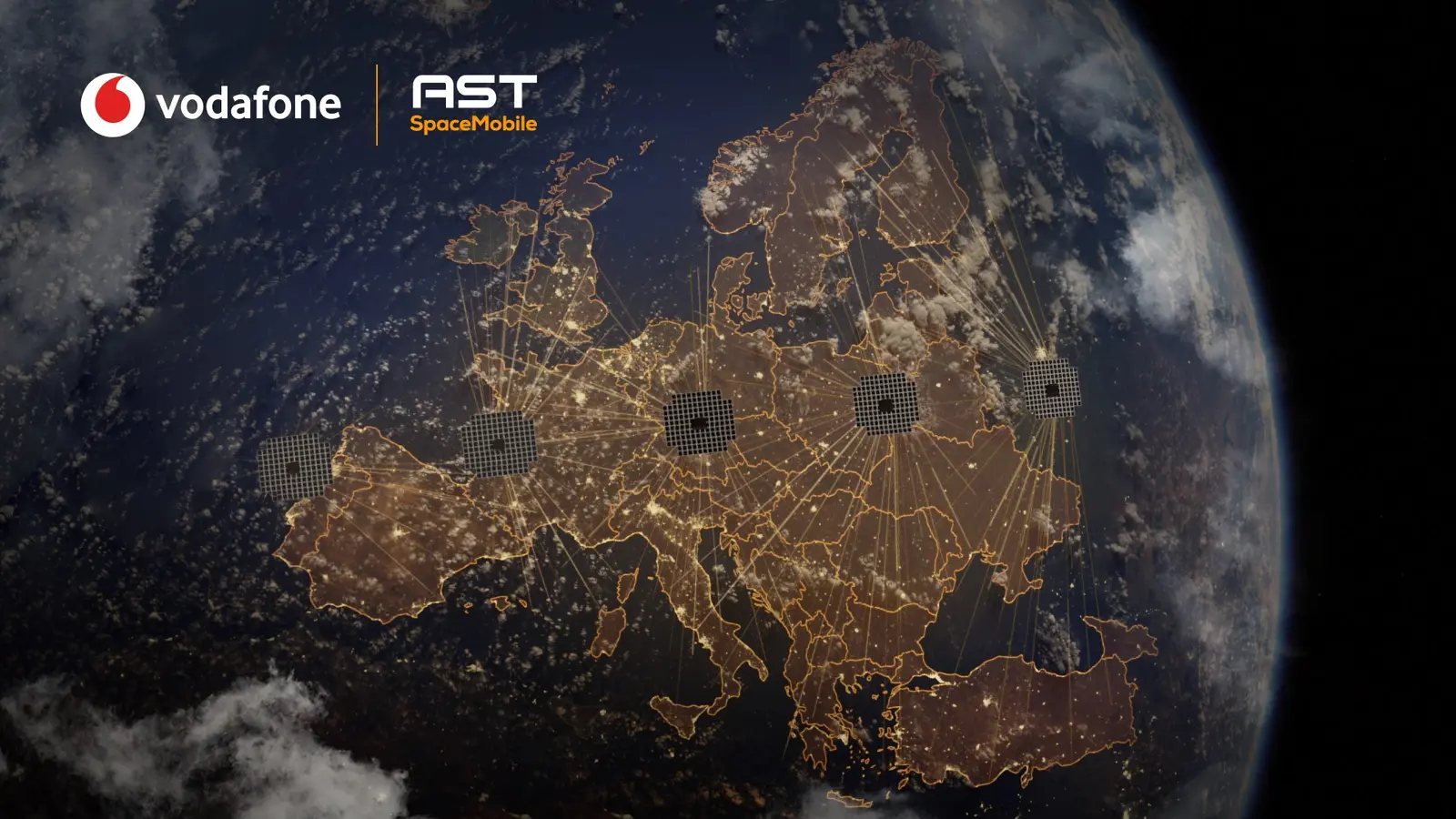
Vodafone is also exploring satellite connectivity for everyday smartphones and other cellular devices used by emergency responders. The company presents this as a way to extend communications into difficult environments where terrestrial infrastructure is damaged, inaccessible or temporarily without power. The announcement does not promise universal satellite coverage for all Vodafone customers, so the idea should be understood as part of an emergency-response strategy rather than a general consumer feature launch.
The programme extends beyond Europe. Vodafone says its African business, Vodacom, is using an AI-on-the-edge system to choose between renewable energy and generators during load-shedding. Initial results reported by the company indicate a 10 to 15 percent reduction in diesel use, alongside lower operating costs and fewer site visits.
What mobile users should expect
For smartphone users, the most visible effect should be fewer interruptions during local or regional power problems, although the result will depend on the scale of an outage, the condition of the wider network and the availability of backhaul connections. The initiative does not change a phone’s battery life, add a new app or guarantee service when every surrounding network facility is unavailable.
Its significance is that mobile resilience is increasingly being treated as a software and energy-management problem as well as a hardware problem. Selective shutdowns can preserve the functions that matter most, while additional batteries and portable equipment provide a physical fallback. As extreme weather and grid instability put more pressure on communications infrastructure, keeping a phone connected may depend as much on intelligent network control as on the 5G radio technology inside the handset.