
News
Vodafone and Nokia demo agentic AI for smarter 5G network slicing
Vodafone Albania and Nokia have demonstrated how agentic AI could create dedicated 5G network slices during emergencies, major events and unexpected demand spikes.
By Amelia Santos
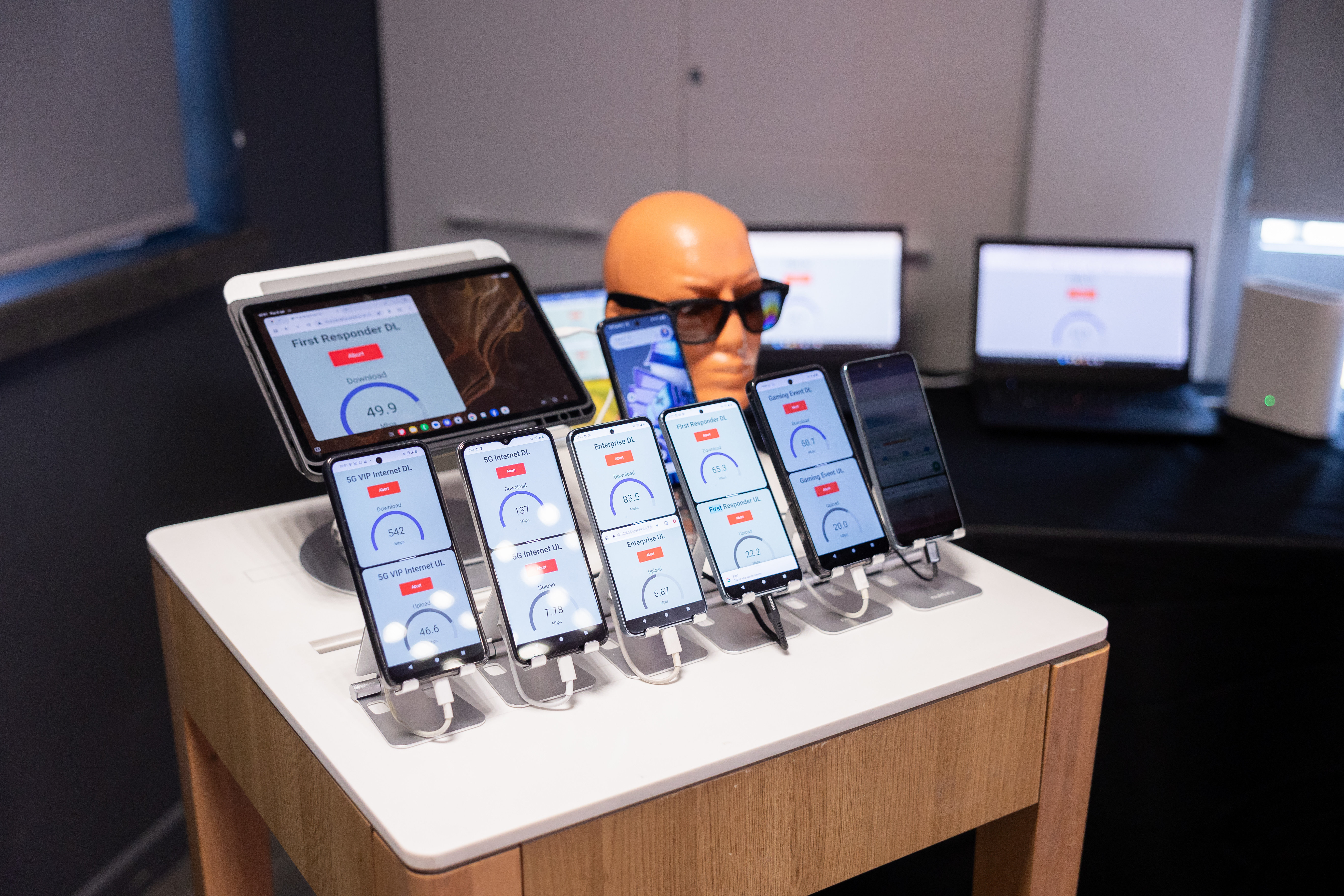
Vodafone Albania and Nokia have demonstrated how agentic artificial intelligence could help mobile networks respond more quickly when demand changes suddenly. The companies say their trial used AI to create dedicated 5G network slices for emergencies, major public events and unexpected surges in user activity.
The demonstration, announced on July 15, combined Vodafone Albania’s 5G Standalone network with AI designed to analyse live network conditions, including traffic levels and meteorological data. The system could then make autonomous decisions intended to optimise performance without relying only on predefined configurations.
How the AI-powered slicing demonstration worked
Network slicing allows an operator to dedicate network resources to a specific use case or group of users. In this demonstration, Vodafone and Nokia focused on making that allocation more responsive. Rather than waiting for engineers to adjust settings manually, the AI assessed changing conditions and helped determine where capacity was needed most.
Vodafone says the approach is designed to support more efficient and resilient connectivity. The examples given by the companies include maintaining reliable service for businesses running mission-critical operations, allocating resources intelligently during concerts and sporting events, and responding to unexpected peaks in demand.
The demonstration also highlights the difference between a conventional configuration and an autonomous network. A fixed configuration may work well under expected conditions, but large events, severe weather or sudden incidents can quickly change the pressure on a mobile network. An AI system that can interpret both network and contextual data could help operators react to those changes faster.
What it could mean for smartphone users
For smartphone owners, the potential benefit is most visible in crowded or high-pressure situations. A network that can assign resources dynamically may be better prepared for a packed stadium, a transport hub or a public emergency when many people need to connect at the same time.
However, this announcement describes a demonstration rather than a consumer launch. Vodafone and Nokia did not announce a new smartphone setting, a customer-facing application or a timetable for nationwide availability. It also does not provide independent speed measurements or evidence that every user would see an immediate improvement. Any effect on everyday smartphone performance will depend on how operators deploy the technology, which services receive priority and how much capacity is available in a given location.
That distinction matters because network slicing is primarily an operator technology. It works behind the scenes, and users may never see a separate control or notification. The value lies in how the network manages its resources, not in a new feature that can be switched on from a phone.
A practical airport example
Vodafone also points to Tirana International Airport as an example of how its 5G network can support specialised communications. The airport is using Vodafone’s 5G network for advanced security solutions, including secure push-to-talk communication between airport teams through Airbus’ mission-critical Agnet platform.
This use case shows why dedicated connectivity can be valuable beyond faster consumer downloads. Airport staff may need dependable communications while coordinating across different parts of a complex site. A network designed to prioritise such traffic could help separate operational communications from the much larger volume of ordinary smartphone activity.
The announcement does not claim that the airport deployment itself is controlled by the new agentic AI demonstration. Instead, it presents the airport as an example of how Vodafone Albania’s 5G infrastructure is already being used for secure, time-sensitive communications.
From demonstration to wider deployment
Vodafone says its UK business became the first operator earlier this year to deliver commercial 5G network slicing to enterprise customers. That service gives participating organisations access to a dedicated portion of the mobile network with guaranteed local performance, and complements Vodafone’s Mobile Private Network offering for organisations that need more customised control.
The Albania and Nokia demonstration adds an automation layer to that broader direction. If the technology progresses beyond trials, operators could use AI to make network slices more adaptive instead of treating them as static allocations. That could be relevant to public safety, transport, industrial operations and large gatherings, where demand and operating conditions can change quickly.
For now, the important result is the demonstration itself: Vodafone Albania and Nokia have shown how traffic information and weather data can feed an AI-assisted decision process for 5G network slicing. The next test will be whether such systems can be deployed reliably, securely and at scale while delivering measurable benefits to organisations and the people using their networks.