
Noticia
Apple Business folds mobile device management and work apps into one platform
Apple Business brings device management, work app distribution, business communication tools and Apple Maps presence into a single service for organizations.
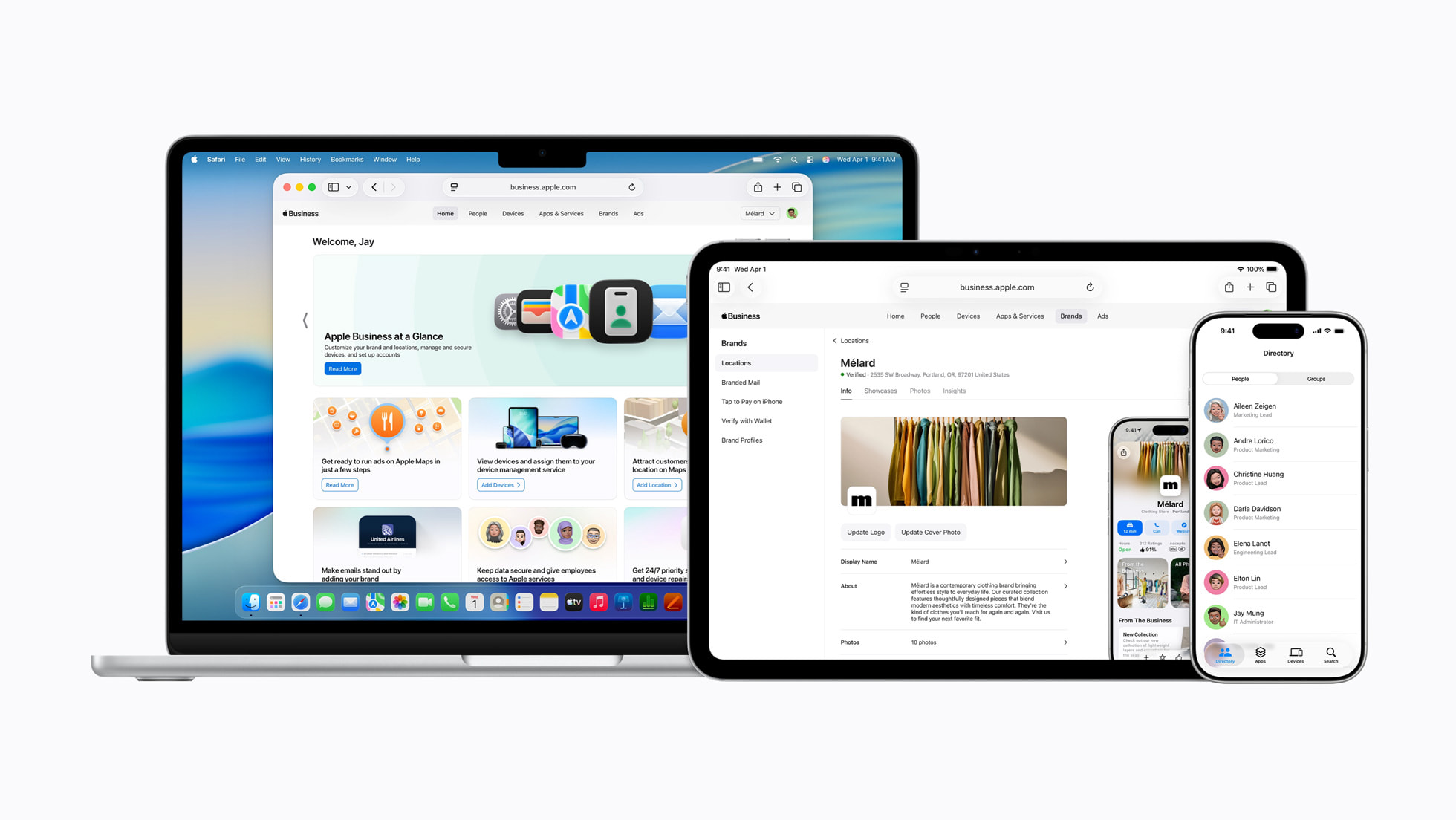
Apple is consolidating several business tools into Apple Business, a platform designed to manage company devices, distribute work apps and maintain business information across Apple services. The announcement matters to mobile teams because it puts smartphones, tablets, employee accounts and workplace software under one administrative layer.
The service combines built-in mobile device management with business email, calendars, directory features and brand management. Apple is positioning it for organizations of different sizes, including smaller companies that may not have a dedicated IT department. The platform is also intended to bring together services that were previously spread across Apple Business Essentials, Apple Business Manager and Apple Business Connect.
Device setup becomes the central feature
Apple Business uses Blueprints to configure groups of devices with predefined settings and applications. An administrator can create groups by department or role, assign apps through the App Store and define custom permissions. Apple also describes an Admin API for handling device, user, audit and mobile-management data in larger deployments.
This approach is aimed at reducing the manual work involved when employees receive a new iPhone or iPad. Apple says zero-touch deployment can prepare devices before they reach an employee when the hardware is purchased through Apple or an authorized reseller. The result is a more standardized starting point, although the exact setup still depends on an organization’s policies, identity provider and device fleet.
Managed Apple Accounts are another important part of the model. Apple says the accounts are designed to separate company information from personal employee data through cryptographic separation. The platform can also create accounts automatically through identity providers such as Google Workspace and Microsoft Entra ID.
A companion app for employees
Apple Business is not limited to an administrator dashboard. Apple says its companion app will let employees install approved work apps, view colleague contact information and request support while away from a desk. That makes the service relevant to mobile-first organizations where staff may spend most of their working day on an iPhone or iPad rather than on a traditional desktop.
The same platform also adds integrated email, calendar and directory services. Companies can use a custom domain and organize contacts into groups, while calendar delegation is intended to simplify scheduling across teams. These functions do not replace every existing collaboration system, but they give smaller organizations another way to keep core communication services within the same account structure as device management.
Apple states that the companion app, email, calendar and directory features require iOS 26, iPadOS 26 or macOS 26. That requirement is worth checking before a rollout, particularly for companies with older devices or a mixed fleet. The platform’s availability is also global, but Apple notes that individual features can vary by country or region.
Apple Maps becomes part of the business console
The most consumer-facing element is Apple Maps. Businesses can manage brand details, photos, opening hours, rich place cards and custom actions that can direct customers to a website or preferred app. Apple also says companies will be able to review how customers discover and interact with locations through searches, views and taps.
Apple Business introduces a separate advertising option for Apple Maps in the United States and Canada. The company says advertisements will be clearly marked and may appear when users search for a business or browse suggested places. Apple also says a user’s location and interactions with those ads are not associated with their Apple Account, while personal data remains on the device and is not shared with third parties.
This creates a link between operational mobility and customer discovery. A business can manage employee devices, publish its public location information and guide customers toward an action from one service. The trade-off is that the organization becomes more dependent on Apple’s account, software and location ecosystem.
What the announcement means for mobile teams
Apple Business is best understood as a consolidation effort rather than a new smartphone operating system. Its practical value depends on whether a company already uses Apple hardware and wants a simpler way to handle enrollment, app distribution, access rules and support. Organizations using Android devices or several competing ecosystems will still need separate management tools or a broader cross-platform system.
The pricing structure also separates the core service from optional extras. Apple says Apple Business is available as a free service for eligible organizations, while additional iCloud storage and AppleCare+ for Business are paid offerings. Existing business data from Apple’s earlier services is intended to migrate into the new platform, but teams should still review account ownership, app licenses, device policies and location information before changing their administrative workflow.
For companies already invested in iPhone and iPad, the announcement points toward a tighter connection between device management, workplace apps and public-facing business information. The main question is not whether Apple Business adds another dashboard, but whether consolidating these functions reduces administrative complexity without limiting the organization’s choice of devices and services.