
Noticia
Deutsche Telekom Tests Flying Mobile Base Stations
Deutsche Telekom says two unmanned aircraft successfully alternated as flying mobile base stations at a Czech trail-running event, keeping smartphones connected through seamless handover and satellite backhaul.
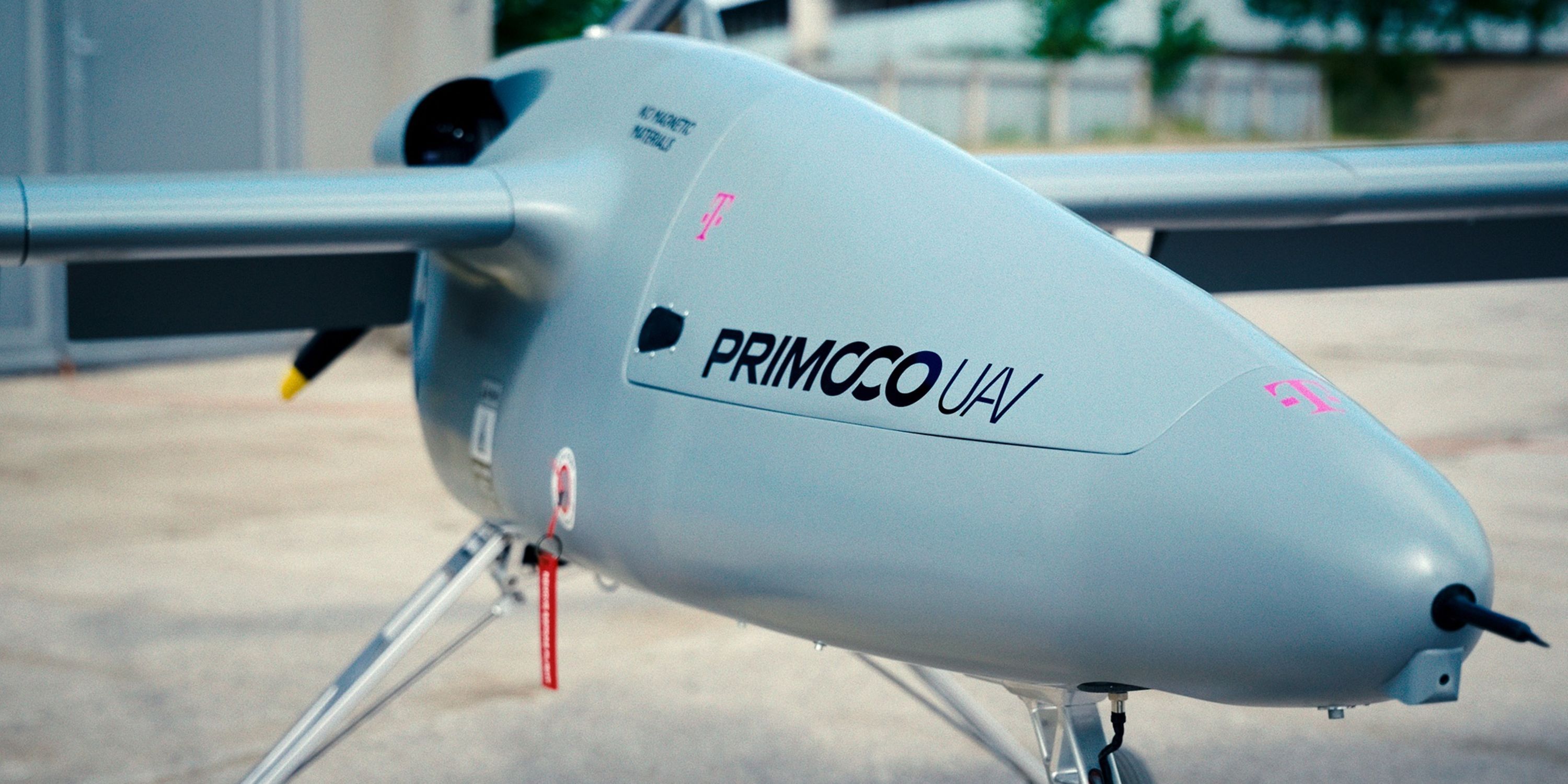
Deutsche Telekom has demonstrated a way to keep smartphones connected when a conventional cell site cannot cover an area: two unmanned aircraft alternated as flying mobile base stations during a public event in the Czech Republic. The company’s official announcement says the trial combined seamless handover between aircraft with satellite backhaul to the mobile core network.
The result is not a consumer service launch. It is a field demonstration of a network layer that could be deployed temporarily, or used to reinforce terrestrial infrastructure, when geography, damage or a sudden concentration of users makes a ground-based solution difficult.
Two aircraft, one continuous mobile service
The trial involved Deutsche Telekom, T-Mobile Czech Republic and Primoco UAV. Their two Primoco One 150 aircraft carried integrated mobile network technology. While one aircraft operated, the second could take over when the first returned to the ground for refuelling. That operating model is intended to address the most obvious weakness of a single airborne cell: endurance. Deutsche Telekom says the alternating setup is designed to support continuous service, including in situations where a communication link must remain available around the clock.
For a smartphone user, the key test was the handover. Phones automatically connected to whichever mobile cell was active, and calls and data connections continued without interruption as service moved between the two aircraft. The announcement does not describe a special handset, app or customer sign-up process. Instead, the aircraft used the same standard frequency bands as the terrestrial network, pointing to a system intended to work with ordinary mobile devices that are within coverage.
Satellite backhaul removes a ground dependency
The aircraft also carried satellite backhaul. In practical terms, that gave each flying base station a direct connection to the mobile core network without requiring an additional ground station at the event site. This matters because the locations that most need temporary coverage may also be the places where fibre, microwave links or fixed mobile infrastructure are unavailable, overloaded or damaged.
Deutsche Telekom says the trial aircraft operated between two and three kilometres above the ground and provided coverage across an area of up to 20 square kilometres. During the test, the system reached data rates of up to 100 Mbit/s using a 10 MHz channel. The company also says network capacity can be prioritised when required, for example for emergency responders. Those figures describe this specific field trial; they are not a promise of a fixed speed or coverage footprint for a future commercial service.
A trail-running event supplied the real-world test
The demonstration took place during the Běhej lesy trail-running event in the Brdy Protected Landscape Area. The remote course has limited mobile coverage, making it a useful setting for testing whether an airborne cell can fill gaps without changing how people use their phones. A compact portable cell tower covered the start and finish areas, while the two aircraft supplied the route between them.
According to Deutsche Telekom, around 1,900 runners remained reliably connected throughout the event. The important result was not simply that an aircraft transmitted a signal, but that the network could hand users from one airborne cell to the other while the event continued. That distinction moves the idea beyond a static demonstration and toward an operational model that can be managed alongside ordinary network equipment.
Where flying base stations could fit
The company presents the technology as a complement to terrestrial networks rather than a replacement for them. Potential scenarios include wildfires, floods and large outdoor events in remote areas. A flying base station could be sent where a site is temporarily inaccessible, where a ground mast has been damaged, or where extra capacity is needed quickly. Emergency services and organisations operating critical infrastructure are also named as possible users.
There are still practical limits. Aircraft need authorisation, safe operating conditions, airspace coordination, fuel or battery planning and a reliable link back to the core network. The trial’s use of satellite backhaul reduces the need for local ground equipment, but it does not remove those operational constraints. Nor does a successful event trial establish broad commercial availability, pricing or a timetable for public access.
Why the handover matters for mobile networks
Temporary coverage has often meant accepting a gap between one portable cell and the next, or asking teams to deploy heavier infrastructure on the ground. Deutsche Telekom’s approach targets continuity as the main design requirement: one aircraft serves the area while another is prepared to replace it. If that process can be repeated safely and economically, airborne cells could become another tool for network resilience.
For now, the Czech field trial is best read as evidence that the pieces can work together: smartphones using familiar mobile bands, two airborne base stations performing a handover, and satellite connectivity linking the aircraft to the core. Deutsche Telekom says the aircraft used in the test already hold extensive European certifications, but the announcement stops short of claiming a general rollout. The next question is therefore less whether a flying base station can connect a phone, and more how operators will integrate, regulate and sustain the service in the places where ground networks are most vulnerable.