
Noticia
Google Project Genie Brings Street View Into AI-Generated Worlds
Google is expanding its experimental Project Genie app with Street View-grounded worlds, while keeping access limited to eligible AI Ultra subscribers.
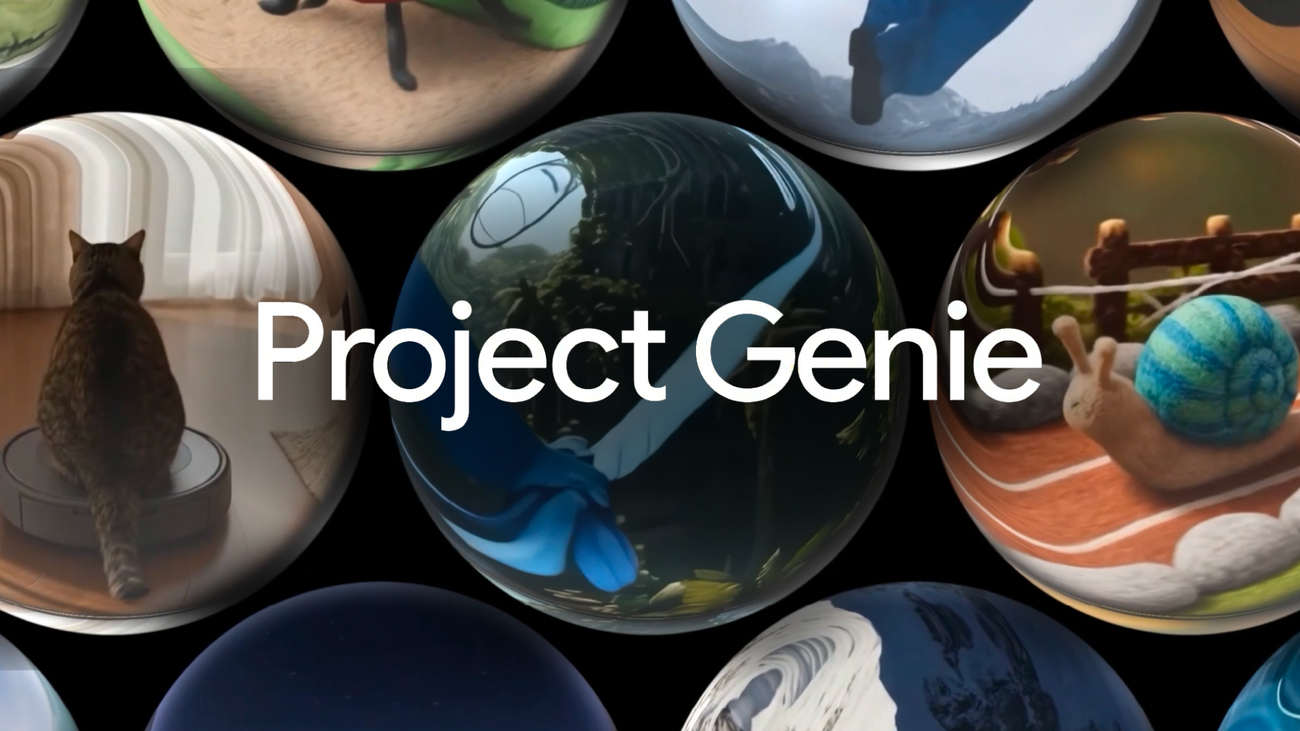
Google is expanding Project Genie beyond free-form world building. The experimental app can now use Google Street View imagery as the starting point for new interactive environments, giving users a way to place an imagined experience around a real location. The announcement comes from Google DeepMind, Google Maps and Google Labs, and it is one of the clearest examples yet of a consumer-facing AI experiment using map data as creative input.
From map pin to imagined world
The new capability is straightforward to describe. Inside Project Genie, a user taps a Maps pin, chooses a place in the United States and can select a visual style such as Desert Sands or Stone Age. The user then describes a character, which could be an animal, a comic-book hero or a claymation monster. Genie uses the selected location and Google’s real-world imagery to create the world’s starting point, while the style and character prompt determine how that place is reimagined.
Google’s own examples show the range it has in mind. A familiar bridge can become an underwater setting populated by schools of fish. Another location can be recast as a black-and-white version of the past, complete with saloons, vintage cars and trading posts. These are not new Street View tours. They are generative scenes anchored to a real place, designed for exploration and creative play.
What Street View adds
That distinction matters. Street View supplies the geographic reference, but Project Genie remains an experimental world model rather than a navigation tool, a game with a fixed map or a replacement for Google Maps. Google says the combination can also provide a virtual environment in which AI agents or robots learn to navigate and interact with the complexities of the real world. For ordinary users, however, the immediate experience is about creating and exploring a fictional version of somewhere they know.
The underlying technology is Google’s Genie world model, which the company describes as capable of generating diverse, interactive environments. The new feature connects that generative system with Google Street View through Maps Imagery Grounding, the technology Google says developers already use to create AI visuals with Street View. That gives the experiment a more concrete starting point than a purely text-generated landscape: the model is asked to build around a place, not invent an anonymous setting from scratch.
Google’s official announcement says the Street View connection is being introduced inside Project Genie, the company’s experimental prototype. It also says the feature is designed to let people explore familiar places or reimagine them with a creative twist.
Limited access and a narrow launch
Access remains tightly limited. Google says Project Genie, including the Street View feature, is gradually rolling out to eligible Google AI Ultra subscribers around the world who are at least 18 years old. That means the announcement is not a general release for every Android or iPhone owner, and it does not establish that the experience is available through a conventional app-store download. The current Street View grounding option is also limited to places in the United States, with Google saying that it plans to add more locations over time.
Those restrictions are important for anyone assessing what has actually launched. A global subscriber rollout is not the same as universal access, and a U.S.-only set of Street View starting points is narrower than the worldwide coverage people may associate with Google Maps. Google also does not present Project Genie as finished software. It calls the product an experimental research prototype and says the details are still being refined for greater sharpness and accuracy.
A generated interpretation, not a simulation
That caveat should shape expectations. The attraction is the combination of a real place and an imaginative prompt, but the result should be treated as a generated interpretation rather than a faithful reconstruction. Users may recognize a landmark while still encountering a world governed by the model’s creative choices. The output is therefore closer to an interactive concept or visual experiment than to a dependable geographic simulation.
For mobile and app watchers, Project Genie is interesting because it shows how established location data can become an input for a new class of consumer software. Instead of opening a map only to find a route, users can use a place as the seed for a story, a game-like scene or a visual thought experiment. That changes the role of a familiar app surface: the map is no longer only something to consult, but also material that another system can transform.
The announcement also reveals Google’s current product strategy. The company is using a paid AI tier as the access point for an early consumer experiment, while keeping the prototype’s geographic scope and audience narrow enough to learn from real use. It is a controlled preview, not a promise that every location will soon become a fully interactive world.
The bottom line is simple. Project Genie’s Street View integration makes Google’s experimental world model more tangible by tying generated environments to places people can recognize. It is worth watching for its creative and research potential, but today it should be understood as limited, subscription-gated experimental software—not as a finished mobile service or a new way to navigate real streets.