
Noticia
Google Brings Study Notebooks to Gemini With Personalized Learning Plans
Google is rolling out study notebooks in the Gemini app, turning uploaded course material into tailored lessons, quizzes and progress tracking for students.
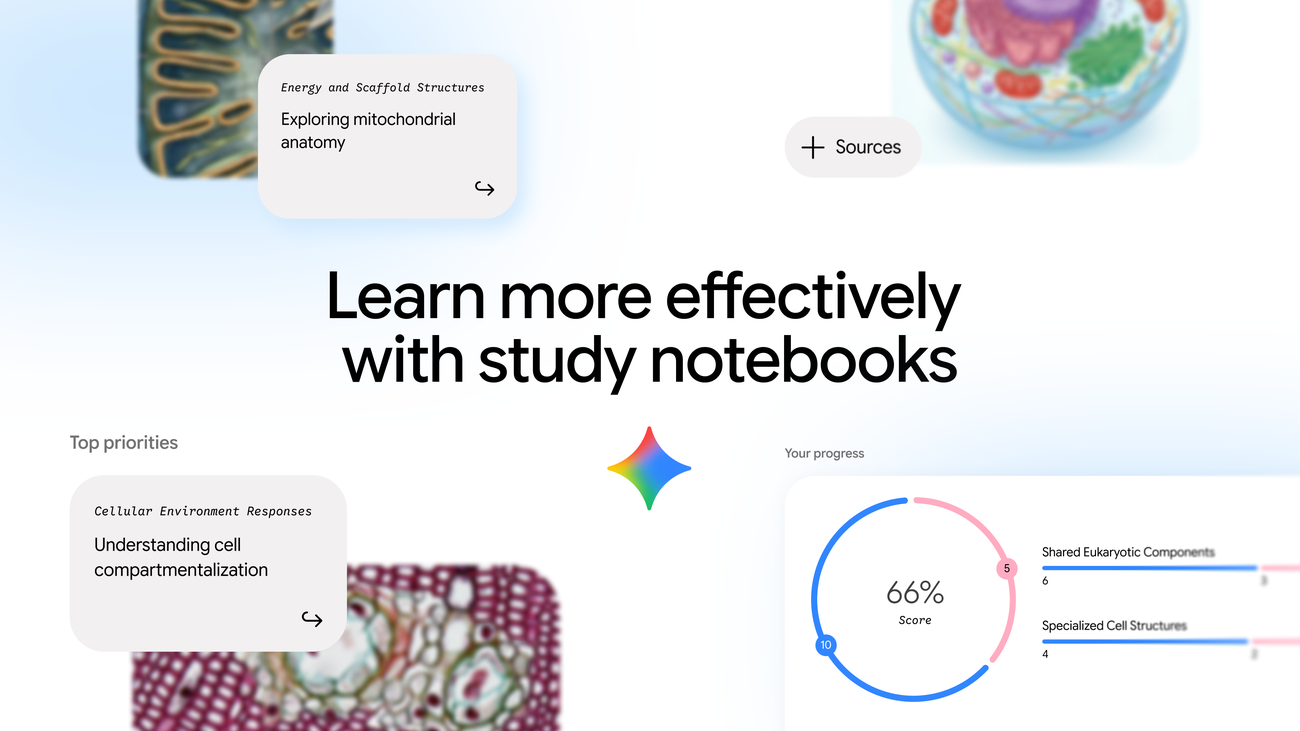
Google is rolling out study notebooks in the Gemini app, adding a structured learning workspace to its mobile AI ecosystem. Announced on June 25, the feature is designed to build lessons around a student’s goal, identify knowledge gaps and track progress through follow-up quizzes. Google says study notebooks are rolling out globally in all languages where the Gemini app is available, while mobile support was planned for later this summer. The company’s official announcement does not provide a specific mobile release date.
The idea is more focused than asking a general chatbot to explain a topic. A student begins by uploading a syllabus, notes, reading list or other permitted class material. Gemini then creates a diagnostic quiz to establish a baseline. The result is intended to show which areas are already understood and which require more work, giving the student a starting point instead of a generic study plan.
From uploaded notes to a personalized study plan
Once the baseline is set, Gemini generates short lessons based on the identified gaps. Each lesson includes practice questions tied to the uploaded material, and students can pause to ask follow-up questions inside the same study notebook. Google says the feature can divide a learning goal into more than 100 individual objectives, then organize them into topics and label them as Strengths, Focus areas or Not started.
That structure is important because it makes the app’s progress view more concrete than a simple conversation history. The dashboard is designed to show what has been covered, what remains unfinished and which lesson should be prioritized next. It also updates as students complete additional quizzes, allowing the plan to change with their results rather than staying fixed after the first prompt.
Google is also connecting study notebooks with NotebookLM. The company says students can bring past Gemini conversations and uploaded sources into NotebookLM to create additional materials such as flashcards and Video Overviews. In practice, that makes the Gemini app the entry point for planning and practice, while NotebookLM can serve as a separate space for revisiting source material and creating revision aids.
Exam preparation is part of the rollout
The feature is not limited to school assignments. Google says students can already use study notebooks for SAT preparation based on questions from The Princeton Review. The company also named JEE, NEET, ENEM, ACT and GRE as exams it plans to add during the summer. Availability may vary by account type and region, so students should check the Gemini app rather than assume that every exam option is present.
There is a useful distinction here between generating an explanation and providing authoritative exam preparation. Study notebooks can organize supplied material and create practice activities, but the quality of the result depends on the sources a student uploads and on how accurately Gemini interprets them. An AI-generated explanation should therefore be treated as a study aid, not as a replacement for a teacher, official syllabus or exam authority.
What the mobile angle means
For smartphone users, the most significant part of the announcement is the planned mobile support. Study notebooks were initially described as available on the web, with phone support coming later in the summer. That timing matters because the feature’s usefulness depends on whether students can review a lesson, answer a quiz or check their progress between classes without returning to a desktop browser.
Google has not said in this announcement whether the mobile experience will match the web version feature for feature. It also has not published a detailed list of supported devices, storage requirements or a precise release schedule. Those details should be confirmed before describing the feature as fully available on every Android or iPhone.
The rollout also raises practical privacy considerations. Students should upload only material they are allowed to use and should remove unnecessary personal identifiers from notes or documents. They should also compare generated lessons with their original course sources, particularly when studying science, medicine, law or any subject where a small error could change the meaning. These precautions do not undermine the convenience of the feature; they help keep the student in control of the learning process.
Study notebooks show Google moving Gemini toward more persistent, task-focused experiences inside a familiar app. The announcement presents a clear workflow: establish a baseline, study in short sessions, test understanding and use the dashboard to decide what comes next. Whether that becomes genuinely useful on smartphones will depend on the mobile rollout and on how reliably the app stays grounded in the material students provide.