
Noticia
Qualcomm’s Snapdragon 6 Gen 5 and 4 Gen 5 Target Smoother Smartphones in Late 2026
Qualcomm has announced two new mobile platforms aimed at bringing faster app launches, smoother graphics and broader 5G features to smartphones arriving in the second half of 2026.
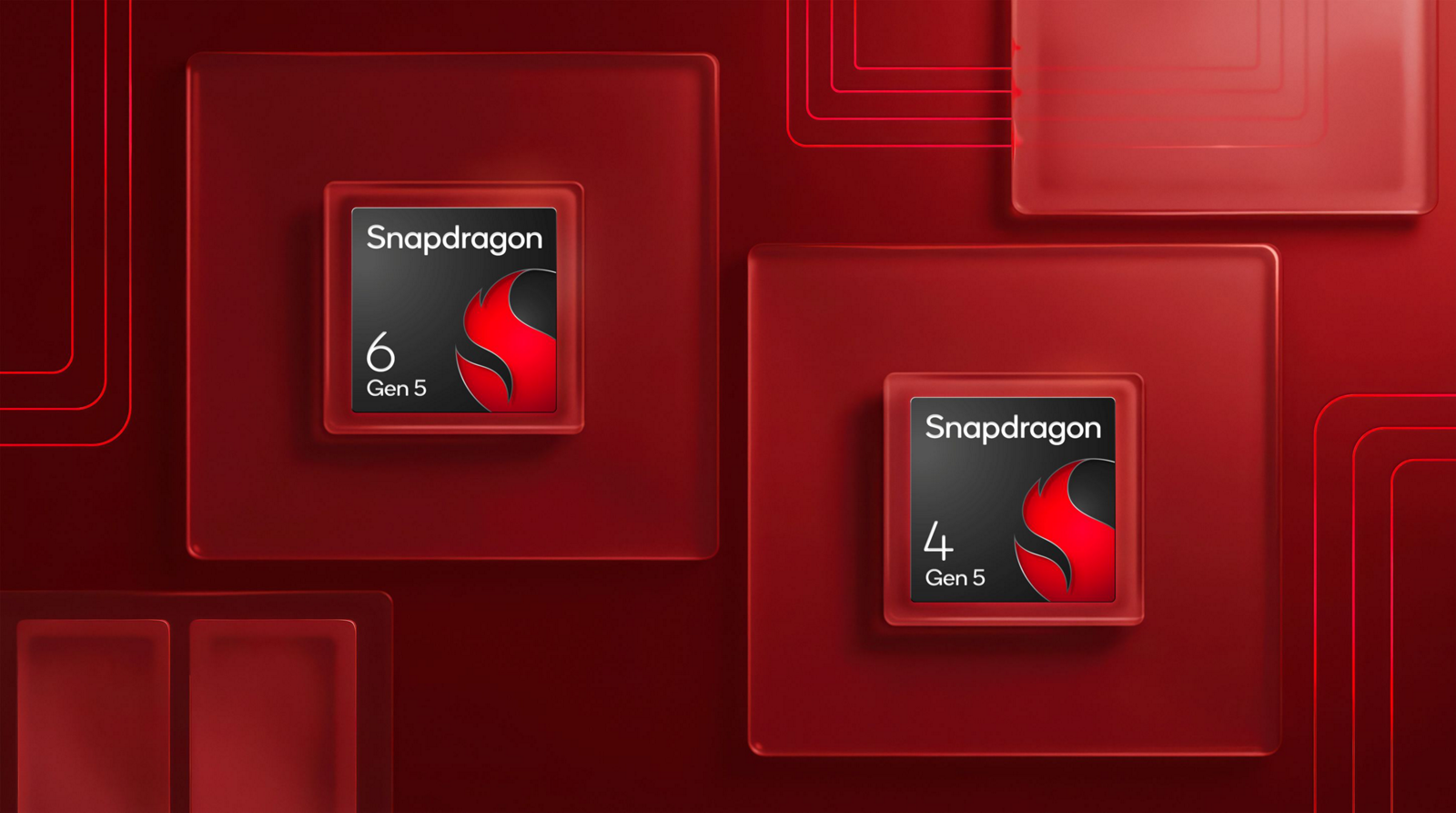
Qualcomm is preparing a new wave of smartphone hardware for the second half of 2026. On May 7, the company announced the Snapdragon 6 Gen 5 Mobile Platform and Snapdragon 4 Gen 5 Mobile Platform, two chipsets designed to improve everyday responsiveness, gaming and connectivity across a wider range of Android phones.
The announcement is focused less on a single flagship feature and more on the routine interactions that shape how a phone feels in use. Qualcomm says both platforms introduce Snapdragon Smooth Motion UI, a technology intended to make navigation feel more fluid by reducing delays when opening apps and moving through on-screen content.
Faster launches and less visible stutter
According to Qualcomm, the Snapdragon 6 Gen 5 delivers app launches that are up to 20% faster than the previous Snapdragon 6 Gen 4, while screen stutter is reduced by up to 18%. The Snapdragon 4 Gen 5 is claimed to improve app-launch speed by up to 43% compared with the Snapdragon 4 Gen 4 and reduce screen stutter by up to 25%.
Those figures come with an important qualification. Qualcomm says the comparisons were made against the previous-generation platforms using Qualcomm Reference Designs in its internal laboratories. They are therefore manufacturer test results, not independent measurements from finished retail phones. Actual performance will depend on the phone’s software, memory, cooling system, display and battery configuration.
What the Snapdragon 6 Gen 5 adds
The Snapdragon 6 Gen 5 is positioned as the more capable of the two new platforms. Qualcomm says it can deliver up to 21% better GPU performance than the Snapdragon 6 Gen 4, alongside support for AI-powered camera features, immersive gaming and the company’s Adaptive Performance Engine 4.0.
The platform also supports 5G and Wi-Fi 7 connectivity. Qualcomm presents that combination as a way for manufacturers to offer quicker network access and more responsive wireless connections in phones that do not use its flagship Snapdragon tier. The company has not announced specific devices, prices or market-by-market availability for the platform.
Qualcomm says the Snapdragon 6 Gen 5 will appear in upcoming smartphones from global manufacturers including Honor and REDMI. Those devices are expected to arrive during the second half of 2026, but the announcement does not identify launch dates or confirm which countries will receive them.
The Snapdragon 4 Gen 5 brings 90 frames per second to the series
The Snapdragon 4 Gen 5 focuses on making core smartphone experiences more accessible. Qualcomm says its GPU performance can improve by up to 77% over the Snapdragon 4 Gen 4, and that it brings 90FPS gaming to the Snapdragon 4-series for the first time.
A higher frame rate can make supported games and compatible interfaces appear smoother, but the result will still depend on the individual game, display refresh rate, thermal limits and the manufacturer’s software settings. The 90FPS claim should therefore be read as a platform capability rather than a guarantee that every phone using the chip will run every title at that speed.
Connectivity is another focus. The Snapdragon 4 Gen 5 supports Dual SIM Dual Active, including 5G plus 5G or 4G combinations. That could be useful for people who keep separate personal and work numbers, travel frequently or rely on two mobile networks. Qualcomm says the first devices based on this platform will come from OPPO, realme and REDMI.
Why this announcement matters for phone buyers
Chip announcements can be difficult to translate into real buying advice because a processor is only one part of a finished smartphone. Qualcomm’s figures suggest that manufacturers will have new options for improving app responsiveness and graphics in phones scheduled for later this year, but they do not establish how any specific retail model will perform.
When the first devices arrive, buyers should look beyond the Snapdragon name. Check the phone’s memory capacity, display refresh rate, battery size, charging system, software support and camera hardware. It will also be worth confirming whether a manufacturer enables features such as 90FPS gaming or advanced camera processing in its regional software build.
The launch does, however, provide a clear indication of Qualcomm’s priorities for the next generation of mainstream Android phones: smoother interaction, more capable on-device graphics, AI-assisted camera tools and broader high-speed connectivity. The Snapdragon 6 Gen 5 aims to raise the performance ceiling, while the Snapdragon 4 Gen 5 is designed to bring several of those improvements to more affordable devices.
For now, the announcement is a technology roadmap rather than a product launch. Qualcomm has confirmed the two platforms and named the manufacturers expected to use them, but the phones themselves, their specifications, prices and release markets remain to be announced. Readers should treat the internal performance figures as directional until independent testing of finished devices becomes available.
Qualcomm’s official announcement contains the complete platform details and testing qualifications.