
Noticia
Vodafone boosts 5G upload speeds in Germany with new carrier aggregation
Vodafone says its new 5G uplink technology can make uploads up to 30% faster in Germany, with initial support for selected Xiaomi smartphones.
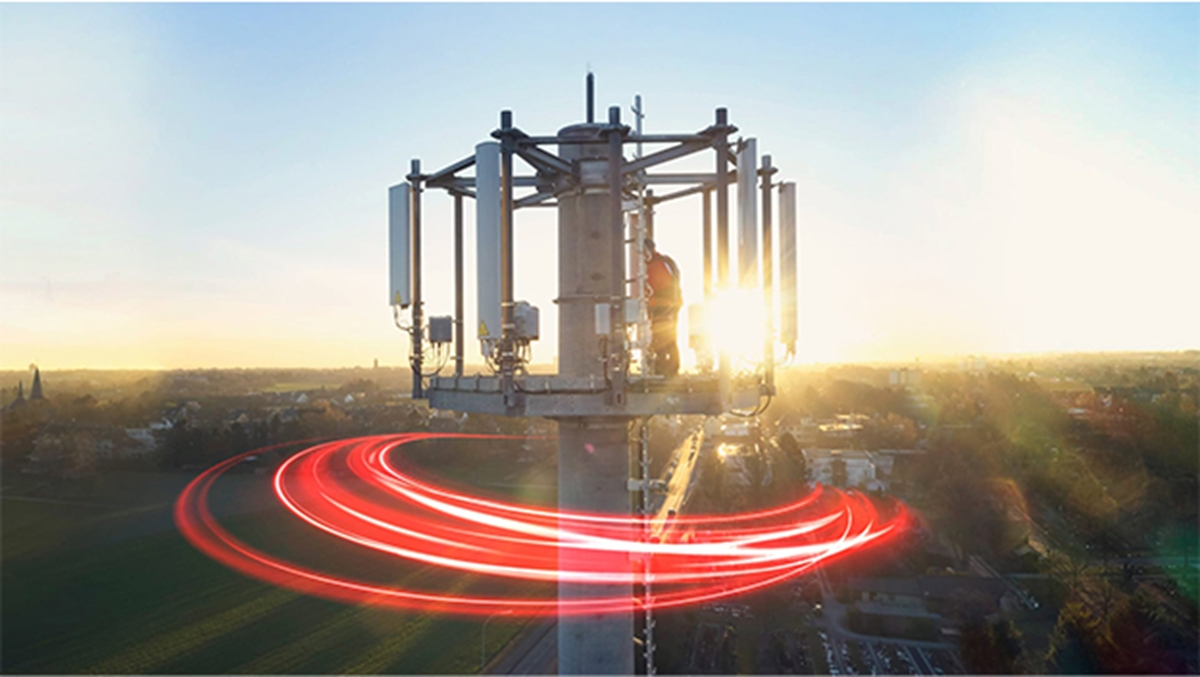
Vodafone is introducing a new 5G feature in Germany designed to make uploads faster for compatible smartphones. The operator says the technology can increase upload speeds by up to 30%, helping users send photos, videos and files to social networks or cloud services more quickly. The announcement was made in May 2026 in Vodafone’s official newsroom update.
The feature is based on Uplink Carrier Aggregation with Tx Switching. In practical terms, the phone and the mobile network can use multiple transmission channels more efficiently instead of relying on a single uplink path. Vodafone compares the approach with adding lanes to a highway: more capacity is available between the smartphone and the antenna, particularly when users are uploading demanding content.
Up to 200Mbps on the live network
Vodafone says the technology is now commercially available through Ericsson radio equipment deployed in its mobile base stations. The operator is initially quoting upload speeds as high as 200Mbps, although that figure is a maximum for compatible conditions rather than a guarantee for every customer. Actual performance will depend on the smartphone, the local network configuration, signal conditions, spectrum availability and congestion.
The first supported devices named by Vodafone are Xiaomi’s 15 Ultra and 17 Ultra. The operator expects additional handset brands and models to support the feature over time, but it has not published a complete compatibility list in the announcement. That means owners of other 5G phones should not assume that the upgrade is available simply because their device supports 5G.
From controlled tests to customer use
Vodafone’s commercial launch follows testing in Hanover, Germany, and Ciudad Real, Spain. During those controlled tests, engineers recorded peak upload speeds of 273Mbps. Those results show the potential of the technology, but they should not be read as a typical everyday speed. Vodafone itself notes that real-world performance can vary with traffic levels and other network conditions.
The distinction matters because uplink performance is often less predictable than download performance. A busy cell, an indoor location or a weak connection can reduce the amount of data a phone can transmit even when the network’s theoretical capacity is high. The new feature is intended to improve that uplink capacity, not to remove the normal limits imposed by coverage and radio conditions.
Why faster uploads matter
Most mobile data traffic is still download-heavy, driven by video streaming, web browsing and app content. Uploads are becoming more important, however, as people back up high-resolution photos, publish video, join video calls and share larger files from their phones. Vodafone also points to future uses involving artificial intelligence, smart glasses and connected cars, where devices may need to send more information continuously rather than simply receive it.
For smartphone users, the most visible benefit could be shorter waits when posting video or synchronising large files. A faster uplink can also help when several people are using the same cell site at a busy location. It does not automatically improve every part of the mobile experience: download speeds, latency and app responsiveness remain dependent on other parts of the network and on the service being used.
The role of 5G Standalone
Vodafone is positioning the upgrade as part of its wider 5G Standalone rollout. Unlike non-standalone 5G, which can rely partly on an existing 4G core, 5G Standalone uses a dedicated 5G core network and is designed to support more advanced capabilities. Vodafone says it is progressively updating sites to support Uplink Carrier Aggregation with Tx Switching as compatible devices become available.
That wording points to a gradual expansion rather than a nationwide switch that reaches every user at once. The feature is available on Vodafone’s live network in Germany, but coverage and handset support will determine who can use it. Vodafone has not announced a separate consumer charge for the uplink feature in this update, so the announcement should be understood as a network capability rather than a new tariff.
What users should take from the announcement
Vodafone’s update is notable because it moves an advanced 5G uplink technique from technical trials into commercial network use. For customers with a supported Xiaomi phone in an upgraded coverage area, the practical result should be faster transfers when conditions are favourable. For everyone else, the announcement is an indication of where 5G improvements are heading: not only higher download speeds, but also more reliable capacity for the data leaving the smartphone.
There is no manual procedure described by Vodafone for activating the feature. Users need compatible hardware, access to Vodafone’s supported 5G network and a location where the radio conditions allow the feature to operate. As more smartphones and sites are added, the benefit should become easier to encounter, but Vodafone’s quoted maximum remains a technical ceiling rather than a promised everyday result.