
Noticia
Vodafone Ireland tests satellite emergency link with a standard smartphone
Vodafone Ireland and the Irish government have tested direct-to-device satellite connectivity on Clare Island, showing how emergency teams could stay connected when terrestrial mobile coverage is unavailable.
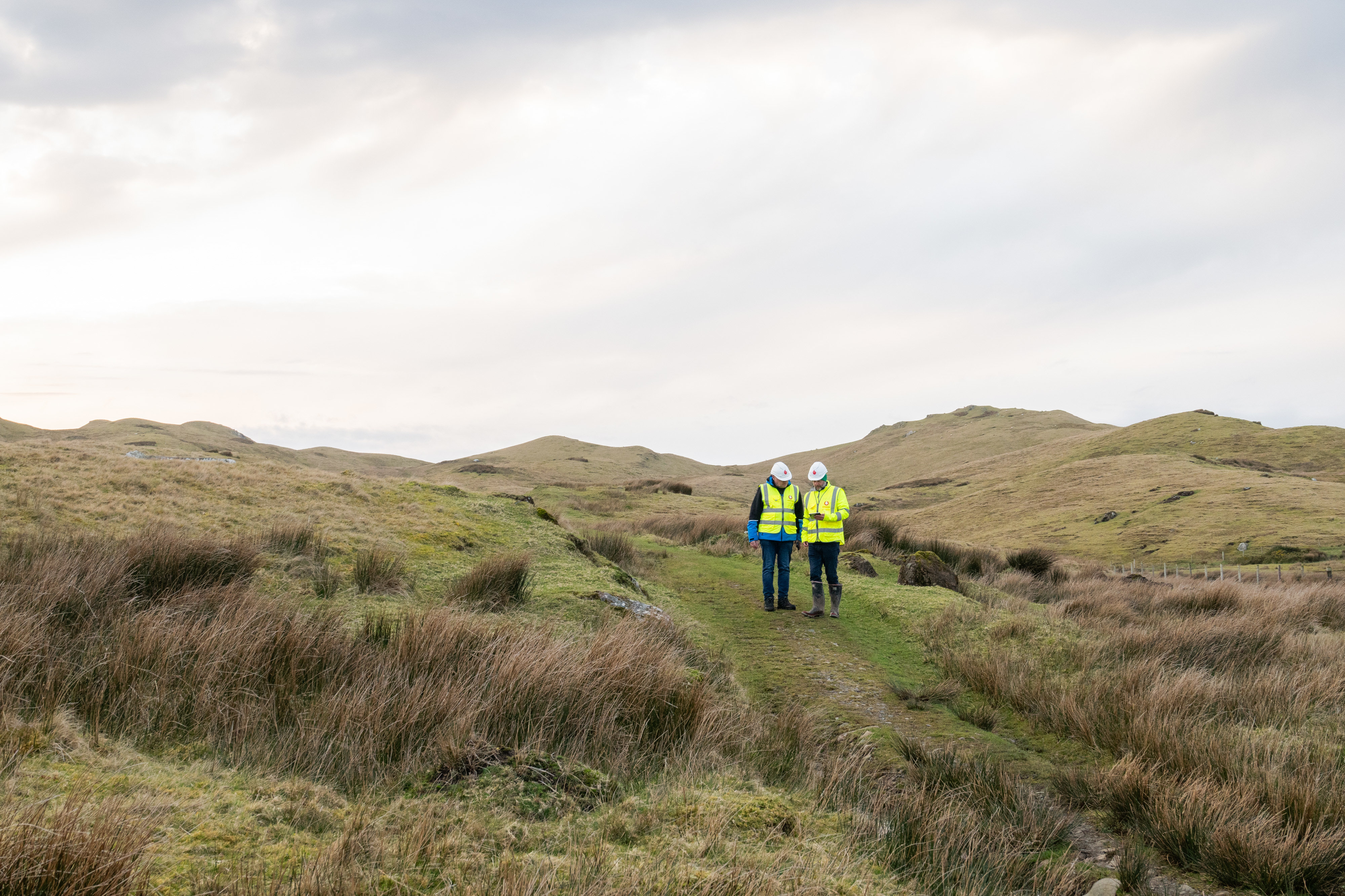
Vodafone Ireland says it has completed a live test of satellite connectivity for emergency and public-service organisations, using a standard smartphone on Clare Island in County Mayo. The announcement, dated 2 July 2026, points to a practical use for direct-to-device satellite technology: keeping frontline teams in contact when storms, power outages or difficult terrain disrupt conventional mobile networks.
The test was carried out with Ireland’s Office of the Government Chief Information Officer (OGCIO) as part of an ongoing collaboration on mission-critical communications, or MCx. Vodafone says the demonstration combined terrestrial mobile infrastructure with low Earth orbit (LEO) satellite connectivity supplied through Satellite Connect Europe, its joint venture with AST SpaceMobile.
What the trial demonstrated
Representatives from Vodafone and the OGCIO made a satellite-enabled MCx call from Clare Island to David Lund, coordinator of the European Union Critical Communications Service in the United Kingdom. The call connected to AST SpaceMobile’s satellite constellation and used an ordinary smartphone rather than a dedicated satellite handset, according to Vodafone’s official announcement.
That distinction matters. Traditional satellite phones are designed for specialist users and often require separate hardware, while direct-to-device systems aim to extend familiar mobile services to places where terrestrial coverage is missing. In this trial, Vodafone says the satellite connection supported voice and data services for frontline responders. It did not present the test as a consumer launch or as proof that every smartphone can connect to a satellite today.
Vodafone describes the demonstration as a first-of-its-kind test in Europe for this emergency-communications use case. The company’s wording is important: this was a technical and operational trial, not a commercial service announcement. The test took place in a remote setting chosen to reflect the coverage challenges faced by rural communities, emergency organisations and critical infrastructure operators.
Why satellite backup matters for mobile networks
Emergency communications are particularly vulnerable when a local network loses power or when responders move beyond the reach of terrestrial sites. A satellite layer can provide another route for communication, allowing teams to exchange information even when the usual network path is unavailable. Vodafone says the technology could help maintain access to Ireland’s 999 and 112 emergency services, regardless of a caller’s mobile provider, while also supporting police, fire and ambulance organisations.
The trial does not replace mobile towers. Instead, it illustrates how satellite connectivity might complement them. In normal conditions, phones can use terrestrial networks for higher capacity and lower latency. When a user moves into a coverage gap or a site is affected by an outage, a direct-to-device satellite connection could provide a limited but valuable fallback. The quality and availability of that fallback will depend on satellite visibility, network integration, spectrum arrangements and the capabilities supported by a particular handset.
Clare Island was a relevant location for the test because its terrain includes areas where conventional coverage can be difficult to maintain. Vodafone had already used the island for Ireland’s first mobile video call via satellite earlier in 2026. The latest demonstration extends that work toward public-service communications rather than presenting satellite connectivity only as a consumer convenience.
The remaining barriers are technical and regulatory
Vodafone Ireland has secured the country’s first test-and-trial licence for direct-to-device satellite technology and is working with ComReg on the regulatory framework needed for any future rollout. The company says it is continuing technical and regulatory engagement, with the ambition of bringing satellite broadband connectivity to customers and emergency services. No general launch date, device list or consumer pricing was announced.
That caveat is central to understanding the news. A successful call proves that the participating network, satellite system and test device worked together in the conditions of the demonstration. It does not establish nationwide availability, guaranteed emergency access or compatibility with every phone. Future deployments would still need to address handover between terrestrial and satellite networks, congestion management, emergency-service prioritisation, location handling and public-safety procedures.
For smartphone users, the most meaningful development is therefore not an immediate new setting to activate. It is the direction of travel: mobile operators and satellite partners are trying to make coverage more resilient without asking people to carry a second communications device. If the technical and regulatory work progresses, remote communities and response teams could gain an additional safety net while continuing to use familiar mobile equipment.
Vodafone’s Clare Island trial is an early demonstration rather than a finished service. Its value lies in showing that a standard smartphone can participate in an integrated terrestrial-and-satellite emergency-communications test. The next evidence to watch will be broader field trials, published service requirements and clear information about which devices and networks will eventually support direct-to-device connectivity.
Vodafone’s official announcement provides the source details for the test.