
Actualité
Google’s June Android Drop Adds Safer Calls and Easier iPhone Sharing
Google’s June Android Drop brings fake-call warnings, expanded Quick Share support with iPhone, and new features across Photos, Personal Safety, Play Books and Gboard.
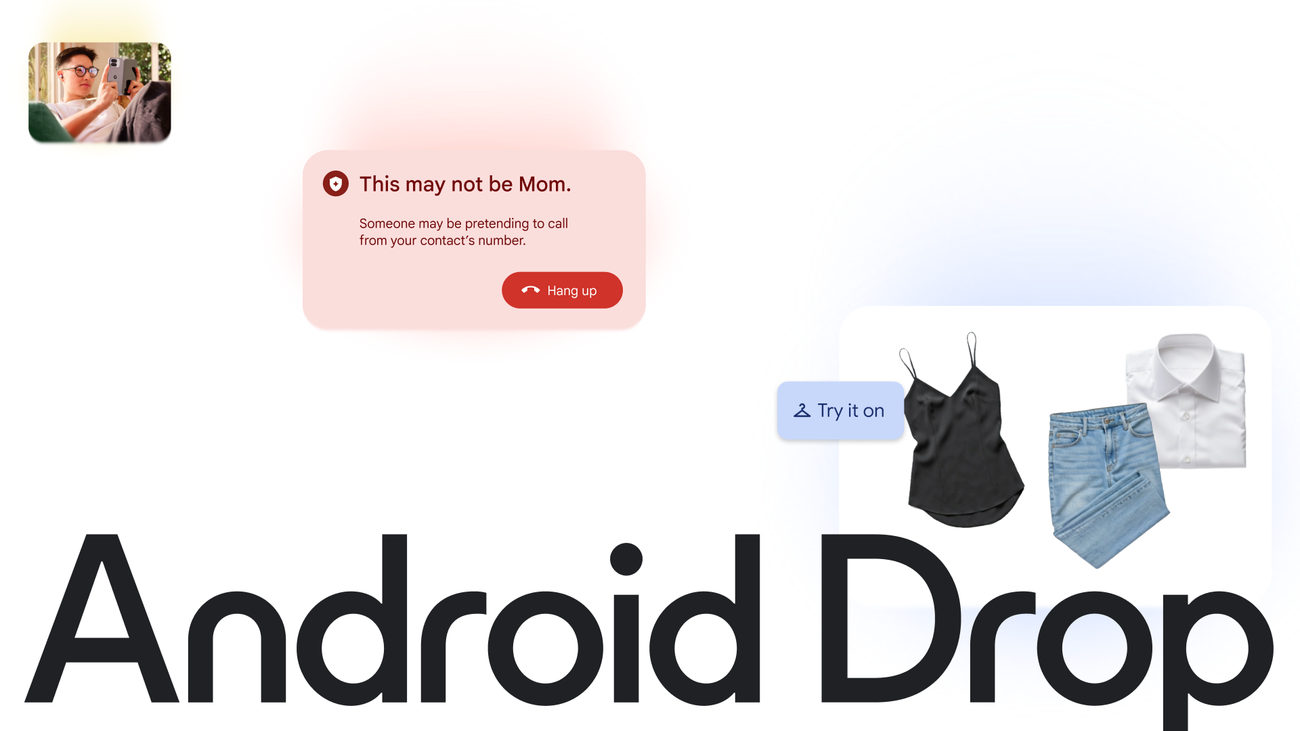
Google’s June 2, 2026 Android Drop is less a single operating-system overhaul than a set of app and device updates aimed at everyday friction. Google says the release adds warnings for calls that may be impersonating a trusted contact, expands Quick Share interoperability with iPhone, and introduces new features in Google Photos, Personal Safety, Google Play Books and Gboard.
That mix makes the announcement relevant beyond Pixel owners. It shows how Google is shipping mobile changes through individual services, so the useful question is not simply whether a phone is running a new Android number. It is whether the relevant app, device and market are included in each rollout.
A warning that targets contact spoofing
The most consequential change is fake call detection in Phone by Google. Google says the feature can check whether an incoming call is actually coming from a contact’s device. If a scammer is pretending to call from a number already saved in the phone, the user receives a warning and can end the call quickly.
Google lists Android 12 and later devices with Phone by Google as the platform for this feature. That wording matters: the announcement describes a capability tied to a particular phone application and a compatible Android version, rather than a universal change to every dialer. The warning is a useful signal, but it is not a reason to disclose passwords, verification codes or payment details. A suspicious caller still deserves the same caution as before.
Quick Share moves closer to platform neutrality
Google also says Quick Share now works with AirDrop on more Android devices, allowing select Android phones and iPhones to exchange photos, videos and documents without an internet connection. The company presents the change as a way to make cross-platform sharing less awkward, especially when friends or family use different phones.
There are two important limits in that sentence. Google says “select” Android phones, and the rollout is described as an expansion rather than a promise that every Android model gains the same compatibility at once. Users should therefore look for the feature on their own device before planning a transfer. The announcement does not claim that every AirDrop workflow or every Android handset is covered.
The broader change is still meaningful. Local file sharing has traditionally been shaped by platform boundaries, with users often switching to a messaging app or cloud service when a nearby device used another operating system. Quick Share’s expanded AirDrop support gives compatible phones a more direct route for common files and avoids uploading them simply to move them across a room.
More functions arrive through individual apps
The same release adds several smaller but concrete changes. Circle to Search can identify a complete outfit, from tops to footwear, without requiring the user to leave the current app. Google says this is available on Android 14 and later devices that already support Circle to Search.
Google Photos is also preparing a digital wardrobe that turns clothes visible in a user’s photo library into browsable snapshots. Google says the rollout begins with eligible users in the United States, India and Brazil on Android 10 and later. The company describes the feature as coming to users in stages, so the announcement is not a guarantee of immediate access in every country.
For families, Google says the Personal Safety app will add features for children under 13, including medical information and emergency contacts on the lock screen, while teenagers will be able to use Safety Check and real-time location sharing with emergency contacts. The company says these additions are coming soon and that the Personal Safety app is available globally; it does not give one universal date for every feature.
Google Play Books is getting a reading companion called “Catch me up,” which can recap what a reader has already read. Book insights begin rolling out in the app for selected English-language titles, including thousands of titles available at no charge, according to Google. Gboard is also receiving new Emoji Kitchen combinations, another example of a feature arriving at the app layer rather than as a handset-wide redesign.
Why the rollout details matter
The June Android Drop is a useful snapshot of Google’s current mobile strategy. The company is grouping safety, sharing, personalization and family tools in one announcement, but the delivery model remains fragmented by service. Phone by Google, Quick Share, Google Photos, Personal Safety, Play Books and Gboard each have their own compatibility or availability conditions.
For readers, that makes the original wording more valuable than a generic claim that an update is “available on Android.” Check the Android version, confirm that the named app is installed or supported, and treat country-specific or staged-rollout language as a real limitation. That habit is especially important for safety features: a warning system can add protection, but it should complement rather than replace careful decisions during an unexpected call.
Google’s announcement is therefore not just a list of seasonal features. It is a reminder that Android’s practical evolution increasingly happens inside the services people already use. The result can be useful without requiring a new phone, but the benefit depends on the exact combination of device, app, account and market.
By Lea Evans