
Actualité
OPPO Find X9 Ultra Puts 10x Optical Zoom in Focus
OPPO’s Find X9 Ultra combines a 50MP 10x optical telephoto, dual 200MP cameras and pro-focused video tools in a camera-first smartphone.
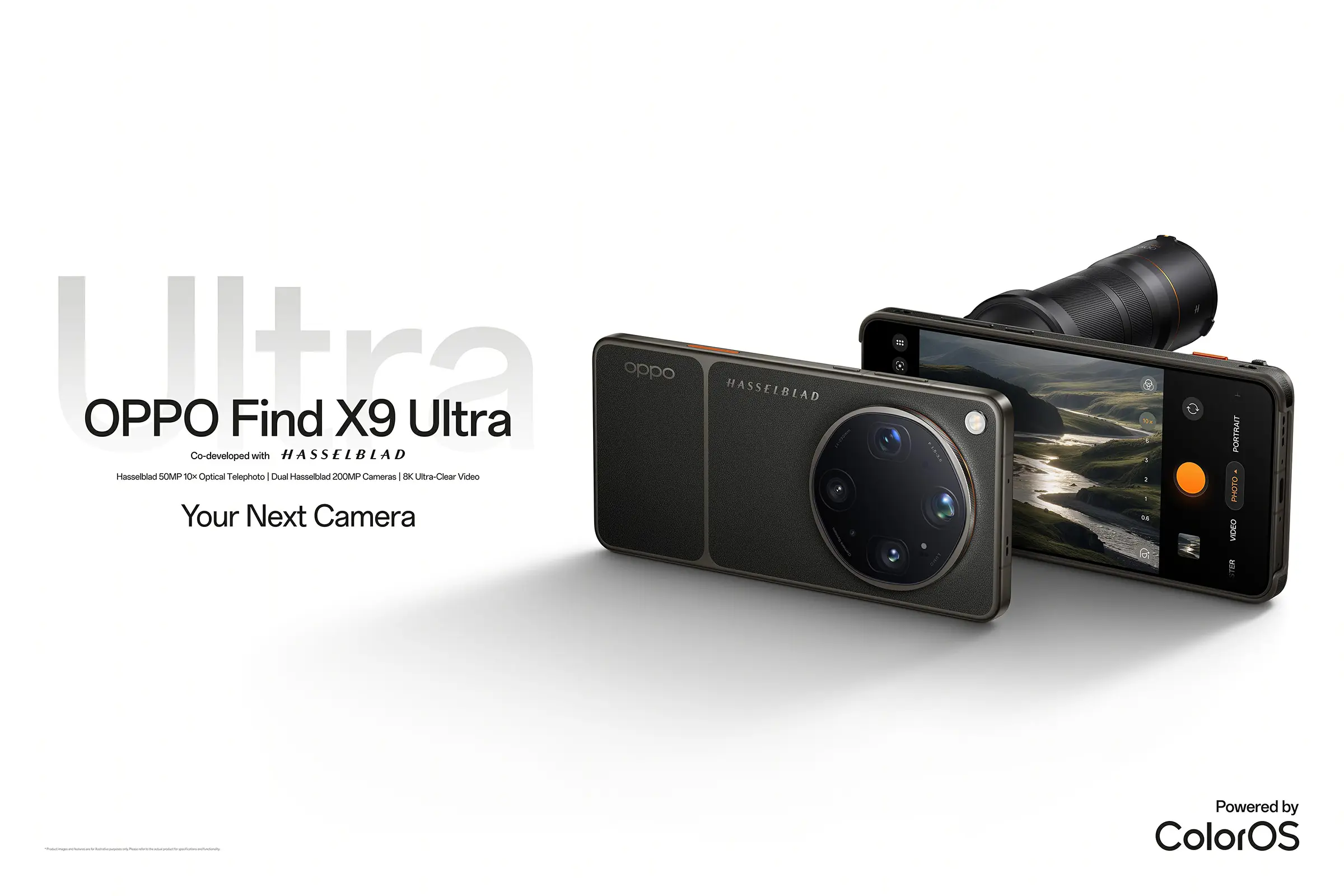
OPPO is putting long-range mobile photography at the centre of its latest flagship announcement. The company says the Find X9 Ultra, unveiled in Singapore on 21 April, combines a 50-megapixel 10x optical telephoto with two 200-megapixel Hasselblad cameras. The headline is not simply a larger sensor count: OPPO is trying to solve the physical problem of fitting serious reach into a phone-sized camera module.
According to OPPO's official announcement, the telephoto uses a Quintuple Prism Reflection Periscope Structure. The light path is folded five times, while the company says the design reduces the module's length by 30 percent. OPPO also lists sensor-shift optical stabilisation and a 50-megapixel JNL sensor for this camera. It claims 10x true optical zoom and 20x optical-quality zoom; those are manufacturer specifications, not independent measurements.
A camera system built around reach
The 10x unit sits alongside a 200-megapixel main camera based on Sony's LYTIA 901 sensor, with a stated 1/1.12-inch format and f/1.5 aperture. A second 200-megapixel sensor serves a 3x telephoto, while a 50-megapixel ultra-wide camera covers expansive scenes. A separate True Color Camera measures white-balance information across still images, motion photos and video, according to OPPO.
OPPO presents the five-camera arrangement as a continuous creative range from 14mm to 460mm through what it calls optical-quality cropping. That wording matters: it describes the company's processing approach rather than promising that every intermediate focal length is produced by a dedicated optical lens. The practical question for photographers will be how consistently the phone maintains detail, colour and stabilisation when light falls or when a subject moves.
The company is also leaning into manual control. Hasselblad Master Mode is designed to reduce aggressive tone mapping, and OPPO says it supports 50-megapixel JPEG MAX and RAW MAX files across six focal lengths. Users can choose from nine film simulations or save a custom preset. The optional Earth Explorer Kit adds a case with a focus-and-shutter button, a zoom dial and a 300mm-equivalent teleconverter that OPPO says reaches 13x optical zoom when paired with the 3x telephoto.
Video is part of the pitch
For creators, the announcement extends beyond still photography. The Find X9 Ultra is specified to record 4K at 60 frames per second with Dolby Vision HDR, with zoom quality claimed from 0.6x to 30x. OPPO also lists 4K at 120fps and 8K at 30fps from the dual 200-megapixel cameras. Its O-Log2 profile is intended to preserve grading latitude, while 3D LUT support allows a chosen colour profile to be monitored or burned into the video file. OPPO says the phone is ACES-certified, a detail aimed at users who move footage into established production workflows.
Those modes place unusual demands on a mobile device, so OPPO pairs the camera package with a Snapdragon 8 Elite Gen 5 Mobile Platform, a vapor chamber and an Encapsulated Thermal Unit. The rest of the specification is similarly high-end: a 6.82-inch 144Hz QHD+ AMOLED display, a claimed peak HDR brightness of 3,600 nits, a 7,050mAh silicon-carbon battery, 100W wired charging and 50W wireless charging.
ColorOS adds an AI layer
The smartphone ships with ColorOS 16. OPPO highlights Live Space for grouping notifications, AI Mind Space for capturing and organising on-screen information, and AI Bill Manager for turning payments and receipts into spending records. AI Mind Pilot can coordinate several AI models and compare their answers, while AI Menu Translation creates a visual guide to foreign dishes. OPPO says AI Mind Pilot will initially be available in selected countries and regions in Asia, so its presence should not be assumed in every market.
This software layer is relevant to the camera story because the Find X9 Ultra is being positioned as a capture-and-edit device rather than a phone with a powerful camera bolted on. At the same time, the announcement does not provide independent image samples, battery tests or sustained-performance measurements. Buyers should therefore treat the long-range claims, water-resistance ratings and endurance language as specifications and laboratory statements from OPPO until outside testing is available.
Availability is regional in the published details
OPPO's Singapore newsroom lists the Find X9 Ultra from SGD 2,199, with pre-orders starting on 22 April in Tundra Umber and Canyon Orange. The same announcement names M1, Singtel, StarHub, OPPO Brand Stores and several authorised retailers in Singapore. It does not establish a single worldwide price or a universal release schedule, so readers elsewhere should wait for a local OPPO announcement rather than extrapolate from the Singapore terms.
The Find X9 Ultra is an ambitious answer to a familiar smartphone-camera compromise: reaching farther without turning the handset into a separate camera. Its five-prism telephoto and dual 200-megapixel system are the most distinctive parts of the announcement, while the RAW, log and LUT tools show how seriously OPPO is courting creators. Whether that hardware translates into a meaningful advantage will depend on independent comparisons in low light, moving subjects, video heat management and the quality of the phone's intermediate zoom steps. For now, the verified news is that OPPO has announced the platform and its claimed capabilities; a real verdict still requires a proper test.