
Actualité
Samsung’s Flex Titanium display tech targets thinner, less visible creases in foldables
Samsung says its new two-part titanium display structure could improve durability, crease visibility and efficiency in its next generation of foldable phones.
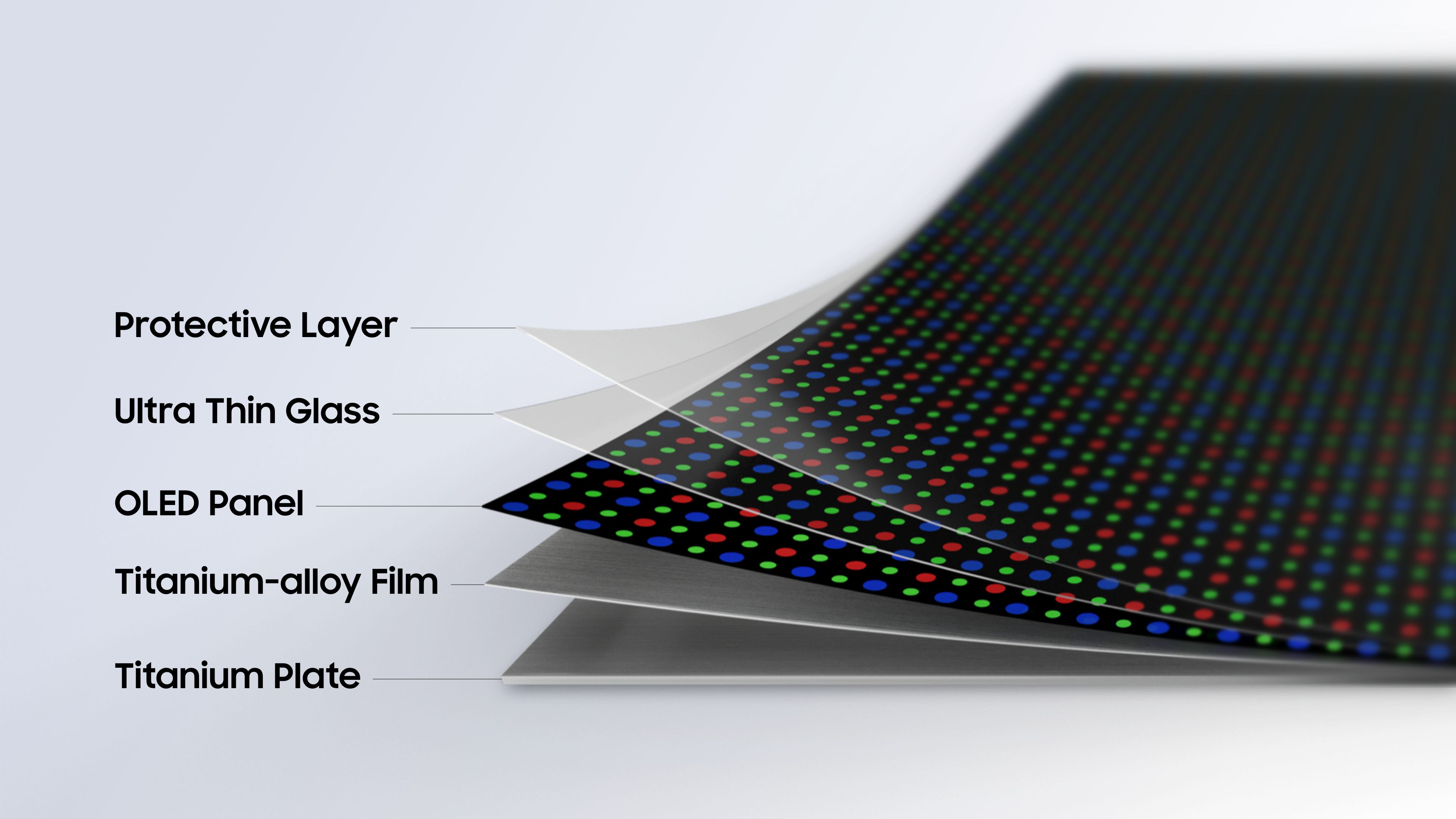
Samsung has introduced Flex Titanium, a new display construction for next-generation Galaxy foldable devices. The company announced the technology on July 15, 2026, presenting it as a way to improve durability, reduce the visibility of the crease and keep the display structure slim. This is a component-level announcement, not a complete phone launch: Samsung did not publish a price, retail availability, device dimensions or a fold-count rating in the announcement.
Two titanium components in the display stack
Rather than describing titanium as a single replacement material, Samsung outlines a two-part structure. A titanium-alloy film sits beneath the OLED panel and supports the display from within. Samsung says this film provides 20 times greater mechanical stiffness than polymer film. It is also produced through precision rolling, which the company says makes it roughly one-third the thickness of an average human hair and helps enable a slimmer panel.
Those figures describe the film component, not the durability of an entire smartphone. They also do not amount to a drop test, a laboratory comparison of finished devices or a guarantee that every model using the technology will behave identically. The practical significance is that Samsung is trying to add stiffness without turning the flexible display into a rigid one.
A flexible plate beneath the module
Below the display module, Samsung places a titanium plate designed to provide additional support while retaining the ability to bend. The company says advanced hole-processing technology creates a more flexible folding area and allows the plate to bond more closely with the display module by removing air gaps between the module and its adhesive layer.
Samsung says the resulting structure provides more stable support when the display is unfolded while still accommodating repeated folding. The design is therefore aimed at balancing three competing requirements: resistance to external stress, flexibility at the hinge area and a thin overall profile. The announcement does not specify a rated number of folds or describe how the assembly performed in an independent endurance test.
What users may notice
Samsung connects Flex Titanium with two visible goals: a more refined viewing experience and a less noticeable crease. It also says that a high-resolution display architecture and next-generation organic materials can deliver vivid images while reducing power consumption.
These remain manufacturer claims rather than independently measured results. Samsung has not supplied brightness figures, battery-life data, power-consumption measurements or a side-by-side crease comparison in the announcement. The technology could still matter to buyers because the display stack sits at the centre of the foldable experience, but the real-world benefit will depend on the complete phone design, hinge mechanism, software and manufacturing consistency.
Why the construction matters
Foldable displays have to perform two jobs at once. They must remain stable enough to support touch input and image quality across a large surface, yet flexible enough to survive movement around the hinge. A material such as titanium can provide strength and stiffness, but that advantage creates an engineering challenge when the material must also be rolled thin and shaped around a folding section.
Samsung’s approach addresses that challenge through separate roles for the film and plate. The film supports the OLED panel from inside the stack, while the plate reinforces the underside and uses patterned openings to preserve flexibility at the bend. In theory, separating those functions can give engineers more control over thickness, support and movement. In practice, independent testing will be needed to determine how the structure behaves after long-term use.
What Samsung has not confirmed
The announcement does not identify a specific retail model, price, regional availability, display dimensions or repair process for Flex Titanium. Samsung says the technology will debut with its next-generation Galaxy foldable devices and that further details would be revealed at Galaxy Unpacked. That makes the July announcement a preview of display engineering rather than a complete product specification.
For readers comparing foldables, the sensible takeaway is to treat Flex Titanium as a potentially meaningful change beneath the screen, not as proof of a better phone by itself. A thinner display stack and a less visible crease could improve everyday use, but those outcomes still need to be assessed on finished devices through independent measurements and long-term durability testing.
The bottom line
Flex Titanium shows Samsung focusing on the mechanical details that shape the foldable experience. Its two-part titanium structure is designed to combine support, flexibility and a slimmer profile, while Samsung also links the design to improved viewing and efficiency. The announcement offers a clear explanation of the intended architecture, but it leaves the most important consumer questions—real-world endurance, measurable power savings and consistency across models—open for future testing.
Read the full Samsung Newsroom announcement for the company’s technical description.