
Actualité
Samsung’s Health Assistant beta turns Samsung Health data into AI wellness guidance
Samsung has started a U.S. beta of Health Assistant, an AI feature that connects sleep, activity, nutrition, mindfulness and vital data inside Samsung Health.
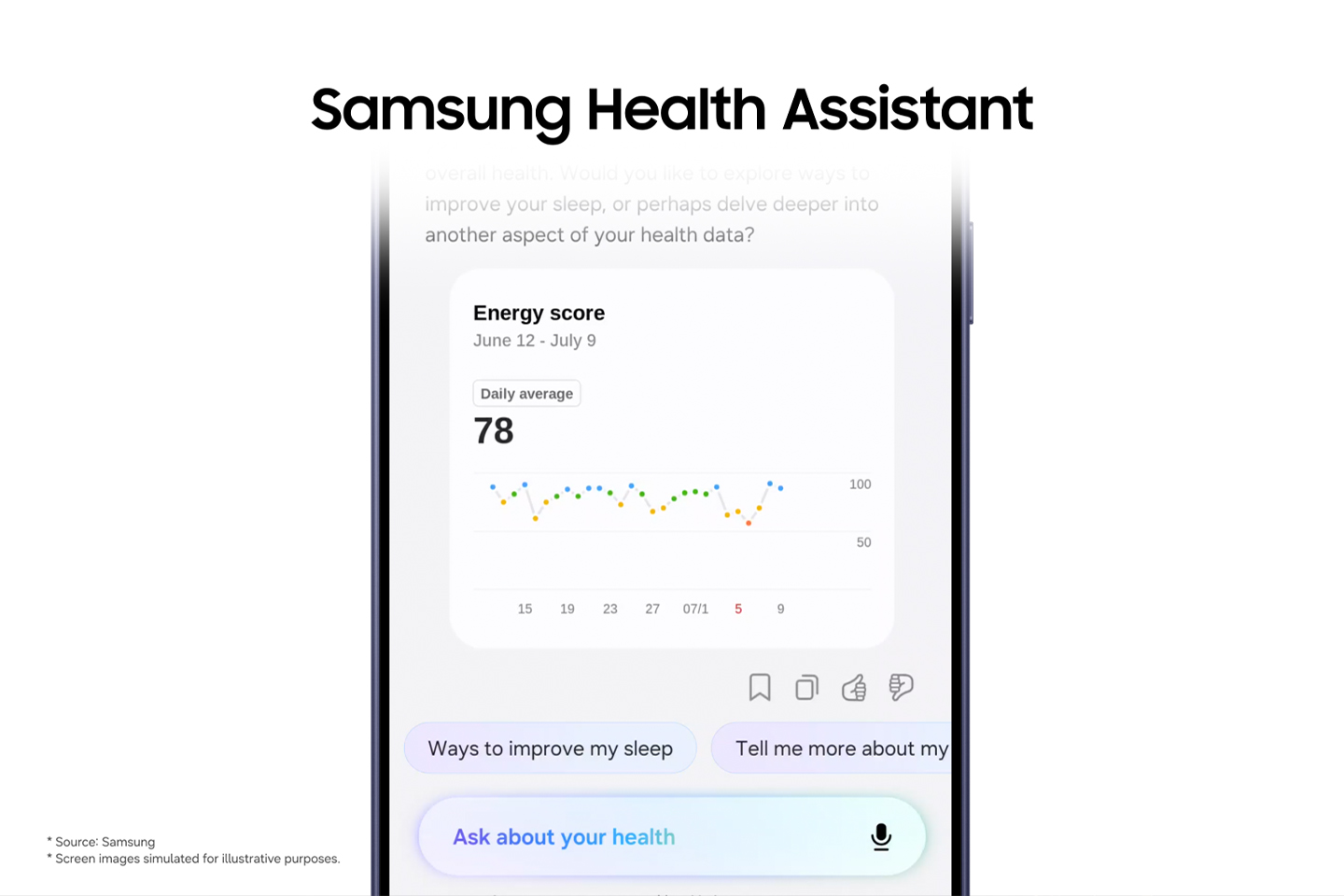
Samsung is testing a new way to make its health platform more conversational. Announced on July 21, 2026, Samsung Health Assistant is a fully integrated AI-powered feature inside Samsung Health, currently available in beta to eligible users in the United States.
The launch matters because it moves Samsung Health beyond a collection of separate dashboards. Rather than asking users to interpret every chart on their own, Health Assistant is designed to connect information from across the app and explain how different parts of a person’s routine may relate to one another. Samsung says users can ask questions about their health and receive personalized guidance based on the information already available in Samsung Health.
Five sources of wellness data in one view
Samsung says Health Assistant brings together five core pillars of wellness: sleep, activity, nutrition, mindfulness and vitals. The goal is to turn those separate streams into more useful context. A change in sleep, for example, can be considered alongside activity or heart-rate information instead of being viewed as an isolated number.
The assistant is also intended to identify patterns and signals that users might otherwise miss. Samsung says its recommendations are supported by the company’s health knowledge base and have been validated by physicians and certified health coaches. That description indicates an emphasis on interpretation and habit-building, rather than simply adding another tracker to the Samsung Health app.
Energy Score is part of the experience
One visible part of the beta is the ability to view Energy Score and receive tailored health recommendations directly within Health Assistant. Samsung’s availability notes say Energy Score works on Android phones running Android 11 or later and requires Samsung Health version 6.27 or above, as well as a Samsung Account.
The feature also depends on compatible Samsung wearable data. To calculate Energy Score, activity, sleep and sleeping heart-rate information from a Galaxy Watch or Galaxy Ring must be synchronized with Samsung Health. Samsung says at least the previous day’s activity, sleep and sleeping heart-rate data are required. Availability can vary by country, region and language, so the announcement should not be read as a global rollout.
A beta with clear limits
Health Assistant is arriving in an area where confident wording can quickly become misleading. Samsung explicitly says the feature will not provide medical advice, diagnosis or treatment recommendations. Its role is to help users understand wellness data and make everyday tracking more actionable, not to replace a doctor or make clinical decisions.
That distinction is important. Personalized suggestions can still be useful for spotting trends, preparing questions for a healthcare professional or building more consistent routines, but users should treat them as general wellness guidance. A recommendation generated from a phone or wearable should never be used to delay care or change medication without professional advice.
Samsung’s wider connected-care plan
The company is presenting Health Assistant as part of a broader connected-care strategy. Samsung says its acquisition of Xealth is intended to help connect user-consented wellness insights with care teams securely and at scale. The announcement does not describe a universal clinical service, and the current beta remains focused on the Samsung Health experience for eligible U.S. users.
Samsung also outlined capabilities it may explore in the future, including coaching for behavior change and additional Samsung Health services such as weight management. The company says the assistant could eventually use its Personal Data Engine to consider context such as calendar events or established habits when generating responses. Those ideas are future plans, not features that Samsung has confirmed as available in the current beta.
What users should check before trying it
Anyone who sees the beta should first confirm that their phone meets the Android requirement, that Samsung Health is up to date and that their Samsung Account is connected. Wearable owners should also check that their Galaxy Watch or Galaxy Ring is synchronizing the relevant data. Missing sleep or heart-rate records may limit what Energy Score and the assistant can show.
It is equally important to review what information is being used to personalize the experience and to keep expectations realistic. Health Assistant may make existing Samsung Health data easier to understand, but it cannot turn incomplete tracking into a complete picture of someone’s health. The quality of its guidance will depend on the consistency and accuracy of the data collected across the phone and connected devices.
Samsung’s beta is therefore best understood as an experiment in interpretation: a software layer that attempts to connect wellness signals, explain their relationships and offer practical next steps. Its usefulness will depend less on the novelty of an AI chat interface than on whether its recommendations remain clear, cautious and genuinely grounded in the user’s own data.