
Actualité
Samsung Wallet adds Digital Home Key for compatible smart locks
Samsung is extending Wallet beyond payments and vehicle access with a Digital Home Key for compatible smart locks, using Aliro, Matter and Galaxy security controls.
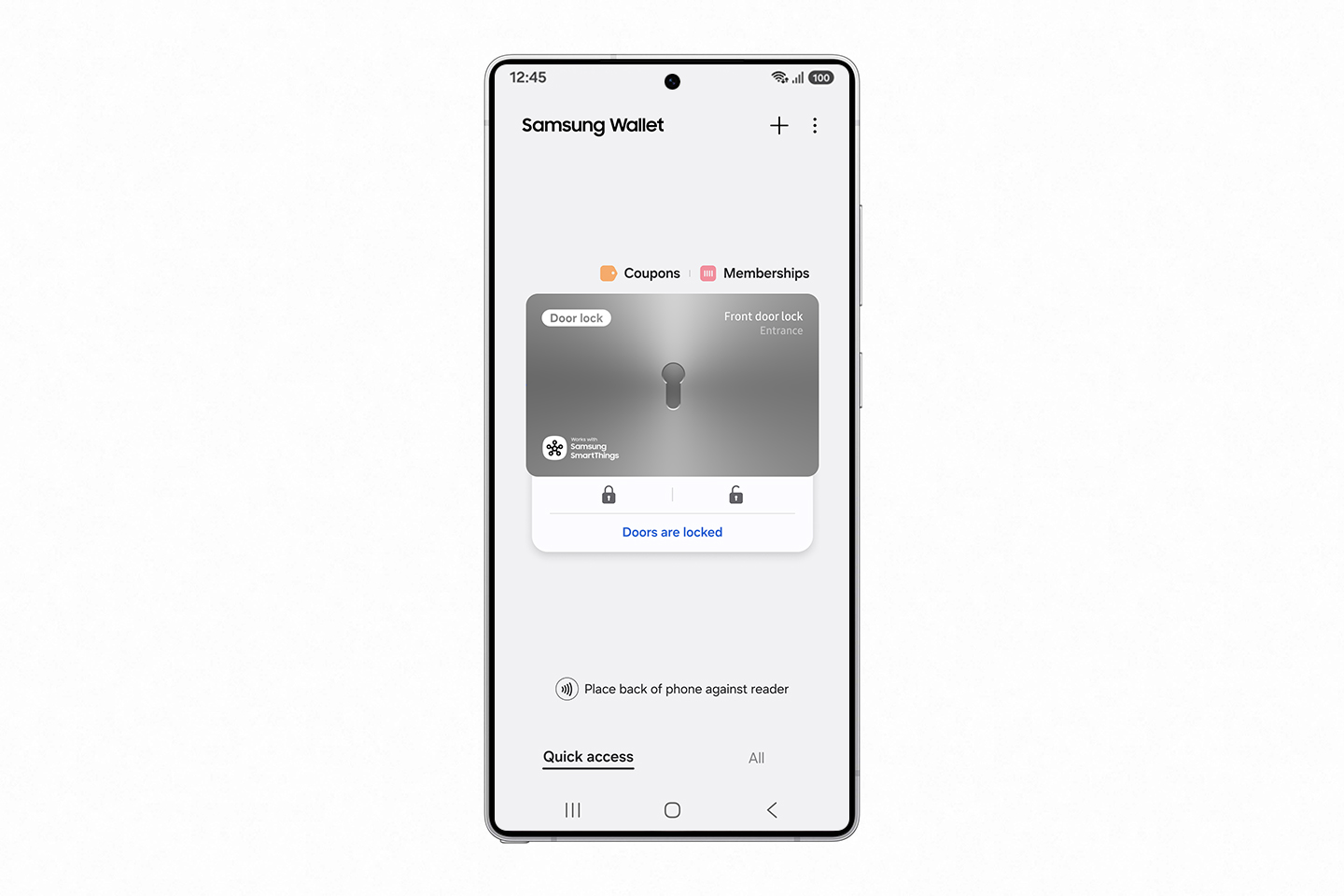
Samsung is expanding the role of its mobile wallet from payments and vehicle access to the front door. In its official announcement, Samsung introduced Digital Home Key, a new Samsung Wallet feature that lets Galaxy users unlock compatible smart door locks with their smartphone.
The feature is built around Aliro, an industry standard for smart-lock access developed by the Connectivity Standards Alliance. Samsung says the goal is to make digital home access more interoperable while preserving the security controls already associated with the Galaxy ecosystem. The company also positions the launch as a continuation of its digital-key work for cars, bringing the same concept into a more routine part of daily life.
How Digital Home Key works
Samsung’s setup flow begins with a compatible smart door lock connected through Samsung SmartThings using Matter, the global smart-home standard. Once the lock is onboarded, users can add a Digital Home Key to Samsung Wallet.
The unlocking method depends on the capabilities of both the Galaxy device and the smart lock. Samsung lists three possibilities: tapping the phone against the lock with near-field communication, using hands-free access through ultra-wideband proximity detection, or unlocking remotely through the app. That distinction matters because not every device or lock will support every method.
NFC is the most familiar option. It allows a user to bring the back of a compatible phone close to the lock’s reader, much like using contactless payment. UWB is designed for proximity-based access, allowing supported devices to detect when the authorised phone is nearby. Remote access, meanwhile, depends on the lock’s own network connection and supported software.
A more open approach to smart-lock access
Digital home keys have often been tied to a specific lock maker, phone platform or proprietary app. Samsung’s use of Aliro is intended to address that fragmentation by relying on a common communication framework for compatible smart locks.
Samsung says it is collaborating with Aqara, Nuki, Schlage and Xthings as part of the rollout. That does not mean every product from those brands will work automatically. Compatibility remains dependent on the individual lock, Galaxy device, region and software version, while each partner controls its own launch schedule.
The Matter connection through SmartThings also gives the feature a familiar place in Samsung’s connected-home setup. Users do not need to treat the digital key as an unrelated service: the lock is configured in SmartThings, while the resulting key is stored and managed in Samsung Wallet.
Security is central to the pitch
Samsung says Digital Home Keys are stored securely on the device and protected by Samsung Knox. Wallet access can also require biometric authentication or a PIN, helping ensure that the key cannot simply be used by anyone holding the phone.
The company says the solution is designed to align with EAL6+ grade certification standards. That wording describes the security target Samsung is aiming for; it should not be read as a claim that every compatible lock or phone has independently achieved the same certification.
If a phone is lost, Samsung says the owner can remotely manage or remove access through Samsung Find. This is an important part of the model because a digital key needs a recovery path that does not depend on having the handset in hand. Users should still follow the security recommendations for their Samsung account, keep the phone updated and remove old keys when a lock or device changes ownership.
Availability will depend on the ecosystem
Samsung says Digital Home Key began rolling out in select regions in March 2026 and will expand in line with compatible smart-lock brands. The announcement does not provide one universal launch date or a single list of supported Galaxy phones and locks. Buyers therefore need to check regional compatibility before treating the feature as a replacement for a physical key or an existing manufacturer app.
That limitation is typical for a connected-home service. A phone may support NFC or UWB while a particular lock supports only one of those standards. Some functions may also require a specific SmartThings setup, a recent Wallet version or an active internet connection. Samsung’s Wallet developer resources and the lock maker’s own compatibility information should be treated as the practical reference points.
Digital Home Key is therefore less about adding another shortcut to Samsung Wallet than about making the smartphone a more formal access credential. If Aliro and Matter support continue to spread, the feature could reduce the number of separate apps and proprietary systems involved in managing a connected home. For now, its usefulness will be defined by the availability of compatible locks and by how consistently Samsung and its partners support the standard across markets.