
Actualité
TikTok expands AI transparency as it targets AI-generated spam
TikTok says it is expanding AI-literacy resources, testing new detection systems for AI-generated spam and joining the C2PA Steering Committee, while more than 3 billion videos have received AIGC labels.
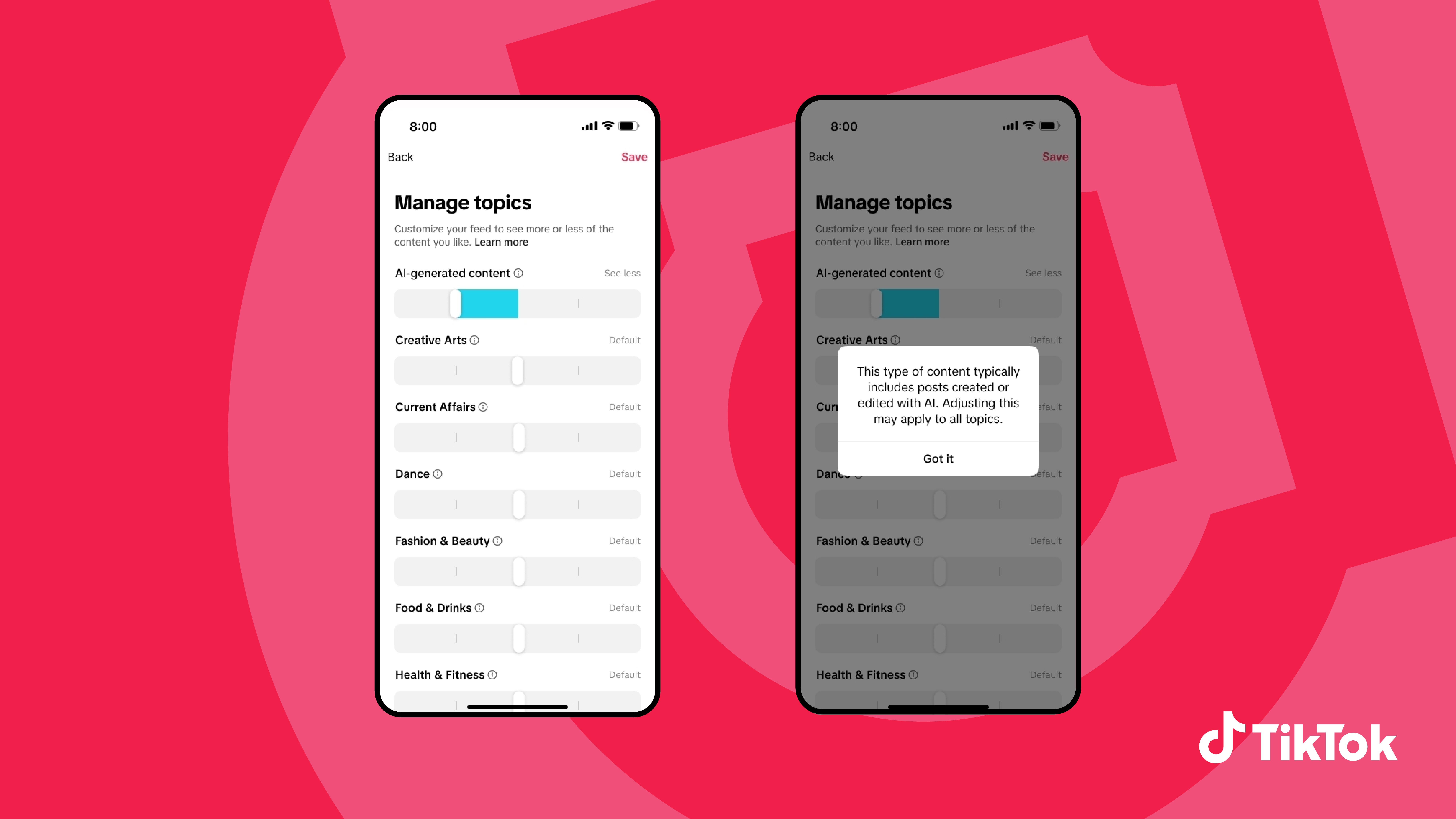
TikTok is expanding its response to the rapid growth of AI-generated content with new education resources, improved spam detection tests and a deeper role in the industry group behind Content Credentials. The company says the measures are designed to help people understand what they are watching while protecting original creators from accounts that mass-produce synthetic content.
In its official newsroom announcement, TikTok outlined three connected steps. It is expanding its AI-literacy work with new educational material and expert partnerships; testing detection systems aimed at accounts dedicated to AI-generated spam; and joining the Coalition for Content Provenance and Authenticity, or C2PA, as a member of its Steering Committee.
Education becomes part of the safety system
TikTok’s first measure is aimed at users rather than automated moderation. The company says it has worked with the National Association for Media Literacy Education and AI commentator Henry Ajder on a guide intended to help people use AI tools responsibly. It is also launching an in-app hub that will provide practical advice for spotting AI-generated material when users search for AI-related terms.
That approach acknowledges a limitation of labels: they can identify how content was made, but they do not automatically tell viewers whether the information itself is accurate, trustworthy or safe. TikTok says it is continuing to work with organisations such as NoFiltr and the Raspberry Pi Foundation to publish AI-literacy content on the platform.
According to TikTok, those expert organisations have generated more than 200 million views since the programme began. The company also says it has committed more than $4 million so far and intends to continue investing in the programme. These figures are TikTok’s own measurements; the announcement does not provide an independent audit or a breakdown by country.
New detection tests focus on AI spam
The second part of the announcement targets accounts rather than individual videos. TikTok says AI can support creative work, but it can also make it easier to flood feeds with repetitive or low-value posts. That kind of activity can reduce the visibility of creators producing original work, even when the content does not violate a specific safety rule.
TikTok says it removed more than 86 million fake accounts during the first three months of the year. It now plans to test improvements to its detection systems for accounts that specialise in AI-generated spam, with particular attention to posts about politics and current events, financial advice and medical content.
The wording matters: TikTok describes these measures as tests rather than a completed global rollout. The announcement does not promise that every AI-generated post will be detected, nor does it claim that automated systems can determine the truth of every video. Instead, the proposed focus is on coordinated accounts and patterns of mass-produced content in areas where misleading material could affect public trust or personal well-being.
Why C2PA matters beyond TikTok
TikTok is also joining the C2PA Steering Committee, a move that places the company in a more formal role in the development and adoption of Content Credentials. The technology can carry information about a file’s origin and editing history, helping participating services identify whether media was generated or significantly altered with AI.
That provenance layer is useful because a label added inside one application may disappear when a file is downloaded, edited or uploaded somewhere else. TikTok says it has already labelled more than 3 billion videos as AI-generated content using a combination of Content Credentials, creator labelling tools and its own invisible watermarking technology.
Those systems are complementary rather than interchangeable. Creator labels depend on people identifying their own use of AI. Content Credentials can provide machine-readable information when that metadata remains attached to a file. Invisible watermarking gives TikTok another signal when content moves through workflows that remove visible labels or embedded metadata. None of these mechanisms guarantees that viewers will receive a complete record of every edit, but together they can make provenance harder to erase.
What users should expect
TikTok says it is also testing controls that let people adjust how much AI-generated content appears in their feeds. The company has previously described this kind of setting as a way to tune recommendations rather than remove AI-generated posts altogether. That distinction is important for users who want to see synthetic media for creative or educational reasons, as well as for those who prefer to reduce it.
For now, the most significant change is the combination of user education, account-level enforcement and cross-platform provenance. TikTok is not presenting one feature as a complete answer to synthetic media. Instead, its announcement describes a layered system: teach users what to look for, label content when possible, identify accounts that exploit generative tools at scale and work with other platforms on shared standards.
The effectiveness of that strategy will depend on how widely the tools are deployed and how clearly the labels are explained. TikTok’s announcement confirms the direction of travel, but it does not yet provide results from the new detection tests or a universal timetable for the in-app education hub. Those details will determine whether the measures become a meaningful protection for viewers and creators or remain primarily a set of platform commitments.