
Review
Signal Stories and Telegram Group Stories: What Official Sources Confirm
A source-based review compares what Signal and Telegram officially document about Stories, from availability and formats to privacy and group participation.
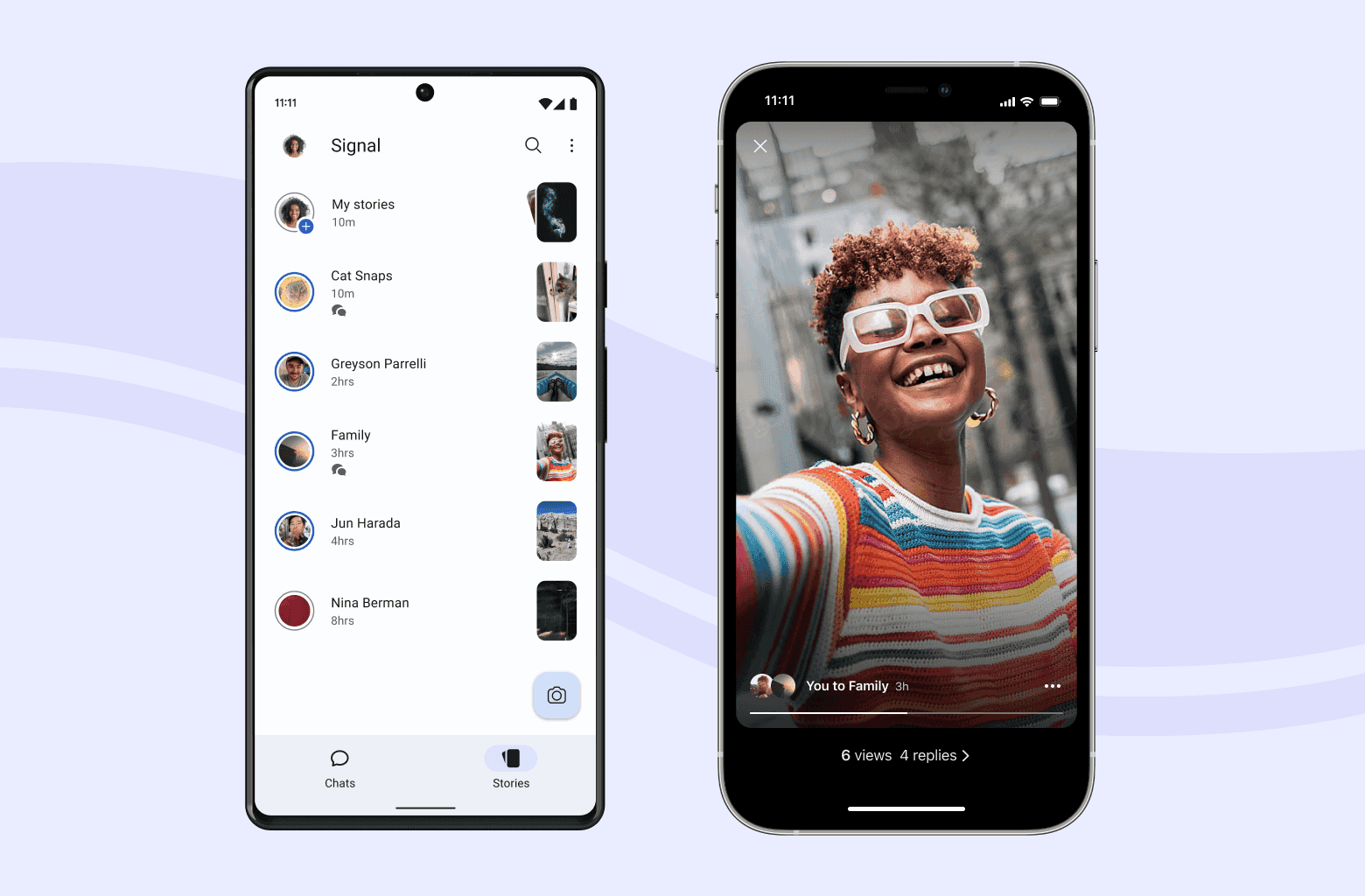
Signal and Telegram both document Stories as part of their messaging services, but their official announcements describe different uses. Signal’s announcement, dated November 7, 2022, confirms Stories on Android and iOS, with desktop availability announced as coming soon. Telegram’s February 29, 2024 announcement focuses on Stories published by groups, including administrator publishing and replies sent back to the group. This review examines only those documented facts.
It is important to define the scope. This is an analysis of official source material, not a hands-on test. No device, account, application build, or user workflow was independently tested for this article. The comparison therefore does not claim to measure performance, reliability, interface quality, rollout timing beyond the cited announcements, or the experience of using either service. Its purpose is to clarify what the two companies publicly state about these Stories features.
What Signal’s announcement confirms
Signal says Stories are available on Android and iOS. The same announcement says desktop availability is planned for a later point, so the source distinguishes between the platforms it identifies as available and the desktop support it describes as forthcoming. That distinction matters: the announcement does not present desktop access as already available.
The formats are broad but clearly stated. Signal allows a Story update to be shared as an image, a video, or text. A Story expires automatically 24 hours after it is shared. The announcement also says Stories are end-to-end encrypted and visible only to people selected by the author. These details define Signal’s documented model around content format, duration, encryption, and audience control.
Signal also connects Stories to existing conversations. An author can send a Story to an existing group chat. In the official description, that is a way to use Stories with a group that already exists in Signal, alongside the option to choose the people who can see the update. The source frames the feature around the author’s selected audience and existing conversations.
What Telegram’s announcement confirms
Telegram’s February 29, 2024 announcement documents Stories for groups. Groups can publish Stories, and administrators can publish them on behalf of the group. The announcement also says groups can save their Stories as posts on their profile page. This creates a documented connection between a group’s temporary Story activity and its profile page, although the source does not provide further detail about the duration or presentation of those profile posts.
Telegram’s announcement describes a group-centered reply path as well. When members reply to a group Story, those replies are sent to the group. That is a different emphasis from Signal’s description of selecting viewers and sending a Story to an existing group chat: Telegram explicitly describes the Story as a group publication with replies routed into the group.
The two announcements therefore establish different reference points. Signal specifies the privacy properties, audience selection, supported formats, and 24-hour expiration of Stories. Telegram specifies the group publisher, administrator role, profile-page posts, and destination of member replies. Each set of facts should be read within the limits of its own announcement.
The clearest difference in the documented models
Based on the two announcements, Signal presents Stories through privacy and audience selection. The documented controls are who can see an update, the end-to-end encryption applied to Stories, the supported image, video, and text formats, and automatic expiration after 24 hours. Its group feature is described as sending a Story to an existing group conversation.
Telegram presents Stories through group identity and participation. Its announcement centers on the group publishing a Story, administrators acting for the group, replies returning to the group, and Stories being saved as posts on the group’s profile page. These are not interchangeable descriptions. Signal’s source foregrounds the author’s selected audience and privacy properties; Telegram’s source foregrounds the group as the publisher and the conversation as the destination for replies.
That comparison should remain limited to the evidence. The supplied announcements do not establish which service has the better interface, broader availability today, faster delivery, stronger engagement, or more useful moderation tools. They also do not support a general ranking of messaging platforms. Any such judgment would require additional sources or direct testing, neither of which is part of this dossier.
Verdict
The official record supports a precise conclusion: Signal documents Stories as encrypted, audience-controlled updates available on Android and iOS, with desktop availability announced as forthcoming, while Telegram documents group Stories with administrator publishing, group-directed replies, and profile-page posts. For readers seeking verified reporting, the meaningful distinction is not a universal winner but the feature model each announcement actually describes.
As a review, this article is not scored because it contains no hands-on test data. Its verdict is therefore evidence-based rather than experiential: Signal’s documented emphasis is private sharing around selected viewers and existing group chats; Telegram’s documented emphasis is collective publishing around a group identity. Readers should treat that as a comparison of confirmed announcements, not as a practical recommendation or a report of personal use.
Official sources
Official source: signal.org
Official source: telegram.org
Related reading
Guides
How To Verify Googles Pixel 2026 Announcement
Test protocol
Official-source analysis only. This review uses the supplied Signal and Telegram announcements and includes no hands-on testing, device testing, account testing, performance measurement, or personal-use claims.
Verdict
Not scored. The official sources document Signal’s encrypted, selected-audience Stories and Telegram’s group-publishing model, but they do not support a universal ranking or an experiential product verdict.